
Dementia: what if prevention is as important as the cure?
Professor Dame Louise Robinson explores the generations of research on campus that’s shaping dementia care.
A picture of health: How we can reduce our risk of getting dementia
Did you know? Up to 45% of future cases of dementia may be preventable through lifestyle changes. Here, Newcastle University’s Regius Professor of Ageing, Professor Dame Louise Robinson, explores the generations of research on campus that’s shaping dementia care.
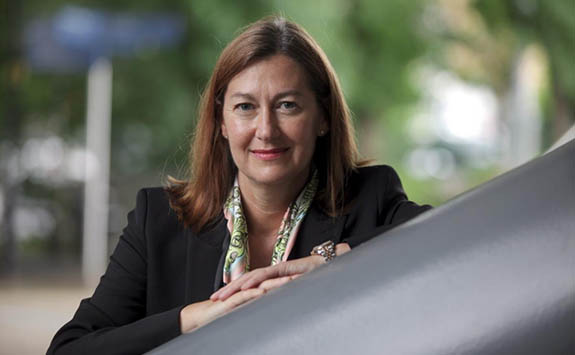
Professor Dame Louise Robinson is an academic GP and Professor of Primary Care and Ageing at Newcastle University. She also holds the first UK Regius Professorship in Ageing.
Louise leads a research programme focused on improving quality of life and quality of care for older people, especially those with dementia. She leads one of only three Alzheimer's Society national Centres of Excellence on Dementia Care. Louise was the primary care lead for the Prime Minister’s Dementia Challenge and is a member of the National Dementia Care Guidelines development group.
In this blog, Louise explains what causes dementia, the latest research on risk factors, and what we can do to help prevent developing the condition.
Everyone has a connection to dementia
If there is one thing I have learned from decades of dementia research, it is that almost everyone, regardless of age or personal circumstances, has a connection to the condition. Whether through a parent, grandparent, partner, friend or colleague, dementia touches the lives of millions of families.
Every three seconds, somewhere in the world, a person develops dementia. As populations live longer, the number of people living with dementia is expected to rise dramatically over the coming decades.
For many years and even today, the focus of dementia research is on finding a single breakthrough treatment – the “magic pill” that could halt or cure the disease. That work remains important, but Newcastle University has helped lead a broader and, I believe, equally vital research informed conversation: understanding how dementia develops, how we can reduce risk, and how we can improve care and support for people living with the condition.
Understanding a complex condition
Dementia is not a single disease. It is an umbrella term used to describe a range of symptoms, including memory loss, changes in behaviour, difficulties with language and decision-making, and a gradual decline in a person's ability to be independent and manage everyday life.
Alzheimer’s disease accounts for around two-thirds of dementia cases, but there are other forms, including vascular dementia, Lewy body dementia and Frontotemporal dementia which usually occurs in younger people. Newcastle has played a particularly important role in advancing our understanding of Lewy body dementia, with internationally recognised expertise in diagnosis and research.
While age remains the greatest risk factor, dementia is not simply an inevitable consequence of growing older; there are modifiable lifestyle factors that may influence your change of developing dementia. That is one of the most important discoveries modern research has revealed.
A Newcastle study that changed the conversation
Much of what we know about dementia risk today can be traced back to a landmark study known as the Cognitive Function and Ageing Study (CFAS).
Beginning in the late 1980s, researchers recruited more than 13,000 people aged 65 and over from communities across England and Wales and followed them over many years. It remains one of the most influential population studies ever conducted in dementia research. Newcastle researchers played a key role in this work from the beginning.
Twenty years later, the study was repeated with a new generation of older people. Given the ageing population, many expected dementia rates to be significantly higher. Instead, the findings surprised researchers around the world.
Despite there being more older people in society, the proportion developing dementia had fallen by around 20 per cent compared with two decades earlier. This discovery challenged long-held assumptions and suggested something remarkable: dementia risk could be influenced by factors beyond ageing alone.
The rise of dementia prevention
The CFAS findings, alongside similar studies from Europe and North America, helped identify a series of modifiable risk factors associated with dementia.
These include:
- Smoking
- Physical inactivity
- High blood pressure
- Obesity
- Diabetes
- Hearing loss
- Visual loss
- Lipid/cholesterol levels
- Depression
- Social isolation
- Traumatic brain injury
- Air pollution
- Excessive alcohol consumption
- Lower levels of education in early life
Many of these may look familiar because they are also linked to heart disease and stroke. The message is increasingly clear: what is good for the heart is often good for the brain.
Research has shown that addressing these risk factors throughout life – from childhood education to healthy ageing in later life – could potentially prevent or delay a significant proportion of future dementia cases.
The evidence was so compelling that it influenced both international clinical guidelines and World Health Organization policy, shifting dementia from being viewed solely as a clinical condition to being recognised as a major public health challenge.
Moving from research to action
Understanding risk factors is only the first step. The next challenge is helping people act on that knowledge.
One of the most influential studies in this area was the Finnish FINGER trial, which tested whether a combination of healthy lifestyle interventions could help protect brain health. Participants received support with exercise, healthy eating, cardiovascular health, cognitive activity and social engagement.
The results were encouraging. Those receiving the intervention demonstrated improvements in memory, thinking and decision-making compared with those receiving standard advice. The study has since inspired a global network of similar trials, creating one of the most exciting areas of dementia prevention research anywhere in the world.
For me, it reinforces an important principle: dementia prevention is not about finding one solution. It is about addressing multiple factors across the course of a lifetime.
Dementia prevention is not about finding one solution. It is about addressing multiple factors across the course of a lifetime.
Leading dementia research on a global stage
Newcastle’s contribution has extended far beyond the UK. In 2017, our team established the first National Institute for Health and Care Research (NIHR) Global Health Research Group focused on dementia prevention and care, working with partners in Tanzania, India and Malaysia.
This international work revealed something important. While researchers in high-income countries were increasingly focused on finding a cure, our colleagues overseas highlighted a more immediate challenge: many people were still unable to access timely diagnosis and alongside that early treatment and support. They also recognised the equal importance of trying to prevent dementia as well as diagnose and treat it.
In response, Newcastle researchers developed practical tools to support earlier identification of dementia in community settings where specialist services are limited. One example is the IDEA cognitive assessment tool, designed for use by frontline healthcare workers in countries where neurologists and dementia specialists are scarce. Adaptable across cultures and delivered through mobile technology, it demonstrates how innovation can improve lives even in resource-constrained settings.
Why care matters as much as cure
While headlines often focus on new drugs, the reality is that dementia remains a lifelong condition for which there is currently no cure.
Recent treatments have shown promise in slowing disease progression for some people with Alzheimer's disease, but they are not a cure, and they will not help everyone living with dementia.
That is why Newcastle has also championed research into care and support. Our work has explored the most effective ways to support people after diagnosis, helping families navigate the challenges of living with dementia and identifying models of care that improve quality of life.
Ultimately, breakthroughs in treatment are important, but so too are the practical services, support systems and communities that help people live well with dementia.
Looking ahead
There is still much we do not know about dementia. Questions remain about genetics, inflammation, infections and the biological processes that drive disease. New technologies and treatments will continue to play an important role in answering those questions.
But perhaps the most significant lesson from the past three decades is this: dementia is not simply something that happens to us.
Research has shown that we can influence our brain health throughout life. Through education, physical activity, social connection, managing long-term conditions and reducing health inequalities, we can all play a role in lowering risk.
Newcastle University has helped shape that understanding, leading research that has transformed how the world thinks about dementia. And while the search for better treatments continues, the evidence already tells us something powerful: protecting brain health begins long before a diagnosis is ever made.
It is ever more important that we do so. The UK is experiencing an escalating pandemic of chronic ill health across the population which is resulting in a loss of productivity. In the first quarter of 2024, there were 2.8m economically inactive people in the UK due to long term sickness.
Prevention promises long term savings and healthier populations, yet cures offer immediate, tangible results and life-saving breakthroughs. How do we strike the right balance – financially, ethically and politically – in shaping the future of health?
Join our panel of Newcastle University alumni and colleagues for a thought-provoking debate to explore whether prevention is better than a cure.