The Making of a Medical School
From Barber Surgeons to Medical Breakthroughs
A picture of health on campus: Nearly 200 years of medical education in Newcastle
Take a journey through Newcastle's remarkable medical history: from its origins in a barber surgeons' hall to the world-leading institution it is today. Along the way, discover pioneering alumni, groundbreaking research and the milestones that have shaped generations of Newcastle medics.
Many alumni can vividly recall their first day at Newcastle Medical School: finding their way around campus, stepping into anatomy teaching for the first time, or crossing the road to the RVI between lectures and placements. Yet today's students are part of a story that began long before Framlington Place, white coats and clinical skills suites.
Almost 200 years ago, a handful of aspiring doctors gathered in Newcastle to study medicine at a time when surgery was performed without anaesthetic, and infectious disease shaped everyday life. Since then, generations of students, researchers and clinicians have helped transform both the Medical School and medicine itself.
To celebrate the start of this year’s NCL in Action programme – ‘A Picture of Health’ – we look back at how medical education in Newcastle has evolved alongside medicine itself: featuring pioneering discoveries, educational innovations and generations of alumni who have helped build the reputation of one of the world's leading medical schools.
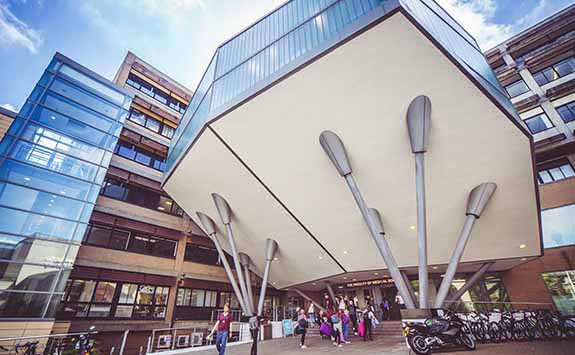
Humble beginnings, bold ambitions
The roots of medical education in Newcastle can be traced back to 1832, when a small group of local physicians and surgeons began delivering lectures to supplement the traditional apprenticeship system.
Just two years later, on 1 October 1834, the School of Medicine and Surgery was formally established in the Barber Surgeons’ Hall in Newcastle. The first cohort numbered fewer than a dozen students, but the vision was ambitious: to create a centre of medical learning that could serve a rapidly industrialising region.
Among those early students was a young apprentice named John Snow (pictured below). Long before becoming known as one of the founders of modern epidemiology, Snow attended lectures in Newcastle. His later work identifying contaminated water as the source of cholera outbreaks would transform public health and save countless lives - a fitting legacy for one of the school's earliest alumni!
.png)
.png)
Becoming a national force
The decades that followed saw Newcastle's medical education evolve at pace.
In 1852, the College of Medicine formally joined Durham University, laying the foundations for a stronger academic future. It quickly developed a reputation for educational excellence and became the first medical examining body in the UK to introduce practical examinations alongside written and oral assessments - a radical step at the time.
Student numbers climbed steadily and, by 1879, Newcastle had become the largest provincial medical school in the country.
For alumni looking back today, it is remarkable to think that the foundations of the modern medical curriculum were being laid almost 150 years ago in classrooms and anatomy theatres that would be barely recognisable to current students.
A school that helped shape modern medicine
Newcastle’s story is not only one of teaching future doctors. It is also one of discovery.
Throughout the twentieth century, researchers and clinicians associated with the Medical School contributed to advances that changed healthcare around the world.
In 1924, graduate and surgeon Frederick Pybus published research exploring pancreatic transplantation as a treatment for diabetes - decades before the procedure became a clinical reality.
The pioneering Thousand Families Study, launched in 1947, followed children born in Newcastle and revealed how poverty, childhood health and early-life experiences influence long-term wellbeing. Nearly 80 years later, researchers continue to learn from its findings.
Then, in 1960, Newcastle scientists identified the major biochemical defect associated with Alzheimer’s disease, helping to shape future understanding of the condition.
These milestones reinforced a growing reputation: Newcastle wasn't simply teaching medicine - it was advancing it.
Newcastle wasn't simply teaching medicine - it was advancing it.
Revolutionising medical education
In 1962, just a year before King’s College at Durham University formally became the University of Newcastle upon Tyne (that’s us!), Newcastle Medical School became the first in the UK to introduce an integrated medical curriculum. Students gained earlier clinical exposure and a more connected understanding of medicine, breaking away from the rigid separation of classroom science and patient care.
Today, integrated learning feels entirely natural. At the time, it was revolutionary.
The Medical School's physical transformation reflected these educational changes. In 1939, King George VI opened a purpose-built medical school opposite the Royal Victoria Infirmary. In 1984, medical students moved from the King George VI building opposite the Royal Victoria Infirmary, their home for the past 40 years, to the current Medical School on Framlington Place. The new Medical School was officially opened by HM Queen Elizabeth The Queen Mother and is still familiar to the thousands of alumni who have studied there over the last four decades.
From Newcastle. For the world
The opening of Newcastle University Medicine Malaysia (NUMed) in 2011 marked a major milestone, making Newcastle the first UK university to establish an international branch campus dedicated to medicine.
What began in a barber surgeons' hall now extends across continents, with graduates practising medicine around the world while earning a Newcastle degree built on the same academic standards and ethos.
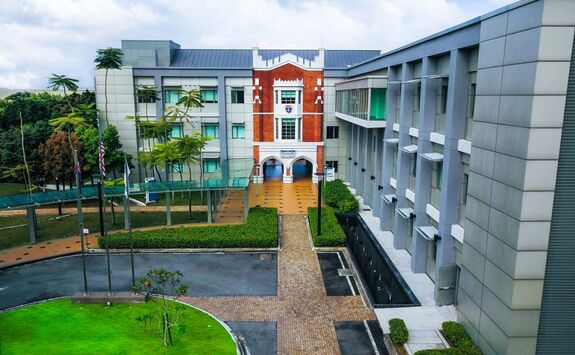
Leading the breakthroughs of tomorrow
Newcastle researchers have played a central role in developments ranging from genetics and stem-cell science to diabetes research and mitochondrial replacement treatment – a pioneering IVF technique to prevent babies from inheriting incurable genetic disorders that was licensed in the UK in 2017.
The University's scientists helped develop the ovarian cancer drug Rubraca®, delivered landmark gene therapy treatments, and continue to lead internationally recognised research centres focused on cancer, ageing, rare diseases, transplantation and neuroscience.
For current students, these achievements represent exciting possibilities. For alumni, they are further chapters in a story that began nearly two centuries ago.
Newcastle researchers have played a central role in developments ranging from genetics and stem-cell science to diabetes research and mitochondrial replacement treatment.
A shared legacy
Every generation of Newcastle medical students has encountered a different world.
The first students studied before anaesthetics became commonplace. Their successors witnessed the emergence of antibiotics, transplantation, medical imaging, genomics and precision medicine.
Yet one thing has remained constant: Newcastle's commitment to improving lives through education, research and clinical excellence.
From the lecture rooms of Bell's Court to a globally recognised medical school, nearly 200 years of progress have cemented Newcastle University's place among the world's leading centres of medical education.
And for everyone who has studied, taught, researched or trained here, that history is something worth celebrating.