Published: 19 November 2018
Aspirin and omega-3 reduce pre-cancerous bowel polyps
Both aspirin and a purified omega-3, called EPA, reduce the number of pre-cancerous polyps in patients found to be at high risk of developing bowel cancer, according to new research.
A clinical trial, involving experts at Newcastle University, found that both aspirin and EPA reduced the number of bowel polyps in patients one year on from a screening colonoscopy, although they did not reduce the chances of an individual having any polyps present in the bowel.
Patients who took aspirin developed fewer polyps overall, including on the right side of the large bowel, the part which is most difficult to monitor by colonoscopy being furthest from the back-passage.
Those who took purified omega-3 EPA (eicosapentaenoic acid) also developed fewer polyps, but this effect was seen only on polyps on the left side of the bowel, which is nearest the back-passage.
The SeAFOod trial is one of the largest studies of medication to prevent bowel polyps, some of which would develop into bowel cancer
Important trial
The seAFOod Trial, the result of a multidisciplinary collaboration between the Universities of Newcastle, Leeds, Nottingham and Bradford, as well as others, is published today in The Lancet.
The trial was launched to determine whether aspirin or EPA could reduce the number of people who had any polyps at their one year follow up test, which they did not. However, both compounds had preventative effects by reducing the number of polyps of specific types in patients.
Professor Colin Rees, from the Northern Institute for Cancer Research, Newcastle University, was the lead clinical person recruiting from more than 50 centres throughout the UK for the study.
He said: “This ground-breaking research led from Northern Universities demonstrates a superb example of collaboration between Universities and clinical research teams.
“The SeAFOod trial is one of the largest studies of medication to prevent bowel polyps, some of which would develop into bowel cancer. The trial demonstrated that combination of drugs are most likely to be effective.”
Bowel cancer remains the second largest cause of cancer deaths in the UK. Despite a national screening programme, bowel cancer still resulted in more than 16,000 deaths in England and Wales in 2014.
People at high risk of the disease are regularly monitored by specialists who use a flexible camera to examine the lining of the large bowel, also called the colon, by a technique called colonoscopy.
During a colonoscopy, a specialist looks for polyps, which are fleshy growths on the lining of the colon. The growths are usually benign but they can turn cancerous and so they are removed. However, colonoscopy is not fool-proof and a significant number of people still continue to develop bowel cancer.
The seAFOod Trial, funded by the EME Programme - a Medical Research Council (MRC) and National Institute for Health Research (NIHR) partnership - was conducted to see if aspirin and EPA could provide another layer of prevention, alongside colonoscopy.
Lead author Mark Hull, Professor of Molecular Gastroenterology at the University of Leeds, said: “The seAFOod Trial demonstrates that both aspirin and EPA have preventative effects, which is particularly exciting given that they are both relatively cheap and safe compounds to give to patients.
“Given this new evidence, clinicians need to consider these agents for patients at elevated risk of bowel cancer, alongside regular colonoscopy surveillance.”
Hundreds of participants
Just over 700 people took part in the study from 53 hospitals in England, all of whom were identified as being at higher risk of developing bowel cancer after having a colonoscopy in the BCSP. This study is the first drug trial to have taken place in the English BCSP.
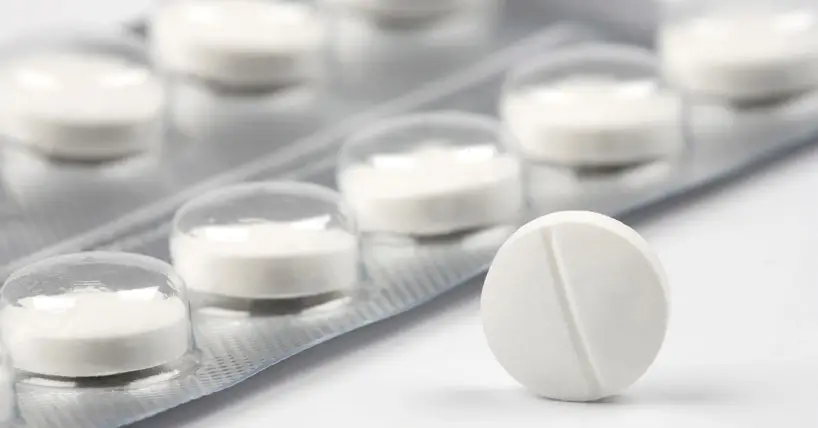
People who took part were randomly allocated to one of four treatment groups and, each day over the following year, they took either a 300 milligram aspirin tablet; 2 grams EPA in four capsules; a combination of both aspirin and EPA; or placebos only.
Patients who took aspirin had 22% fewer polyps at the end of the one year study compared to those who took the placebo.
Those who took EPA had 9% fewer polyps at the end of the study compared to those who took the placebo, although this difference was not statistically significant. However, patients who took EPA had 25% fewer polyps in the left side of the bowel compared to those who took the placebo.
The study suggests that a ‘precision medicine’ approach may be the most appropriate way to use aspirin and omega-3 to prevent bowel polyps, in which patients at risk of particular types of polyps are given treatment specific to that risk.
Professor David Crossman, Interim Director of the NIHR’s Efficacy and Mechanism Evaluation (EME) Programme, said: "The seAFOod Trial results are very exciting and I'm particularly pleased that the MRC/NIHR collaboration funded this study.
“Prevention is key in this common disease and it's fascinating that the combination of widely available and relatively cheap drugs seemed to have such an impact."
EPA is naturally present in fish oil, but was given to patients at a higher dose than is present in most omega-3 supplements that are available to the public. Aspirin was provided by Bayer AG and EPA was partly provided by SLA Pharma AG.
Although aspirin and EPA had beneficial effects on polyp number on their own, the combination of aspirin and EPA together appeared to have an even greater effect. However, the trial was not designed to provide a definitive answer about combination treatment and further research is needed to test aspirin and EPA treatment together for polyp prevention.
Treatment with aspirin and EPA was safe with no increased bleeding risk seen. Individuals who took EPA on its own had a slight increase in stomach-upset symptoms.
Reference
Eicosapentaenoic acid and aspirin, alone and in combination, for the prevention of colorectal adenomas (seAFOod Polyp Prevention trial): a multicentre, randomised, double-blind, placebo-controlled, 2 × 2 factorial trial
Mark A Hull et al
The Lancet. DOI. 10.1016/S0140-6736(18)32322-5