Published: 9 January 2024
Newcastle student investigates Roman 12-sided 'mystery objects'
A Newcastle University doctoral student will appear on BBC 2’s Digging for Britain to share her expertise on mysterious Roman artefacts called dodecahedra.
Lorena Hitchens was invited to appear on the programme following the discovery of a dodecahedron during an archaeological excavation in Lincolnshire.
To date, about 130 dodecahedra have been documented between the 18th and 21st centuries. All of them were discovered across what was the north-western edge of the Roman empire, mostly in the provinces of Britannia, Gaul, and Germania (now England and Wales, France, Belgium, The Netherlands, and Germany.
Over thirty of the objects or fragments have been discovered in Britain - one of these, which was unearthed in Newcastle in the 1970s, is now on display at the Corbridge Roman Town museum, alongside two others from sites along Hadrian’s Wall.
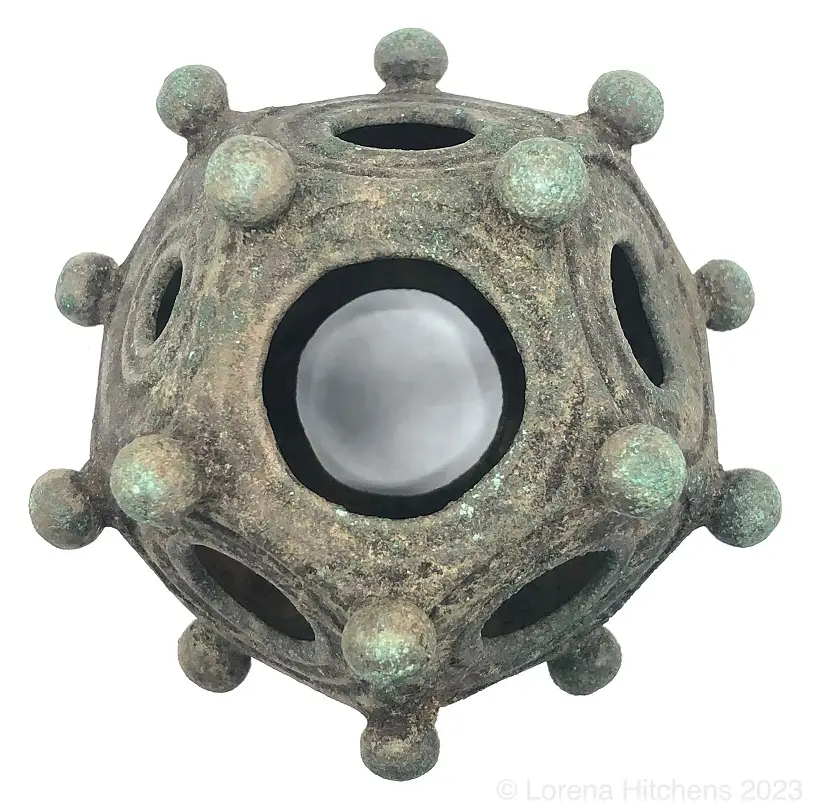
Roman dodecahedra are complex, 12-sided, hollow bronze 'mystery objects' dating to the late Roman Empire. Each dodecahedron varies in size and decoration, and all have variable-size holes in each face and studs at each corner. They are all unique in their size and weight, ranging in size from a golf ball to a cricket ball.
The discovery in Lincolnshire was a rare fully intact dodecahedron, found in-situ. This is significant because many dodecahedra are now in private or museum collections and little is known about the archaeological context that they were found in.
Although we have known about these artefacts for hundreds of years, there is still so much mystery about their purpose. For me, the challenge of solving the puzzle of what these items are is part of their appeal.
Challenge of solving the puzzle
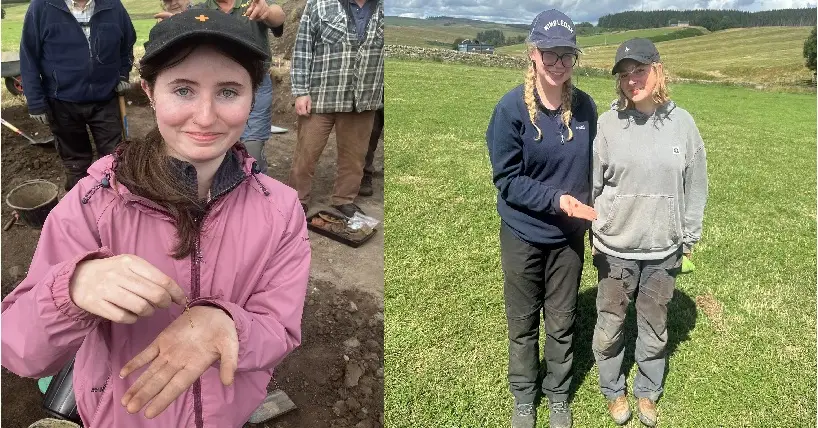
Lorena is studying the puzzling objects for her PhD and was delighted to share her knowledge with Professor Alice Roberts and members of the community-run Norton Disney History and Archaeology Group (NDHAG), who made the discovery in 2023 during an excavation supervised by Allen Archaeology.
“Dodecahedra are some of least understood objects to survive from the Roman empire,” Lorena explains. “The find from Lincolnshire is exceptional not just because it’s the first to have been found in the Midlands, but also because it’s a large, very finely-made example in excellent condition. Importantly, it was found in a modern controlled dig, right where it was buried.
“Although we have known about these artefacts for hundreds of years, there is still so much mystery about their purpose. For me, the challenge of solving the puzzle of what these items are is part of their appeal.”

One of archaeology's great enigmas
Richard Parker, Secretary of the Norton Disney History and Archaeological Group, said: "Our small Lincolnshire amateur archaeology group were thrilled to have made the find of a lifetime. We intend returning to the same site in 2024, provided we have raised enough money for another excavation. There may be a lot more to discover about one of archaeology's great enigmas!"
Lorena added: “A high degree of skill went into making them, so their purpose was clearly an important one, yet there is no written or visual record of what their use was. Hopefully, the dodecahedron discovered in Lincolnshire will open up new directions for further research on these fascinating objects.
“I am also very much looking forward to the summer, when hopefully the dig will be funded to continue and NDHAG will uncover further information about this important site.”
The Norton Disney dodecahedron will feature in episode four of the current series of Digging for Britain, which will be broadcast on BBC 2 on 9 January 2024, and is available on iPlayer.
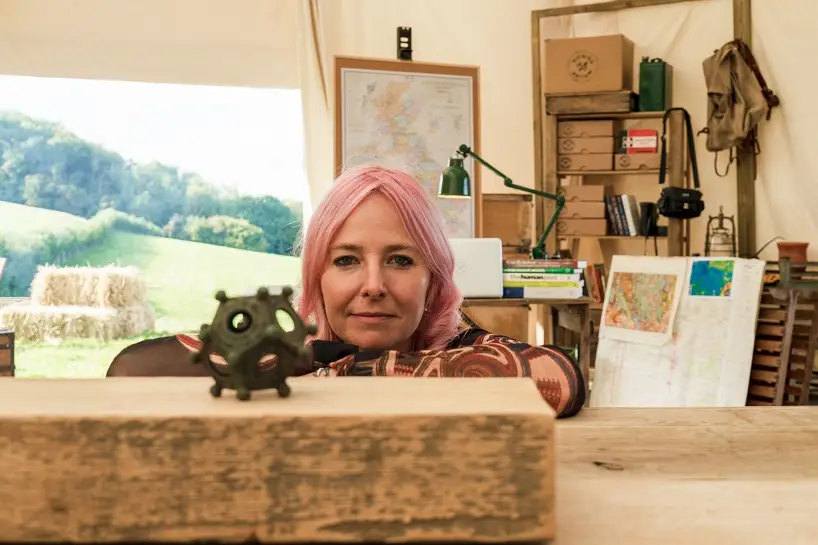
Professor Alice Roberts, who presents Digging for Britain, said: “I do love an archaeological mystery, and this has to be one of the greatest, most mysterious archaeological objects I've ever had the opportunity to look at it up close. It's just extraordinary.”
The dodecahedron will be on display at the National Civil War Centre, Newark Museum, Appleton Gate, Newark from Wednesday 3rd January for three months. For more information visit www.nationalcivilwarcentre.com/
For more information about the Norton Disney History and Archaeology group visit https://nortondisneyhag.org/