Fine Art research students
Fine Art has a thriving community of PhD students; it has built a strong reputation for quality of supervision, and for excellent resources for practice and research.
PhD Study in Fine Art at Newcastle University
Fine Art has a thriving community of PhD students. We support a wide range of both theoretical and studio-based practice and research across Fine Art, Digital Cultures and Art History.
All staff in the unit are available as supervisors. Many of our projects also challenge traditional disciplinary boundaries with supervision across subjects.
We're committed to supporting artists' individual practices through practice-led research. All students are encouraged to participate in the our wider research culture through research seminars. This includes chairing seminars with visiting artists/researchers. The Institute for Creative Arts Practice also provides an important route for engagement and networking with creative practice-led researchers across the University.
All students are also encouraged to engage with professional and academic opportunities. This includes exhibiting, attending and presenting at conferences, and organising symposia and conferences.
Read more about the projects of both current and recent PhD students below.
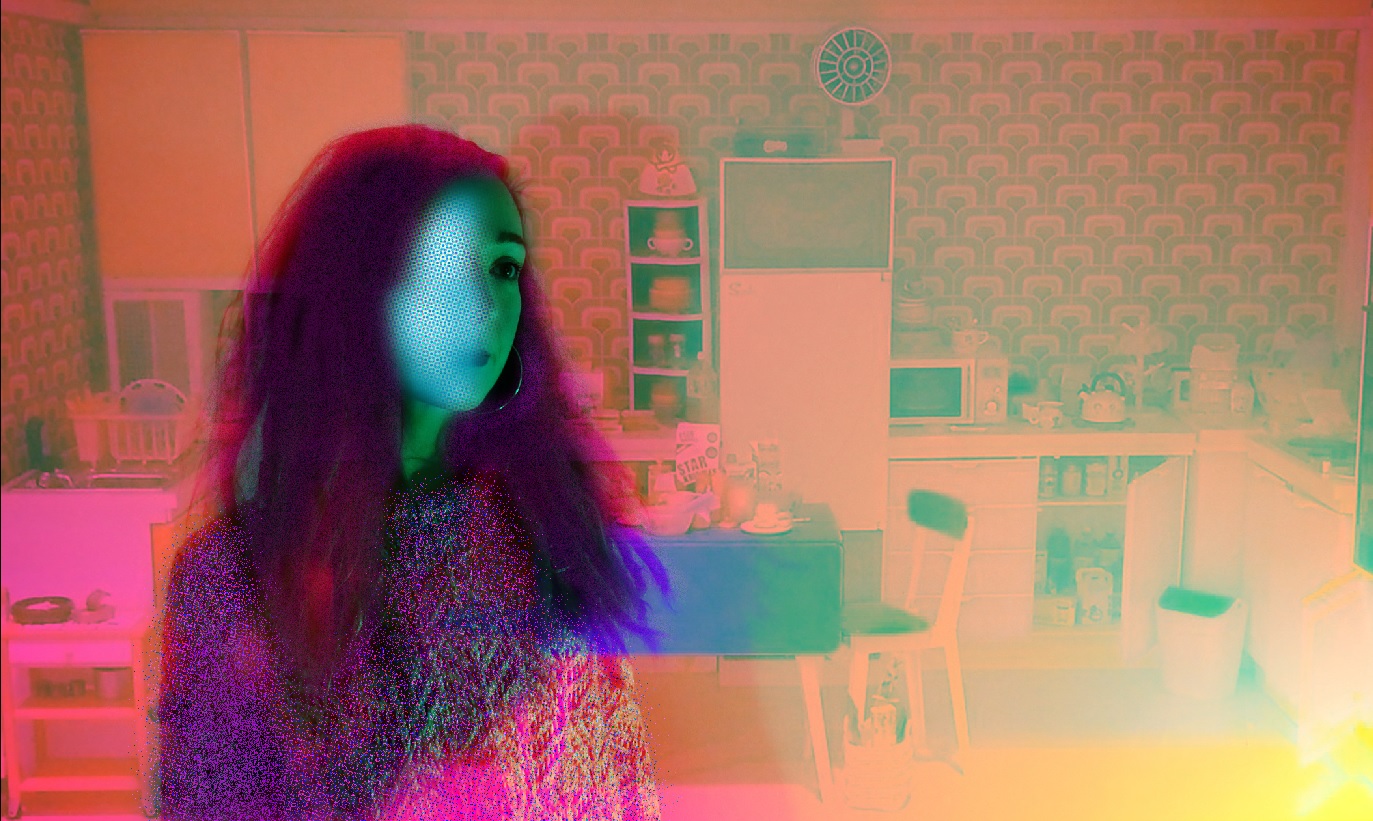
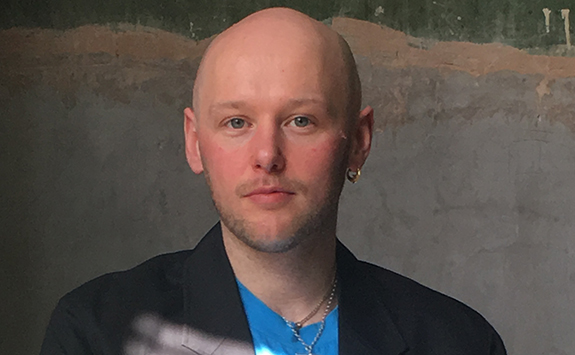
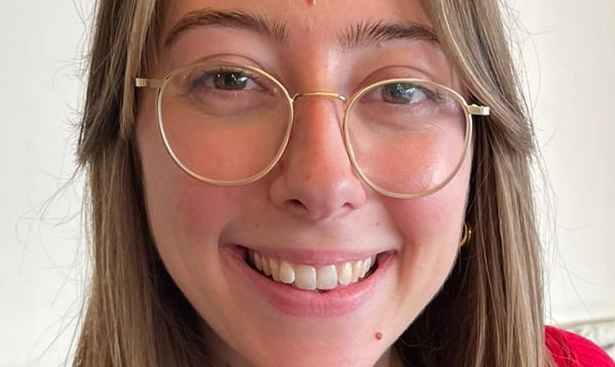
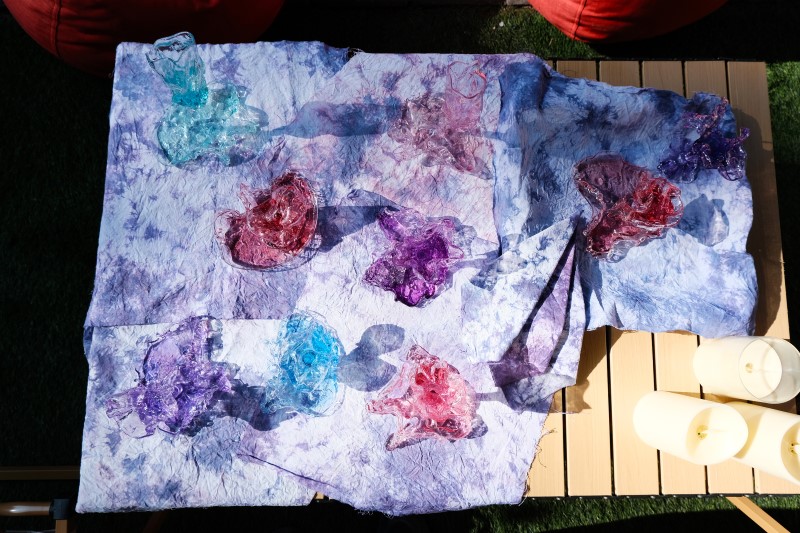
Paulina Michnowska
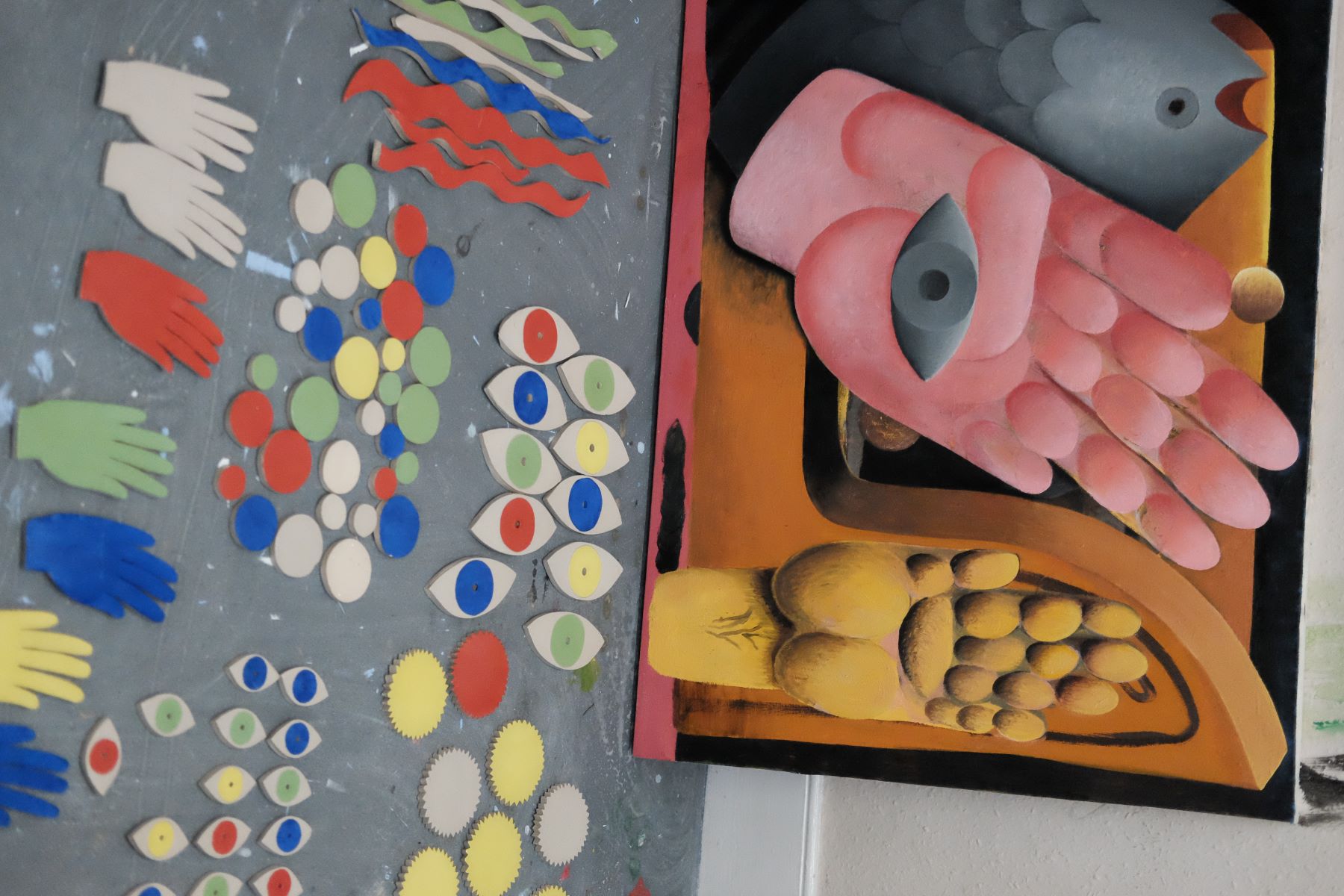
I am an artist, researcher, and educator whose work has been exhibited nationally and internationally and is included in collections such as Tate Modern, Camden Art Centre, and the Cass Sculpture Foundation. Alongside my studio practice, I am completing an AHRC-funded practice-led PhD at Newcastle University, exploring how modular ceramics can function as a material language for documenting endangered cultural and ecological knowledge.
The project develops in collaboration with the Penan people of Borneo, focusing on the Oroo sign language—a forest plant language embedded in relational ecological practices. It investigates how ephemeral, oral, and gestural knowledge can be translated into material form without reducing its vitality, creating a dialogue between contemporary ceramics, indigenous knowledge, and ecological stewardship. My studio practice produces modular forms that are provisional, reconfigurable, and performative, offering ways to communicate practices not easily captured through text or static objects.
The research integrates fieldwork, studio practice, and archival engagement. I have co-developed ethical documentation strategies with Penan elders, including collaborative active archives with the Borneo Museum of Sarawak, and conducted research at UK collections such as the Pitt Rivers Museum. Dissemination is central: I have presented at international conferences, including the Participatory Design Conference, Borneo (2024), and published peer-reviewed papers on community-based and process-led ceramic practice.
This project demonstrates how ceramics can document and share ecological and cultural knowledge while respecting indigenous practices, bridging art, research, and ethical documentation.
Narbi Price
Repainting the Pitmen: The Ashington Art Group & Robert Lyon - Rethinking Legacy through Archive and Practice
The work of the Ashington Group (also known as the Pitmen Painters) is a celebrated historical record of a working community, held in great affection in the North East and further afield. However, the main narratives are very limited (a single text by William Feaver, ‘Pitmen Painters – The Ashington Group 1934 -1984’ and Lee Hall’s play, ‘The Pitmen Painters’).
Using three distinct methodologies - archival research, curatorial and creative practices, my AHRC funded Collaborative Doctoral Award research challenges dominant narratives about the Group’s intentions, methods, output and legacy.
At Woodhorn Museum, in Ashington, Northumberland, in Summer 2018, I presented ‘Pitmen Painters Resurfacing’, a major public outcome, which presented a new invigorated position on the work of the Ashington Group. This comprised two new exhibitions; ‘Pitmen Painters Unseen’ gathered previously un-exhibited work, forming the largest and most complete exhibition of the Ashington Group’s work ever staged.
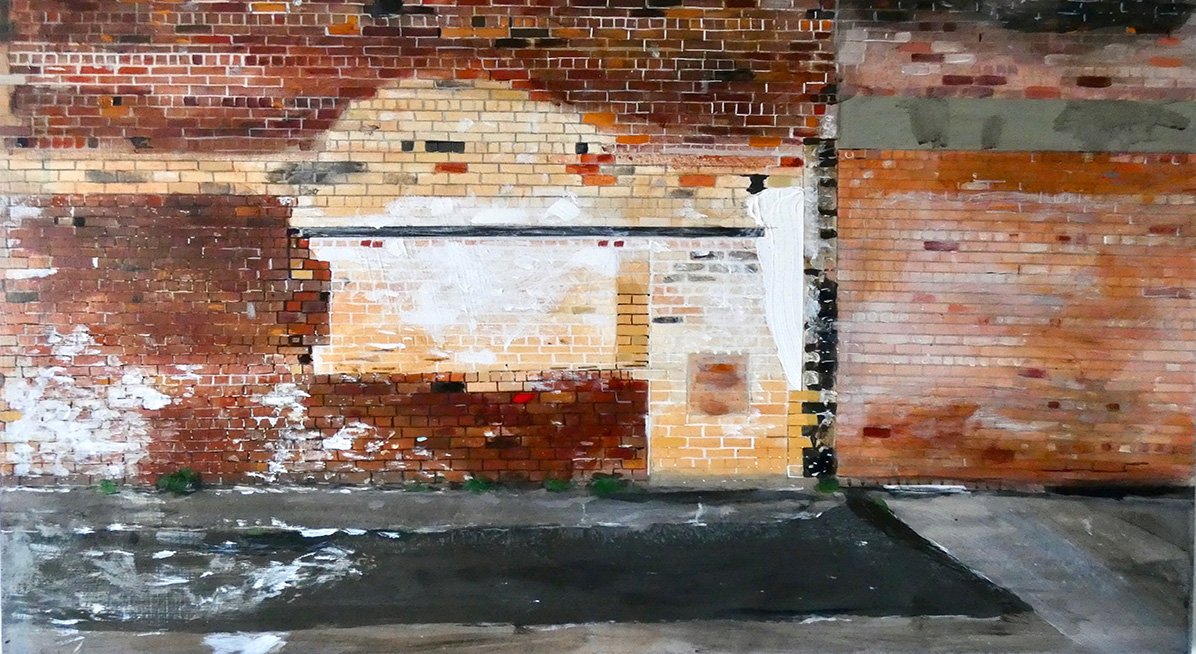
This was accompanied by a major new body of my own work, drawing upon innovative painting and psychogeographical practices, ‘The Ashington Paintings’ investigates the changed landscape of a common geography. It engages with the Permanent Collection of Ashington Group paintings (held in perpetuity at Woodhorn Museum), in its construction and shared longitudinal study of the locale, and provides a neoteric position on how contemporary practice can have an informed, discursive relationship with historical collections.
The shows were accompanied by two new publications with contributed texts by the art critics William Feaver and Matthew Collings.
A selection of the work is scheduled to tour the UK as part of an Arts Council England funded group exhibition entitled ‘Where We Live’, from late 2021 through 2022.
This PhD was one of three studentships that were part of an AHRC-funded Collaborative Doctoral Award research project (CDA) which investigated aspects of art education and culture in the North East from the 1930s to the 1970s.
Sneha Solanki
Speculating through the eyes of the othered: eating in the remains of the rural
Set in a parallel rural space and anchored to present-day Northumberland as a case study, this research foregrounds intra-disciplinary arts practice as a tool to interrogate and speculate on rural diversity through the lens of food and eyes of the othered.
Breaking apart the problematic and ongoing perceptions of the rural which perpetuate a static and superficial idyl of nature, English bucolic ‘timelessness’, and the given notion of ‘diversity’, this research aims to identify, remove and set aside the current rural imagination, asking what ‘remains’ and how can speculative thinking from the ‘othered’ offer missing or new research into minoritsed rural inhabitants and food culture.
Food, intrinsically linked to both the rural space (production and cultivation) and to those minoritised through ethnicity has been identified as the lens to explore rural diversity. Connected to community, religion, ethics, land, hybrid-identities, cosmic occurrences and seasonal variation, shifts, infections and adaptions in food culture can be seen with presence in urban areas through transmission activity between and from diaspora or through subsequent generations. In rurality, this is more difficult to see, either invisible or largely ignored.
This research specifically asks-
If there is a relationship between food within rural English countryside landscape and the ‘diversity’ of the population?
Can speculative thinking and making through the lens of food imagine a parallel, asymmetric or more engaged food landscape from the perspective of the ‘other’?
This is a Northern Bridge Collaborative Doctoral Award in partnership with The Maltings (Berwick) Trust (MBT).
Website- http://electronicartist.net/
Liang Zhou
The Integration of text within Contemporary Printmaking
This research is a practice-led exploration of the combination of cross-cultural text art and printmaking in a contemporary environment. I will explore the materiality of printmaking in relation to text and explore the possibilities of cross-cultural text reading.
I will develop my research questions through three series of works. My aim is to examine the ideographic nature of the text, but also to challenge the reading habits of the audience. First, I will explore contemporary printmaking and digital development of Chinese characters. Secondly, I will explore whether the attention of contemporary text artists has shifted from the visual text to the text itself. Finally, I will explore the possibility of creating texts that can be understood by people of all cultures in the context of globalisation. In my work, new symbols will be created by mastering certain rules of symbol designation and arrangement.
Anthony Polo
Eco-intervention Art: Reinterpreting Gas Flare Practices in Niger Delta through Contemporary Paintings.
Anthony Polo's works investigate the complex relationships between humans and nature. His works focus on the ecological issues in the Niger Delta.
However promising, with vast crude oil mineral resources and reserves, fertile fishing grounds, and forest games, teeming with endangered species of wildlife and aquatic life, toxins, industrial pollutants, and gas flares practices, from oil exploration operational activities have increasingly polluted the environment, affecting the region's farmlands and potable water supplies thus marking the Niger Delta as one of the world's most ecologically endangered regions.
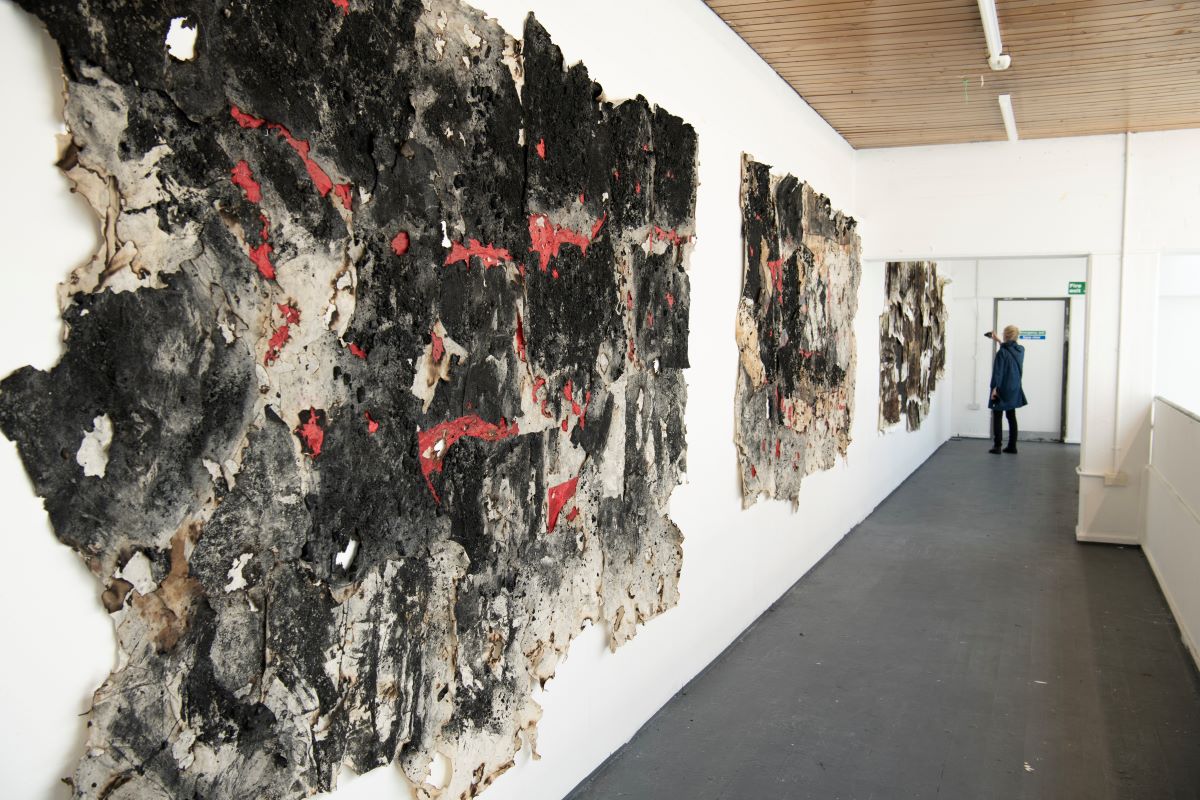
He engages the ideas of ‘Change and Transformation’, ‘Destruction and Creation’ to highlight the issue of Anthropocene subjectivity and the precarious nature of the Niger Delta landscape while exploring the role of combustible materials in art making. His works are conceptual inquiries into the illimitable nature of art to constitute meaning with an exploratory link between fire and other combustible materials. Since fire is light and so also is color, the exploration of both energies is used to create a visual resonance depicting climate change and ecological issues facing the Niger Delta region of Nigeria.
Marjolaine Ryley
Time, Image, Archive: Visualising garden communities through auto- ethnographic photographic practice.
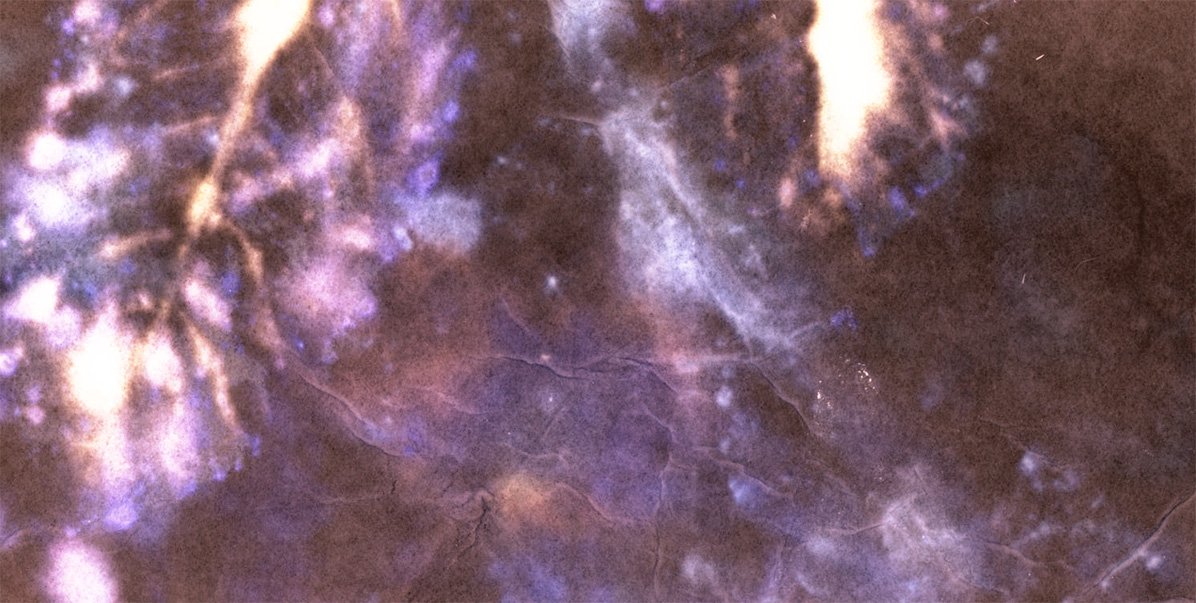
Marjolaine's practice-based PhD research encompasses interdisciplinary strands including working with photography, writing and plants and exploring gardens as sites of practice. Using auto-ethnography, post-humanism and critical plant studies her engagement with the Garden interweaves creative writing, sustainable photography, plant-made imagery and collaborative workshops to instigate dialogues around human-plant relations and our place in a more than human world.
Her research montages both archival and auto-ethnographic stories emphasising Women’s experience in the garden through a number of current and historical voices. The practice also raises awareness about the current extinction risk to plants and the beneficial effects of gardening/growing/plant-relations for both humans and the environment, told through these personal encounters.
Using three sites of practice the National Trust’s Wallington Heritage Garden, Dilston Physic Garden and her own allotment Plot 92 her work is rooted in the ‘horti-counterculture’ questioning how arts practice can transverse ecology, growing, sustainability and photography to generate acts of resistance, protest and hope in an age of uncertainty. As part of her practice she is also artist in Residence at Dilston Physic garden and undertaking an RHS level three qualification on Horticulture.
Marjolaine is a Lecturer in Photography at Sunderland University, and her research is funded by the AHRC.
Gaoxiang Han
Aesthetics, Class and British Modernism:the East London Group and the London arts scene, 1928-39.
This research attempts to analyze the complex relationship between the aesthetic interest of British audiences in modernist art and class divisions in the 1920s and 1930s by examining the East London Group and other related groups of London artists (Camden Group, etc.). For the research, the definition of audience is expanded to include not only spectators who entered galleries to view artworks, but also managers of art institutions, art dealers, critics, publishers, and even other art groups and artists of the same period, which collectively constituted the wider reception of modernist art in the London art scene during the period 1928-1939.
The ELG exemplifies unique research value in at least the following ways. First, ELG was one of the very few art groups at the time that was initially active in the East End of London and eventually gained recognition by opening exhibitions in the West End as well. This suggests, in part, that the group's artworks were enjoyed by audiences and critics of different class identities, and that ELG became a cultural symbol that transcended geography and class. Second, the ELG gained national and international recognition. At the Venice Biennale in 1936, ELG's works were exhibited alongside those of masters such as Cézanne, Renoir, Picasso and Monet. As a workers' art group, the fact that the ELG was able to participate in the exhibition as a representative of Britain's artistic achievements, while at the same time gaining appreciation in a context where modern British art was considered relatively 'backward', undoubtedly demonstrated that the ELG was worthy of attention.
Some potential research questions might be:
Question 1:How does the work of the East London Group, and its relation other artists' groups in London, alter our understanding of modernism in Britain during the inter-war decades?
Question 2: How did audiences respond to East London Group's work, and what does this tell us about the competing aesthetic and political ideologies of the 1920s and 1930s?
Question 3: What was the relation between the aesthetic interests of the East London Group and its class affiliations?
Tijana Mamula
Adaptation as Theory
My doctoral project explores the ways in which literary adaptation can be conceived and practiced as a mode of film philosophy. I look at how the process of translating between words and images provides insight into certain aspects of what cinema “is”—how it’s perceived and felt; how it interacts with memory and becomes memory itself. This research contributes to current debates around post-cinema, intermediality and “uncreative” writing. I’m especially interested in adaptations of children’s literature for their ability to tread the line between fantasy and reality, and thus to become part of a child’s psychic life in ways that are often indistinguishable from physical experience. This inherent uncanniness places such works in a privileged position to theorize the primacy of audiovisual media in social and cultural consciousness.
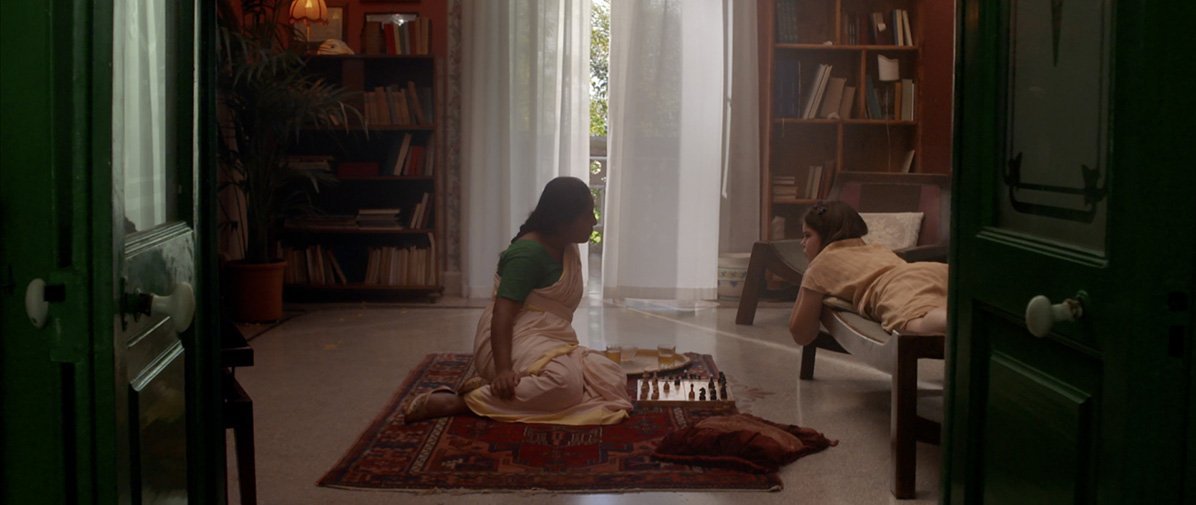
My first film produced within the PhD is a narrative short titled The Writing Box. Set in 1939, the film follows Grace, a manipulative schoolgirl, as she schemes and dreams her way from England to India—with increasingly violent effects on the people she encounters, who do not share her racial and socioeconomic privilege. The Geraldine McCaughrean story on which the film is based is itself a postcolonial text that implicitly critiques Victorian children’s literature. My adaptation brings these references to the forefront of the narrative—embedding Grace’s actions within the very experience of consuming colonial, supremacist mythologies—and interweaves them with numerous other artworks through more experimental techniques of citation and collage. The result is a kind of Classical Hollywood-meets-conceptual poetry hybrid that retains the spirit of McCaughrean’s postcolonial critique, whilst situating Grace’s plight within a post-cinematic world in which the distinction between memory and media has all but ceased to exist. The Writing Box premiered at the Visability Film Festival 2021, where it won the awards for Best Director and Best Actor.
My second film, a feature titled Hotel Savoy, takes this use of collage and citation a step further by weaving together a series of disparate sources, including books by Joseph Roth, Diana Wynne Jones and Ann Radcliffe. These serve to evoke a WWII fantasy inspired by the Kindertransport and by my own grandparents’ wartime experiences in the Independent State of Croatia, and held together by a documentary, essayistic framework built around interviews and re-enactments. Hotel Savoy continues my engagement with themes of post-cinema and uncreative writing, while adding to this a more explicit reflection on adaptation’s relationship to historical trauma and post-memory.
My research is funded by the AHRC/Northern Bridge DTP.
Websites:
newcastle.academia.edu/tijanamamula
Jim Lloyd
A Bird’s eye view
Jim Lloyd’s doctoral research investigates how we might seek to gain a better understanding of an avian perspective through art practice.
The context is in the crisis in the environment leading to mass species extinction and the realisation that current ways of thinking might be inadequate to solve such complex problems. Seeing from the perspective of other beings might be a critical part of the solution.
The specific questions are:
- How might multi-media art practices be developed to represent avian perception?
- To what extent can artworks based on the avian sensorium expand human environmental consciousness?
- How might video and sound installations draw upon avian perception to critique anthropocentric narratives in ecology?
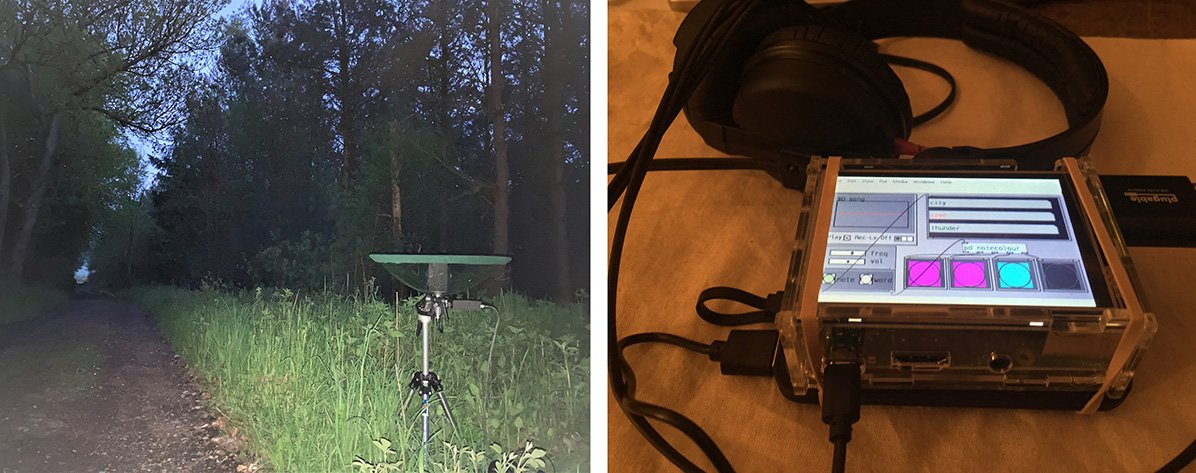
The techniques involve video, photography, field sound recording, software development and writing. Recording beyond the reach of human senses, such as using UV photography or ultrasonic sound recording is one key element of the work.
A major output to date has been the construction of a device to translate birdsong into human language based on the archaic musical language “Solresol”. This is a “speculative fabulation” in the spirit of Donna Haraway’s proposition. This work will be published in the Journal for Artistic Research in 2021, was presented at the Second (Un)common Worlds Conference in Derby in November 2020 and will feature in a book of the proceedings of that conference.
Creative writing and poetry are also important elements in this research and a poem “Rainwolf” won a prize in the RSPB/Rialto “Nature and Place” competition in 2020.
The project is funded by the Arts and Humanities Research Council through the Northern Bridge Doctoral Training Partnership.
Personal Website: https://www.jamesjosephlloyd.com
Qirui Tan
Surrealism and Architecture
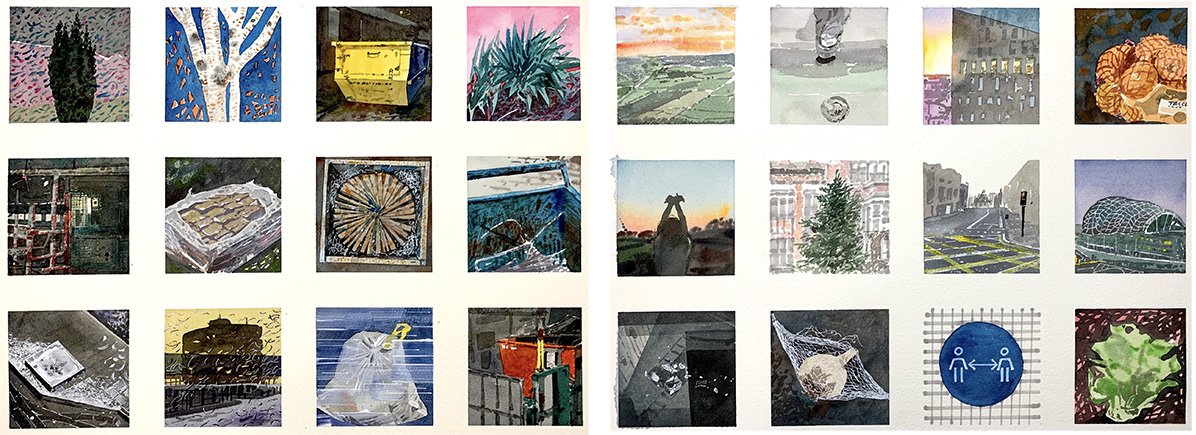
Qirui Tan’s work as an artist and researcher focuses on the relationship between painting and architecture. The research is a cross-disciplinary one which tries to combine fine art with architecture. To be more specific, he focuses on how the methods and ideas of Surrealism can be used to re-examine architecture and space in the context of postmodernism.
The research will involve artistic practice and writing in an attempt to provide a definition of Modelscape: an alternative architectural space consisting of paintings, drawings and architectural installations. The aim is to apply my fine art practice to interdisciplinary purposes and contribute new knowledge to the understanding of the bridges and interstices between fine art, architecture and space.
Qirui Tan’s personal website: https://519328993.wixsite.com/mysite
Hazel Barron-Cooper
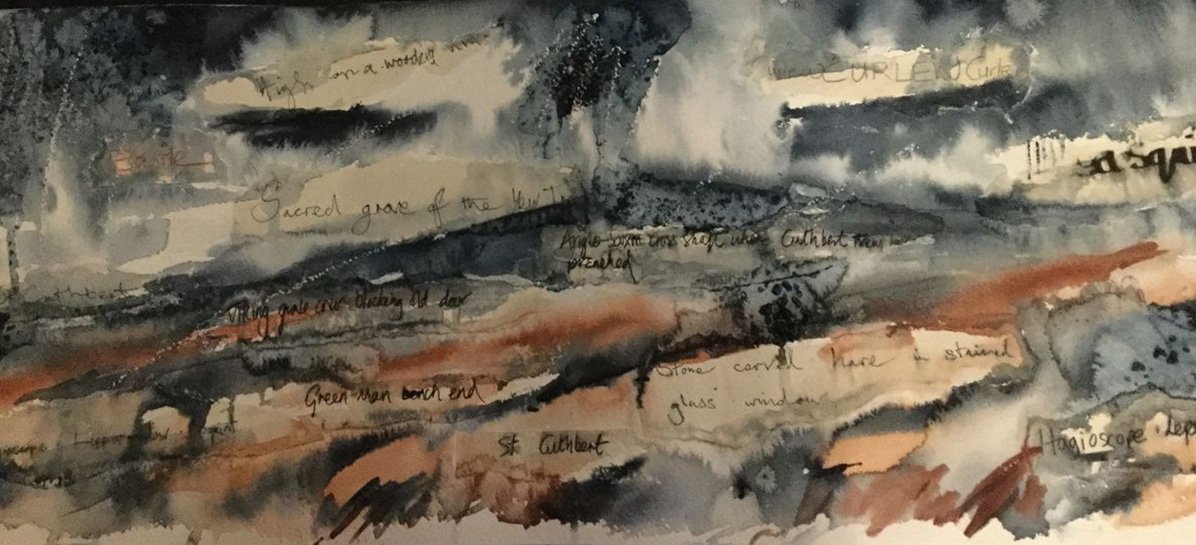
Digging Deep: Unearthing the Genius Loci
This PhD examines the visual representation of sense of place and the human compulsion to observe, record, and map the rural landscape.
It looks at art as a conduit for this compulsion and the ways in which the artist responds to the landscape and local distinctiveness. Can the artist undertake the role of conduit between people and place by instigating community participation, working with local people bringing together the threads of material and intangible culture? Is the artist able to assist in revealing and preserving disappearing dialect words, customs, folklore and other elements which contribute to local distinctiveness?
Ancient sites, place names, weather terminology, dialect for geographical features and occupational terms, customs and folklore particular to a focused area in Northumberland are investigated and recorded.
Three specific sites in Tynedale, on or near Hadrian’s Wall, are the focus of the research: Beltingham, Brocolitia and Heavenfield. The project employs investigating archival research and fieldwork, out walking in the landscape, observing, recording, drawing, painting and writing. The study also explores how artists can work with archaeologists in interpreting significance of place and how visual art can act as an interface.
The role of an artist as a conduit between people and place is also at the heart of the research. As the uniqueness of a place is unearthed and revealed, the local community are involved, consulted and engaged in the process of revealing the layers of their locale. Local people are interviewed, and events are held at community venues where the public will be able to add to the data gathered about their area. By consulting with the community discovering and documenting oral histories, disappearing words and customs, focusing on three ancient sites in the Northumbrian landscape and gathering local knowledge, new information will be added to academic knowledge.
Website: hazelbarroncooperartist.com
Amy Dover
Re-wilding our Imagination.
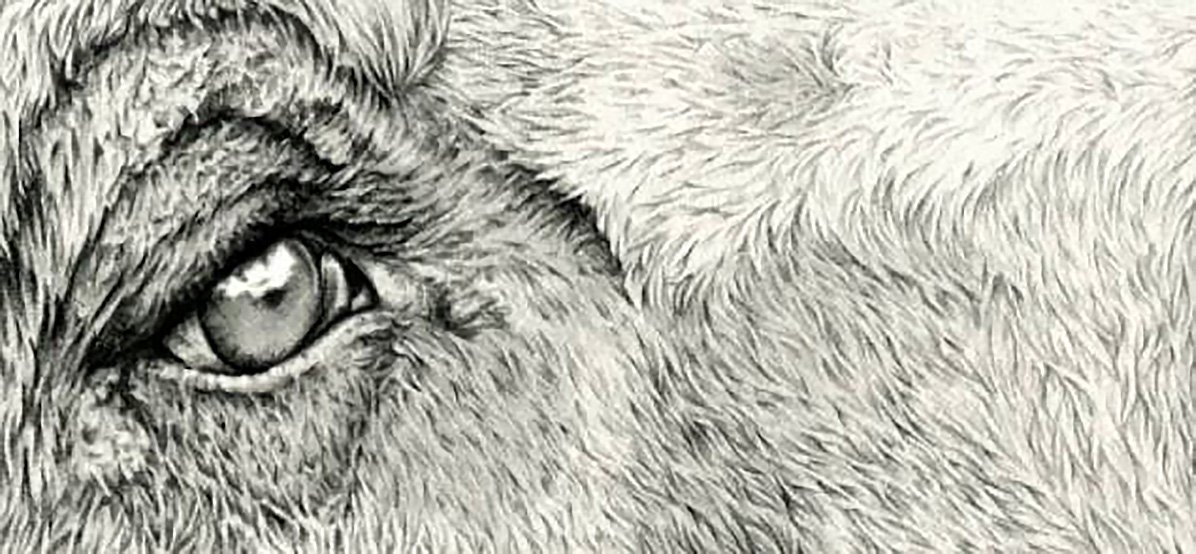
Amy Dover’s doctoral research looks to study the impact and relevance of animal drawing on conservation. This project recognises that myths that are perpetuated within images perpetuate myths within culture and consequently our understanding of other species - thus reinforcing ‘othering’ and ‘speciesism’. We often 'other' non-humans - our attitudes still dominated by the Cartesian perspective that we have dominion over all other species. In the time of mass extinctions and the Anthropocene, the human perception of dominance over nature is dangerous, and could in the end lead to our own extinction.
Questions: How does drawing shape our perceptions of non-human animals and what visual constructs are used to create “speciesism” and aspects of the “other”? How can contemporary drawing generate empathy towards those animals? How does historical drawing embed or change our perception of now extinct animals and how can the creation of new visual representations of animals expose current myths, and help in the advocacy and act of conservation?
Dover has exhibited internationally including LA, London, Sweden, South America, Edinburgh and Newcastle. She also works as an illustrator and has worked for clients such as The Scottish Government, M&S, World Animal Protection, Target and many more.
Yiran Zhang
Building Future Community with Postbugs
Postbug - A multicentric community building.
“We don't merely approach other species as humans; instead, after encountering them, we becoming with each other.”
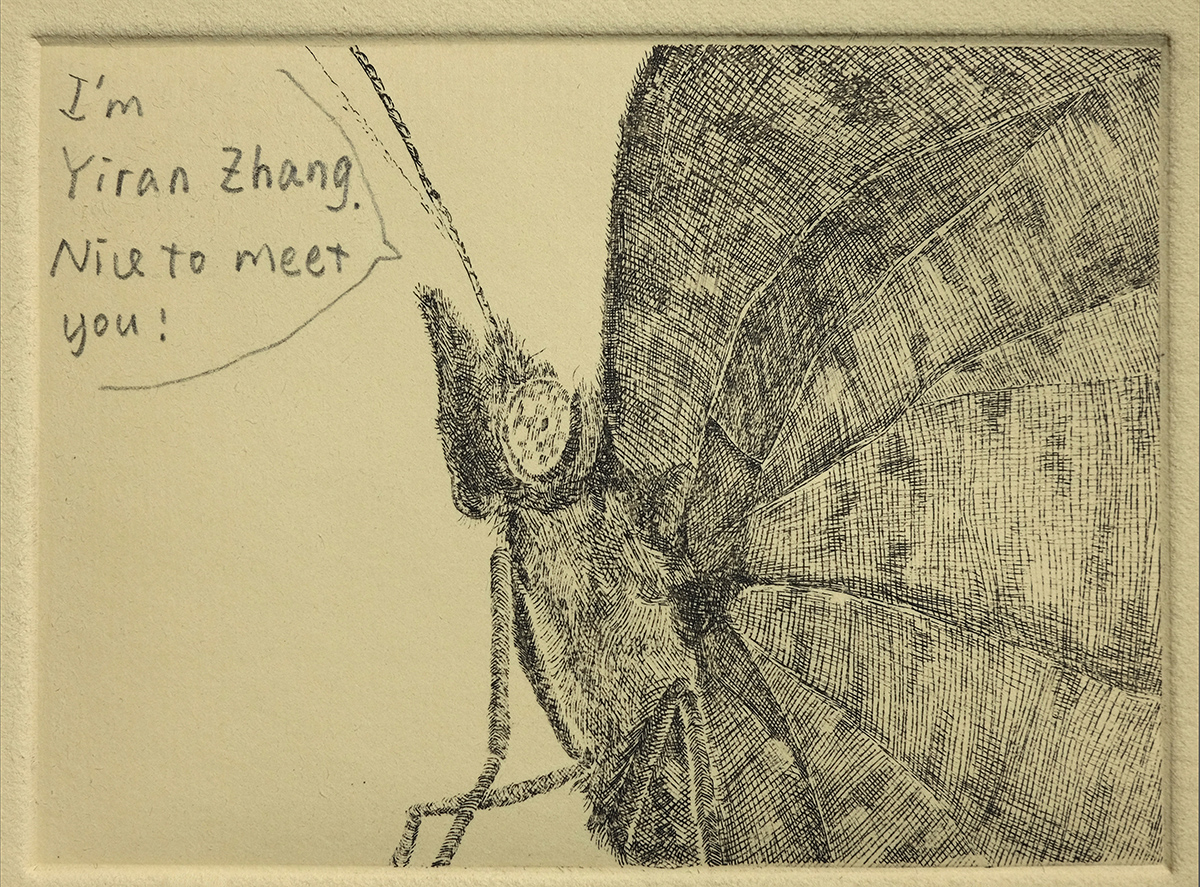
My research explores the concept of Postbug, a term I coined to describe a multi-centric community that envisions symbiotic coexistence between humans and non-human species such as insects. Drawing inspiration from speculative fabulation and participatory practices, my project aims to reimagine the relationships between humans, insects, and more-than-humans through collaborative artistic methods.
The project combines printing, drawing, storytelling, and performance, engaging participants in workshops to create speculative futures that challenge anthropocentric perspectives. By focusing on coexistence and interdependence, I aim to construct an imaginative framework for living together in harmony with other species.
Alice Highet
Screen Time: how can multimedia arts practice imagine new technological modes of interaction, which prioritise care and wellbeing.
Summary of research:
I am interested in The Attention Economy, how Big Tech companies hijack our attention for economic gain, through everyday screen-based technology. This technology negates creative, self-generated, internal states of mind. I am asking if embodied and somatic practices (e.g. meditation, Somaesthetic Design) and theory (e.g. phenomenology, new materialism), can help inform the design of technology to address this. My research explores embodied knowledge, theorised by Donna Haraway as ‘Situated Knowledges,’ which includes feminist and non-human perspectives.
Through my creative practice, I am imagining a multi-sensory technology that encourages embodied experience, allowing space for creative internal states such as daydream and meditation. Some of the ways I do this are by creating multi-sensory installations, alongside participatory embodied smartphone filmmaking workshops.
This interdisciplinary research is across Fine Art, Digital Cultures and Open Lab.
Website: www.alicehighet.com
Instagram: @alicehighet
Hannah Morris
A question of emotion: how does emotion inform subjective narratives, individual expression, and aesthetics in a contemporary painting practice?
This research explores the concept of emotion in a work of art. Specifically, how that notion is developed by an artist, understood and managed by an artist, and read by an audience. The project will attempt to create understanding and perhaps help define what appears to be a new trend in painting today something I call, the ‘emotional narrative’.
Through a desire to better understand my own painting practice and my relationship to my subjective choices and emotional context in which I am working, I examine other contemporary artists working in this manner. These case studies include an examination and reflection upon my own work made during this research period. I attempt to reveal the intentions and mechanisms within this body of abstract based paintings in the broad context of contemporary painting, art history, and art criticism. This research will be asking the questions, does portraying emotion in a work have its own aesthetic tools? Are we still painting in the post-modern? What is the connection between the autobiographical and the emotional in a work of art?
Framing this project as being both of modernism and beyond modernism, the focus will be on contemporary painters working post 1975. Specifically, I will be using the modernist idea of working towards a sensation as a parallel to working towards emotions today. With an investigation into term the post-medium condition (Rosalind Kraus) to progress the idea of using emotion as a new form of medium working against modernism. This also raises the question of the audience in relation to the image, and how the inflection of emotion through gesture, touch and imagery influences an overall Affect for the viewer.
The term post-medium condition refers to the materiality and the context from which a work of art is being made; its reveals to us the ideologies behind our thinking on art and how it references a codex or language seeped in signifiers ingrained in a European tradition.