Irene Brown, Tom Schofield & Alan Turnbull: The Poetics of the Archive
A practice-based research project made in response to the Bloodaxe poetry archive
Project summary
Our research started in response to the aim of unlocking the potential of the Bloodaxe archive. The Bloodaxe archive is one of the most significant resources for contemporary poetry. Newcastle University's acquisition of it has lead to a new awareness of the ways visual practice can produce new insights.
Our research started in response to the aim of unlocking the potential of the Bloodaxe archive. The Bloodaxe archive is one of the most significant resources for contemporary poetry. Newcastle University's acquisition of it has lead to a new awareness of the ways visual practice can produce new insights.
We're a multi-disciplinary team with the aim of:
- creating exciting visual interfaces
- generating new kinds of interaction with archival materials
- adding innovative ways of thinking
across different disciplines including the study of contemporary poetry; creative writing; archive studies and computing science, digital humanities and fine art.
The project produced new insights into participatory research techniques adding to research into models of good practice in this field.
Brown produced new visual materials for an end of project exhibition which was recorded and became a different kind of archival asset from the traditional one, by bringing into play different ideas about context, creative use and interaction.
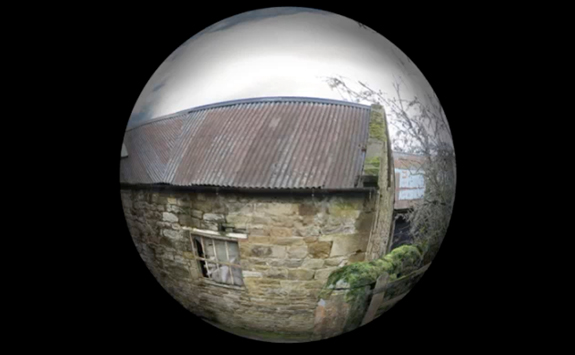
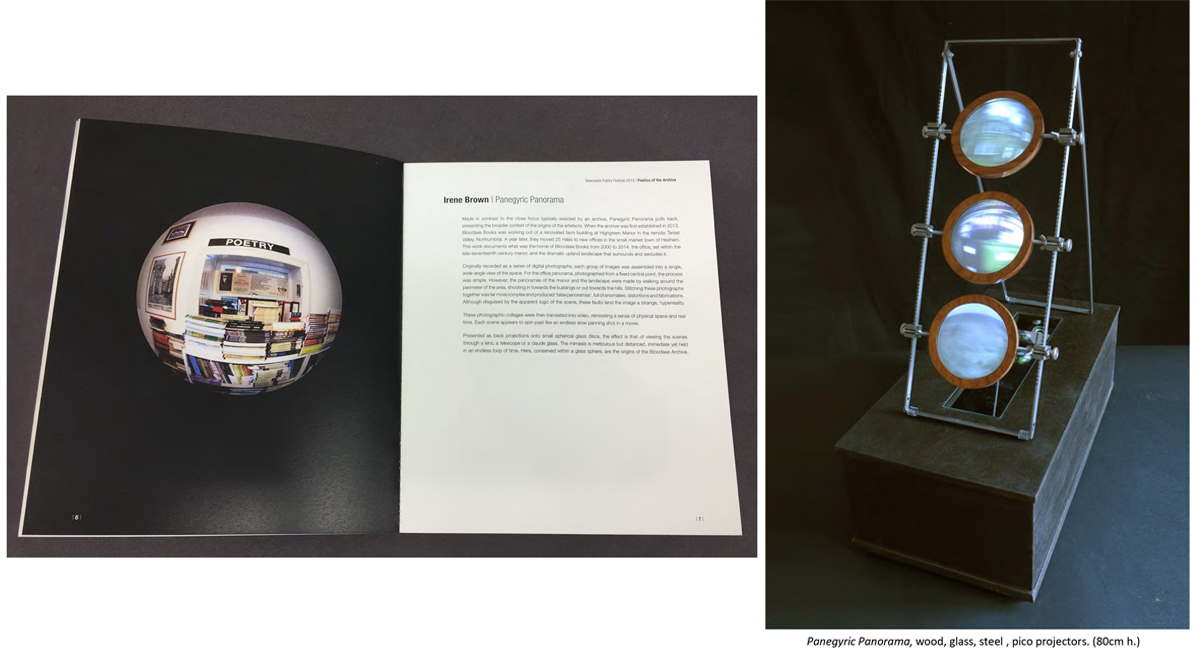
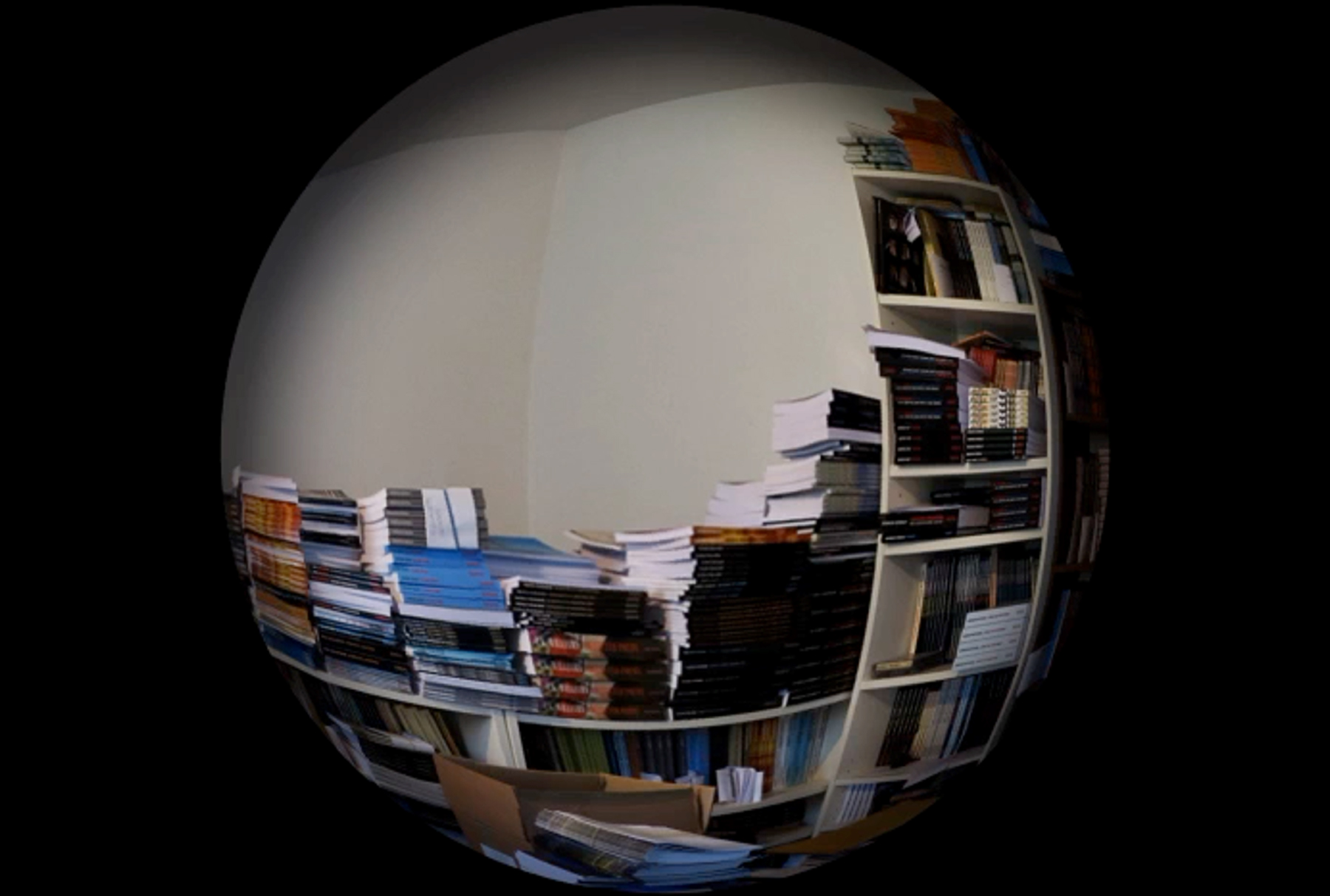
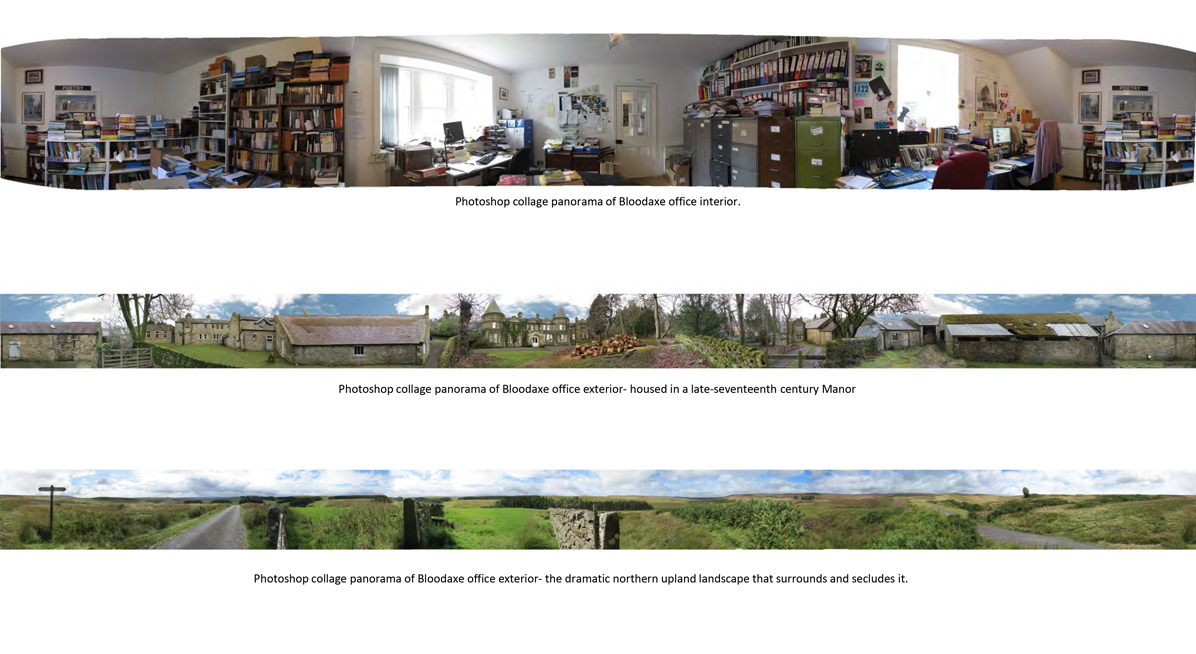
Made in contrast to the close focus typically exacted by an archive, Panegyric Panorama pulls back, presenting the broader context of the origins of the artefacts. This work documents the original home of Bloodaxe Books from 2000 to 2014; an office set within a late-seventeenth century Manor, and the dramatic northern upland landscape that surrounds and secludes it.
Three wide-angle video panoramas of the office space, manor house and surrounding landscape are presented, back projected onto three small spherical glass discs, held within a wooden and steel ‘device of wonder’.
Each scene spins past like an endless slow panning shot in a movie. The effect is that of viewing the scenes through a lens, a telescope or a claude glass. The mimesis is meticulous but distanced, immediate yet held in an endless loop of time. Here, conserved within a glass sphere, are the origins of the Bloodaxe Archive.