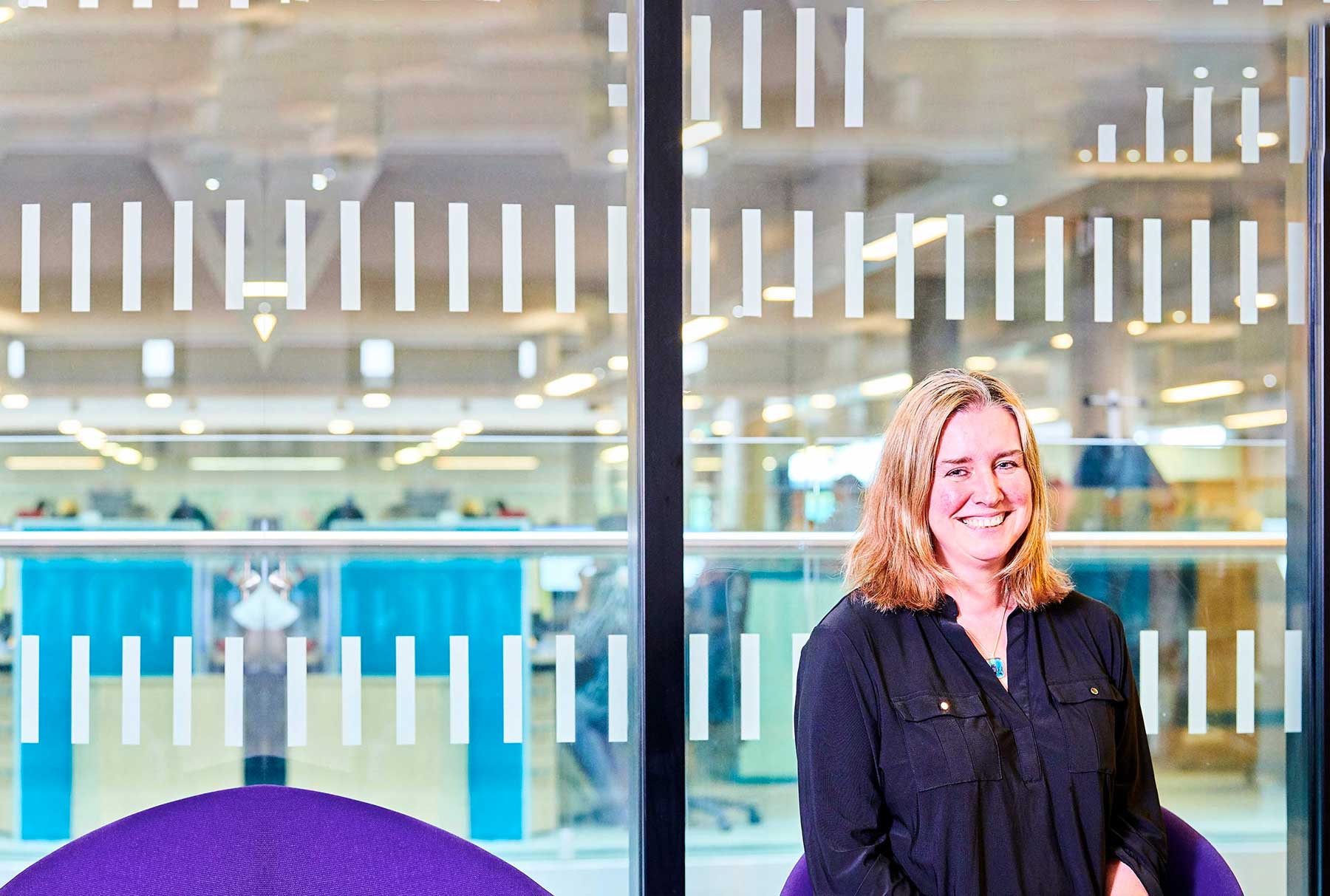
Staff Profile
Dr Joel Wallenberg
Senior Lecturer in Cognitive Science
- Email: joel.wallenberg@ncl.ac.uk
- Address: Room 4.20
School of Psychology
Dame Margaret Barbour Building
Wallace St, Richardson Rd, Newcastle upon Tyne
NE2 4DR
My research and teaching focus on the human language faculty and what linguistic behaviour can tell us about human cognition. I also have interests in risk, linguistic and financial, and maintain work outside of academia in the financial realm.
Please note that I work part-time, and am generally on campus on Wednesdays and Thursdays (subject to some malleability). I also usually check emails on those days. Please email me for meetings, and if you would like to talk on another day, I may be able to accommodate you.
My research focuses on the human language faculty and what linguistic behaviour can tell us about human cognition. I am particularly interested in the application of information theory to syntactic planning, and the adaptation of syntax to noise of all types. I also have interests in risk, linguistic and financial, and maintain work outside of academia in the realm of finance and financial journalism.
Some specific research interests are the following:
The theory of language change, with particular emphasis on the quantitative study of morphosyntactic change; he relationship between language acquisition and change; and the use of information theory to state precise hypotheses about the patterns of change. These patterns can show how the choice between syntactic variants interacts with more general cognitive biases. I am thus also interested in the place of variation in the grammar, and its implications for general cognition and memory. The empirical realm in which I usually work is the Germanic language family, and I often use and develop syntactically parsed corpora in order to do so.
I currently lead a project to develop and use syntactically parsed diachronic corpora of Yiddish and Scots, "Investigating and Treebanking Scots and Yiddish Together (InTSaYT)" (2026-2030) along with colleagues at Newcastle, Edinburgh, and the University of Pennsylvania.
I currently teach PSY2030, "Cognitive Computations: Real and Artificial Intelligence."
This module explores the Computational Theory of Mind, a foundational idea underlying modern cognitive science (including, but not limited to, linguistics). We begin with the question, "What, exactly, is 'computation'?" Students will be able to give a precise answer to this question, and one which holds regardless of whether the computation is performed by a human visual cortex, the human language faculty, a barn owl, or a computing machine. Students will also learn how to mathematically characterise different types of computation, and meaningfully ask what level of computational power is involved in various things humans (and non-human animals) do every day, including language and memory.
We explore both the usefulness and limitations of computing machines (including archaic and modern computers) as a metaphor for understanding the brain and a number of its cognitive functions, not accepting the Computational Theory of Mind uncritically. We will also discuss technical, socioeconomic, and ethical issues surrounding “AI,” and come to a more precise understanding of that problematic term and its historical context.
-
Articles
- Keeble L, Wallenberg JC, Price EE. The evolution of coordination: a phylogenetic meta-analysis and systematic review. Royal Society Open Science 2022, 9(4), 1-18.
- Wallenberg JC, Bailes R, Cuskley C, Ingason AK. Smooth signals and syntactic change. Languages 2021, 6(2), 60.
- Cuskley C, Bailes R, Wallenberg J. Noise resistance in communication: Quantifying uniformity and optimality. Cognition 2021, 214, 104754.
- Hejná M, Ackerman LM, Wallenberg JC. Attention To People Like You: A Proposal Regarding Neuroendocrine Effects on Linguistic Variation. Biolinguistics 2020, 14, 1-20.
- Atkinson BM, Smulders TV, Wallenberg JC. An Endocrine Basis for Tomboy Identity: the second-to-fourth digit ratio (2D:4D) in "tomboys". Psychoneuroendocrinology 2017, 79, 9-12.
- Wallenberg JC. Extraposition is disappearing. Language 2016, 92(4), e237-e256.
- Light C, Wallenberg J. The expression of impersonals in Middle English. English Language and Linguistics 2015, 19(2), 227-245.
- Fruehwald J, Wallenberg JC. A Unified Theory of Categorical Linguistic Variation and Change. Lingua 2015. In Preparation.
- Wallenberg JC. Scrambling, LF, and phrase structure change in Yiddish. Lingua 2013, 133, 289-318.
- Heycock C, Wallenberg J. How variational acquisition drives syntactic change: The loss of verb movement in Scandinavian. Journal of Comparative Germanic Linguistics 2013, 16(2-3), 127-157.
- Wagner S, Wallenberg JC. Translation effects on V2 word order in a conservative Middle English dialect. English Language and Linguistics 2012. Submitted.
- Rögnvaldsson E, Ingason AK, Sigurðsson E, Wallenberg JC. Creating a dual-purpose treebank. Journal for Language Technology and Computational Linguistics 2011, 26(2), 141-152.
-
Book Chapters
- Wallenberg JC. A variational theory of specialization in acquisition and diachrony. In: Anne Breitbarth, Miriam Bouzouita, Lieven Danckaert and Melissa Farasyn, ed. The Determinants of Diachronic Stability. Amsterdam: John Benjamins, 2019, pp.245-262.
- Wallenberg JC. Antisymmetry and Heavy NP Shift Across Germanic. In: Biberauer, T.; Walkden, G, ed. Syntax over Time: Lexical, Morphological and Information-Structural Interactions. Oxford, UK: Oxford University Press, 2015, pp.336-349.
- Wallenberg JC. Language Acquisition in German and Phrase Structure Change in Yiddish. In: Galvez, C., Cyrino, S., Lopes, R., Sandalo, F., Avelar, J, ed. Parameter Theory and Linguistic Change. Oxford: Oxford University Press, 2012, pp.60-76.
-
Conference Proceedings (inc. Abstracts)
- Woods R, Heim J, Wallenberg J. Input beyond the Threshold: Explaining Auxiliary Initial Assertions in a British English Early Talker. In: Proceedings of the 39th West Coast Conference on Formal Linguistics. 2024, University of Arizona, Tucson AZ [online]: Cascadilla Proceedings Project, Somerville, MA.
- Ingason AK, Loftsson H, Rognvaldsson E, Sigurdsson EF, Wallenberg J. Rapid Deployment of Phrase Structure Parsing for Related Languages: A Case Study of Insular Scandinavian. In: Ninth International Conference on Language Resources and Evaluation (LREC ’14). 2014, Reykjavik, Iceland.
- Heycock C, Wallenberg J. How variational acquisition drives syntactic change. In: 27th Comparative Germanic Syntax Workshop. 2013, Connecticut, U.S.A: Springer Netherlands.
- Fruewald J, Gress-Wright J, Wallenberg JC. Phonological Rule Change: The Constant Rate Effect. In: 40th Meeting of the Northeast Linguistic Society (NELS). 2009, Massachusetts Institute of Technology, Cambridge, MA.
- Dredze M, Wallenberg JC. Icelandic Data Driven Part of Speech Tagging. In: 46th Annual Meeting of the Association for Computation Linguistics (ACL). 2008, Columbus, Ohio, USA.
- Wallenberg JC. English Weak Pronouns and Object Shift. In: 26th West Coast Conference in Formal Linguistics (WCCFL). 2007, University of California, Berkeley: Cascadilla Press.
- Wallenberg JC. The Story of the American –self: a case study in morphological variation. In: 28th Annual Penn Linguistics Colloquium. 2005, Philadelphia, PA: University of Pennsylvania.
- Wallenberg JC. Formal linguistics meets the Boojum: metrical variation in Lewis Carroll’s verse. In: 31st Annual Meeting of the Berkeley Linguistic Society (BLS). 2005, University of California, Berkeley.
-
Report
- Dredze M, Wallenberg JC. Further Results and Analysis of Icelandic Part of Speech Tagging. Technical Report MS-CIS-08-13. Philadelphia, Pennsylvania, USA: Department of Computer and Information Science, University of Pennsylvania, 2008. Department of Computer and Information Science Technical Report Series MS-CIS-08-13.
-
Research Dataset/Database
- Wallenberg JC, Ingason AK, Sigurdsson EF, Rognvaldsson E. Icelandic Parsed Historical Corpus (IcePaHC). 2011. University of Iceland, 1 million words.