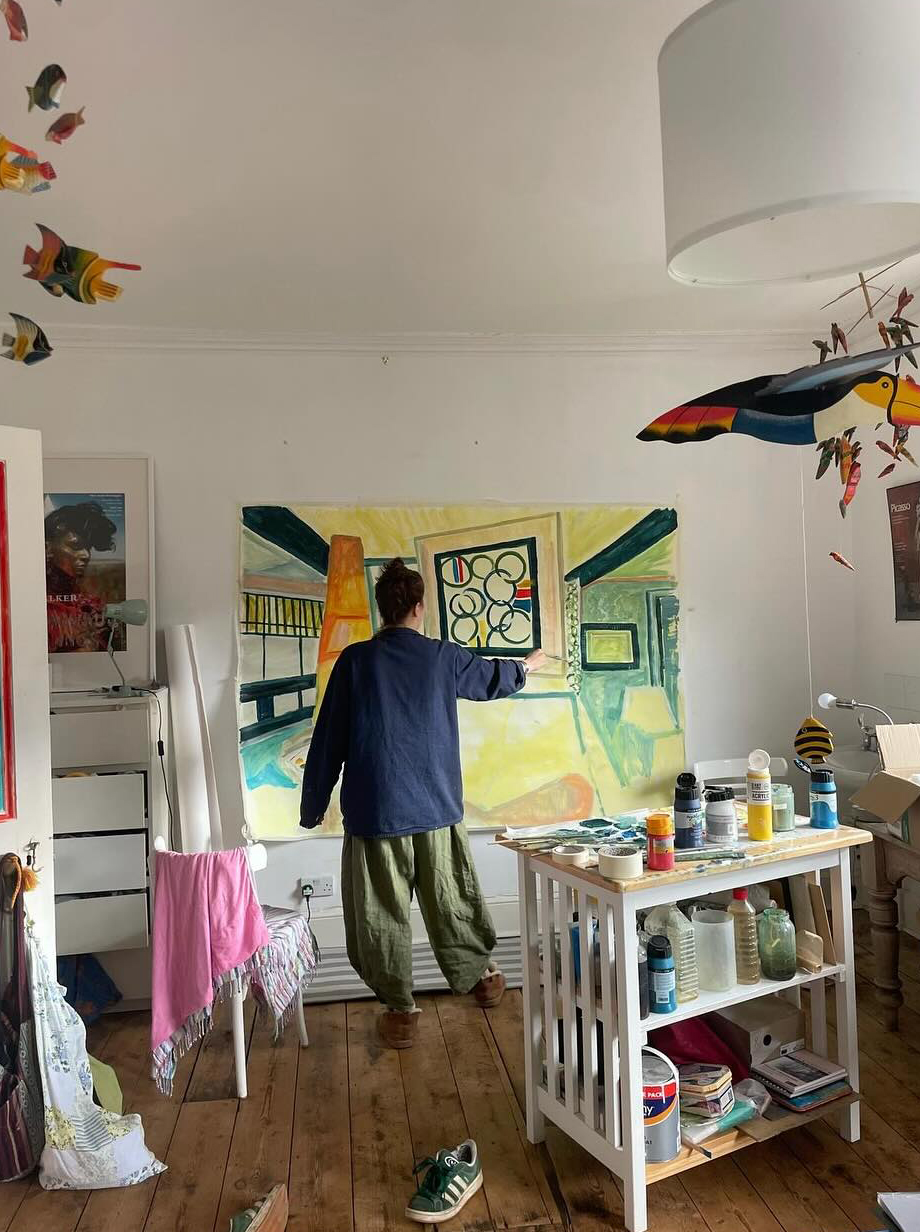
Undergraduate study in Fine Art
Why study Fine Art at Newcastle?
- Join a supportive and creative environment with a committed team of academics dedicated to your individual creativity
- Exhibit your work and collaborate with other artists and art professionals
- Work in some of the best-resourced facilities in the UK, with your own studio space
- Gain the professional skills and tools needed to thrive on our innovative ‘LifeArtWork’ programme
- Our graduates are successful, with many making significant contributions to the world of art
- Learn from a range of visiting global artists, curators and art theorists at our weekly Visiting Speakers Programme
- You can study abroad with a partner institution
- Study in a beautiful, historic city. Newcastle is a dynamic, creative and exciting city, with many galleries and a thriving art scene
The facilities are amazing, enhanced by tutors and technicians who always seem ready to help.
More about our Fine Art BA Honours
All students who study fine art are allocated personal studio space during their studies. You'll be in your studio at least four days each week. You will be taught in your studio by a range of practising artists working across painting, sculpture, drawing, performance, film and video, and installation. The majority of your teaching will be in the form of one-to-one tutorials in your studio space, along with group and cross-year crits.
The Art History component of the course provides you with a grounding in the history and theory of art and an awareness of the relevance of these critical studies to the contemporary artist. Art history teaching helps you to place your studio work into context. Doing so helps you to appreciate the complex relationship between making art and the way art is understood, interpreted, displayed, and discussed. This is complemented by our series of Visiting Artists talks.
The range of teaching methods in Art History - lectures, seminars, individual tutorials, presentations, gallery and museum visits - develop your ability to articulate ideas. We assess Art History modules through the presentation of short essays. In the third year you'll research and present a dissertation on a subject related to your own particular interests.
We admit 65 students per year to study Fine Art, and we very much encourage local, national, and international applications. Our students are very diverse and come from a wide range of educational and other backgrounds.
Stage one
In semester one of your first year, you'll do a series of experimental projects in painting, printmaking, drawing, performance/video and sculpture. These are introduced by a wide range of staff.
You're taught through:
- regular one-to-one tutorials with your studio tutor
- group discussions
- workshops
- technical demonstrations
- field trips and visits
that introduce you to innovative working methods and help expand your experience and develop new skills.
From the beginning of semester two onwards, you will have an allocated studio tutor, and will initiate and develop your own projects with one-to-one tutorial guidance and technical support.
Art Histories 1 and 2 gives you an introduction to a variety of perspectives on key areas within the history of art. Art History occupies approximately one day per week and is taught through lectures, seminars and short essays.
In the LifeWorkArt part of the course, we arrange visits to galleries, studios and art centres in the region. You can take part in exhibitions and international study visits. In the studio, you will have very regular meetings with first-year teaching staff and you will have academic guidance through:
- Individual and group tutorials
- Workshops
- Seminars
- Studio 'crits'
The year ends with an exhibition – usually in an external venue in the city. The students take responsibility for all the organising and publicity around this show and it is always an exciting end to the year.
Stage two
In year two you take studio-based practice modules of 40 credits in each semester, together with a 20 credit Art history module in each semester. The modules are designed to help you continue to develop and extend your knowledge, skills and ideas.
Regular one-to-one tutorials with your allocated studio tutor are accompanied by group critiques, peer reviews, seminars, forums, demonstrations and over 20 optional workshops. There are also weekly visiting lecturer programme sessions and additional tutorials with any member of staff via the ‘surgery’ system.
You'll receive a varied programme of individual and group tutorials; cross-year and cross-discipline crits will help you develop the ability to subject your own practice and that of others to increasingly rigorous criticism.
You'll further develop your ability to work independently and make informed decisions about appropriate working methods, materials and technical skills.
You'll be asked to begin to contextualise your practice in relation to the contemporary art world. You can, if you wish, specialise in a particular studio discipline at this point. Or you can continue to explore possibilities and combine several ways of working.
You'll also be able to select one complementary practice strand in each semester. These strands equip you with an additional technical, conceptual and theoretical understanding.
In Art History, you choose one module per semester from the very varied four on offer.
You will also have opportunities to exhibit in the city, to undertake projects, and to apply for funding for projects and for travel.
Stage three
In year three you'll continue to undertake your intensive studio practice and research. You can also apply to study on our Exchange Programme for one semester at one of our partner institutions abroad.
In Art History, you'll begin to develop your dissertation. Your dissertation topic will be determined through discussing your ideas with art history staff. You'll be assigned a dissertation tutor, and wherever possible, this will be someone whose expertise is appropriate to your dissertation topic. You'll have tutorial discussions throughout the planning and writing of the dissertation. These help you to organise, clarify and structure your study.
Third year students can also determine the balance between studio work and art history, and if you wish, you can take extra Art History modules in addition to your dissertation.
Stage four
The main aim of year four - your final year, is to combine your learning and experience, and to build a substantial and coherent body of artwork for the Degree Show. You can also choose to undertake additional modules, such as in Art Writing, in Curating, and in Career Development.
You'll have regular timetabled tutorials and crits with your final year supervisor during each semester, as well as tutorials with Visiting Speakers and other members of fine art staff, which are available on an ‘open surgery’ basis.
We run studio-specific and cross-studio tutorial teaching; this includes a weekly fourth year forum, where students present ongoing studio work for discussion with the rest of their year group and tutors.
Your future plans for study will be discussed, as will be your future plans for different careers in, or related to the art world. The Career Development module lets you do work-related learning. You can do this in a variety of different contexts, both on and off the University campus. An annual LifeWorkArt Conference is organised by staff and students; this is run in collaboration with the three other fine art departments in the region.
The final year ends with the Degree show, which is shown throughout the Fine Art Building and in the Hatton Gallery. It is an opportunity to see the strengths of each and every student, and is a highlight of Newcastle’s ‘art calendar’ - attracting hundreds of visitors.