
Centre for Food Systems
We study and provide solutions for food systems across the globe.
Our goal
Food systems are the interconnected networks involved in producing, consuming, and disposing of food. These networks consist of:
- people
- environments
- technologies
- institutions
- processes
They are shaped by environmental, social, economic, cultural, and political forces. This makes these systems very complex. They need interdisciplinary approaches to problem-solving.
Our Centre brings together world-leading research and cross-sector collaboration. We aim to address some of the most urgent challenges facing global food systems today.
Our mission is to co-produce real-world, impactful solutions through collaboration with partners across government, industry, and civil society.
Why this matters
Food systems are under unprecedented pressure from:
- climate change
- geopolitical instability
- rising costs
- environmental degradation
Governments, industry, and consumers are also prioritising innovation in agri-food systems. They aim to meet changing societal demands and policy priorities. There is a growing demand for solutions that deliver food security, sustainability, resilience and economic growth.
The Food Systems NUCoRE positions Newcastle University at the forefront of this transformation. We are able to respond strategically to emerging opportunities and global challenges.


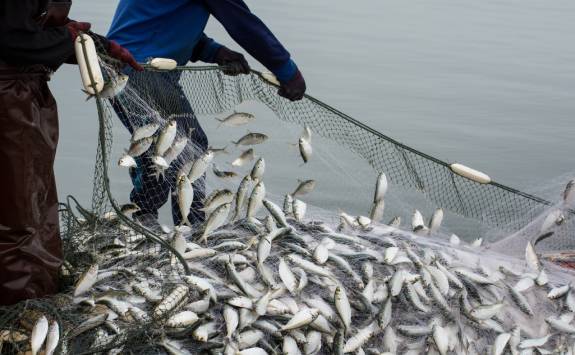
Our strengths
Newcastle University has a unique combination of expertise spanning the entire food system - from farm to fork. Our researchers are leaders in areas including:
- agri-tech and digital innovation (AI, robotics, IoT)
- animal health and welfare
- plant breeding, crop health and protection
- sustainable soils and regenerative agriculture
- food system resilience and supply chains
- food poverty and inequality
- climate change adaptation, mitigation and carbon management
- circular economy and food waste valorisation
We also have a strong track record of delivering large-scale, interdisciplinary research projects. These are funded by major organisations including:
- UKRI
- Innovate UK
- Horizon Europe
- global foundations
Leadership
Jane Midgley - Co-Director and Reader in Urban Social and Economic Practice
School of Architecture, Planning and Landscape, Faculty of Humanities and Social Sciences
Yit Arn Teh - Co-Director and Professor of Soil Science
School of Natural and Environmental Sciences, Faculty of Science, Agriculture and Engineering
Our latest news

First kidney transplant through Newcastle organ assessment hub
Surgeons have performed their first life-saving kidney transplant through the Newcastle Organ Assessment Hub (NOAH) based at the Freeman Hospital.

Researchers funded to cure – rather than manage – inflammatory disease
Researchers from Newcastle University will join international partners in a bid to transform how chronic inflammatory disease is treated.
Newcastle University academics welcomed to Academy of Social Sciences
Three Newcastle University academics have been awarded Fellowship of the Academy of Social Sciences in recognition of their contributions to the field.