Scans reveal lithium acting in the brain
Scans reveal lithium acting in the brain
Published on: 28 June 2026
A revolutionary scanning technique has revealed that lithium MRI is a powerful tool for studying how the drug interacts with the brain and could offer more personalised treatment for bipolar disorder.
This paves the way for the for the medical community to better understand lithium’s effectiveness and agree the best prescribing advice.
The scans were used for the first time to investigate lithium dosing schedules in bipolar disorder in an innovative study conducted by researchers at Newcastle University, UK, and Technische Universität Dresden, Germany. It is published today in The Lancet Psychiatry and reveals:
- For once and twice daily dosing, blood and brain lithium levels did not differ at the standard 12 hours post-dose monitoring time point
- Brain lithium closely matched blood lithium levels across the day, and were more stable with twice daily dosing
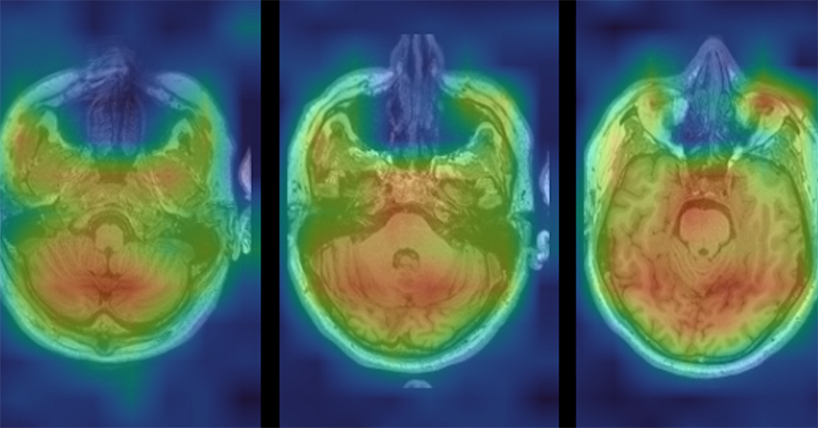
- Brain lithium levels were higher in white matter than grey matter
Lithium is an effective long-term treatment for bipolar disorder, but prescribing practice varies and it is common for it to be given either once or twice daily. Whilst both practices are equally effective, there may be differences in side effects because once daily use results in higher night-time peaks but lower daytime levels in the blood. It has been argued that these peaks and troughs are smoothed out when lithium is absorbed by the brain, but this study shows that brain and blood levels are closely matched across the day.
For medical teams, the finding of comparable brain levels at the standard 12-hour post dose measurement is reassuring and will inform future guidance on monitoring requirements. The differences seen in brain lithium patterns between the two regimens may increase choice, allowing prescribers and patients to consider the option that best fits an individual’s needs and preferences such as convenience, treatment adherence, individual side effects and natural daily body rhythms (circadian processes).
Dr David Cousins, Director, Newcastle Magnetic Resonance Centre, Clinical Senior Lecturer at Newcastle University and Honorary Consultant Psychiatrist, CNTW NHS Foundation Trust said: “Lithium is the most effective long-term treatment for bipolar disorder, preventing episodes of illness and reducing the risk of suicide. Not everyone responds to lithium, but for those who do, it is important to individualise treatment to get the best out of this medication. This study shows that lithium MRI is a powerful tool for studying how the drug interacts with the brain and could support more personalised treatment in future.
“This may be the oldest drug available for bipolar disorder, but our findings which provide a better understanding of how it works in practice mean it should remain at the forefront of developments.”
Method
The study employed 7Li MRI, a multinuclear imaging technique developed at Newcastle University and established in centres across Europe in conjunction with CEA Neuropsin Paris as part of the Horizon 2020 R-LiNK initiative. Conducted in Dresden, 41 white European patients who were stable (euthymic) on lithium treatment (20 once-daily, 21 twice-daily) underwent three consecutive 7Li MRI scans and matched serum sampling over a 10-hour period. This is the largest 7Li MRI study to date, and the first to perform repeated measures in bipolar disorder.
Professor Peter Thelwall, Professor of Magnetic Resonance Physics and Director, Centre for In Vivo Imaging at Newcastle University said: “This new imaging technique allows us to directly visualise a drug in the brain and address important clinical questions. Our research program is also driving advances in the capability of this technique to maximise the scope of its application for patient benefit."
The findings, from a collaboration between expert centres, represent a key output from a network of centres recently equipped with 7Li MRI.
The work received funding from the Baszucki Brain Research Foundation and the Deutsche Forschungsgemeinschaft (DFG, German Research Foundation).
Reference: Brain lithium temporospatial kinetics in bipolar disorder: a repeated-measures 7Li MRI study of dosing regimens in Germany. Ritter et al. The Lancet Psychiatry. DOI: 10.1016/S2215-0366(26)00153-7