.jpg)
Is a PhD for me?
PhD study is open to anyone with curiosity and a commitment to research.
Discover what it involves and why it might be the right choice for you.
Who can study for a PhD?
Considering a PhD is an exciting step that comes with questions and new challenges to navigate.
Our students and staff come from diverse backgrounds, creating a vibrant and inclusive research community. At Newcastle, we take a well-rounded view of each applicant, valuing not just your academic background but your wider skills, experiences and motivation. Research shows that these are all predictors of success.
There's no single route into a PhD - some progress straight from earlier studies while others return after a time away from academia.
Doctoral study is not only suited to those with extraordinary academic ability. Success also depends on qualities such as curiosity and commitment.
If you have lower entry qualifications or alternative experience, please contact us to discuss.

What is a PhD?
A PhD refers to a Doctor of Philosophy degree. It is a postgraduate research degree awarded by universities in the UK, and is recognised as a mark of advanced knowledge in a particular subject. Despite the name, it is offered across almost all disciplines, not just philosophy or humanities.
Most PhDs take three to four years of full-time study or can be part-time over seven years. This can also vary depending on the field of research and the individual's progress. During a PhD, students conduct an original research project under the guidance of a supervisor together with a wider team of academic advisers.
What's the difference between an MPhil and a PhD?
An MPhil (Master of Philosophy) is a research-only Master's degree designed to help you develop as an independent researcher. It’s offered in most subject areas and involves carrying out a substantial research project leading to a thesis of around 40,000–50,000 words. You'll typically undertake activities similar to those of a PhD student, but on a smaller scale and over a shorter timeframe. Your project may include a modest original element, and programmes usually take around one year full-time or two years part-time. For some students an MPhil can also act as a stepping stone toward a PhD. To apply you'll usually need to submit a research proposal and find a supervisor, but always check the specific course requirements.
What is studying a PhD really like?
A PhD is a very different to other degrees, and every PhD journey is unique.
PhD students normally write a thesis or dissertation based on their research findings. They must defend their research in front of an examination committee (this oral test is called a viva). The thesis is assessed, and if it meets the required academic standards, the candidate is awarded a PhD degree.
There may be an element of taught provision included but this is dependant on your subject area and your own personal development needs. An Integrated PhD combines taught Master's-level modules with research. Researcher development training is also included, to ensure you have the skills required for research.
Most students spend their time balancing independent research with collaborative activities. On a day-to-day basis, you might:
- read and explore current literature in your field to build expertise
- design and carry out research through experiments, data collection, fieldwork, or theoretical analysis
- write and reflect including drafting sections of your thesis, research notes, or journal articles
- meet with your supervisor(s) regularly to discuss progress, challenges, and next steps
- engage with peers through research groups, seminars, workshops, or informal discussions
- develop professional skills such as presenting at conferences, teaching, or contributing to collaborative projects
While a PhD involves a great deal of independence, it’s far from a solitary pursuit. You'll also become part of a wider academic community. You'll be sharing ideas, receiving feedback, and working alongside fellow researchers across a global network.
University life extends beyond academics. It’s a transformative journey that teaches independence, time management, self-discovery, networking, adaptability, and practical skills. These lessons have worked to shape holistic growth and enhance my employability.
Eleasha
PhD Geography
Meet our PhD students
Discover what life as a researcher at Newcastle is really like.
Through their stories you’ll see how a PhD here offers the freedom to explore your research interests with the support of a close and collaborative community.
Our talented students are redefining what’s possible through world-changing research.

Where a PhD can take you
A PhD can lead to a wide range of careers - both inside and outside academia.
Doctoral study prepares you for university teaching and further research, but the skills you develop extend far beyond. There are many options:
- academic and research careers: traditional paths include postdoctoral research, university lecturing and leading independent research projects
- industry and private sector: companies value PhD graduates for their problem-solving, analytical and project management skills
- government and policy: PhDs contribute to evidence-based policy, research institutions, and think tanks
- entrepreneurship and innovation: the ability to identify gaps, design solutions and manage complex projects is a highly sought-after skill for start-ups or innovation-led roles
- specialised professions: depending on your field, a PhD can lead to expert consultancy, writing, public engagement, or leadership roles, NGOs, or international organisations
A PhD allows you to develop advanced skills, expertise and independence that you can apply in diverse, meaningful ways.
What to think about before you apply for a PhD
There's lots to consider before deciding to apply for a PhD, including:
- your motivation: why do you want to do a PhD?
- your research idea: is it original and feasible?
- your supervisor: have you found someone whose expertise fit your goals?
- your funding: how will you cover tuition, research costs, and living expenses?
- your time commitment: are you ready for several years of focused, independent work?
- your skills: do you have (or can you build) the research, writing, and critical-thinking skills needed?
- your future plans: how will a PhD fit into your long-term career path?
- your support network: who can support you throughout the process, and how might you build peer and mentor relationships during your PhD?
- your time commitment: are you ready for several years of focused, independent work? Can you complete your proposed project within the timeframe of 3-4 years full time or 6-8 years part time?
If you’re unsure about any of these points or need further guidance, we’re here to help you every step of the way.

Finding your supervisor
Finding a supervisor is a really important step in your application journey. You'll work closely with your supervisor as they guide you through your research.
Our subject areas and academic colleagues are grouped by Schools. Each School has their own webpage where you can find information about their research groups and individual staff.
Take some time to browse these pages to find someone whose expertise aligns with your research interests. A good match can make all the difference in your PhD experience.
Once you've found a supervisor who feels like a good fit, reach out to them. Take the opportunity to introduce yourself and your research interests.
If you're interested in an advertised project on our funding database, there will be a named supervisor listed.
.jpg)
.jpg)
Our students


Simin from China
Sociolinguistics PhD
My supervisors have been incredibly supportive and open to discussion, which makes a big difference when you’re working on a long-term project.


Lukman from Nigeria
Mechanical and Systems Engineering PhD
Newcastle University really welcomes international students. It’s clear that the institution strongly values inclusion and diversity.
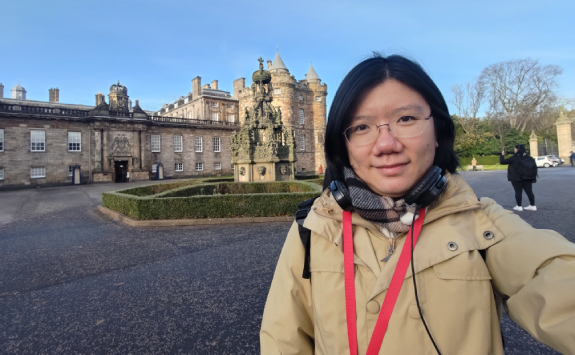

Alice (Shyun-Yih) from Taiwan
Modern Languages PhD
I’m part of the Taiwanese Society as I think it's good to connect with other students from my home country and share information about studying.


Ali from Iraq
Archaeology PhD
The city is more beautiful than described and the people are very kind.
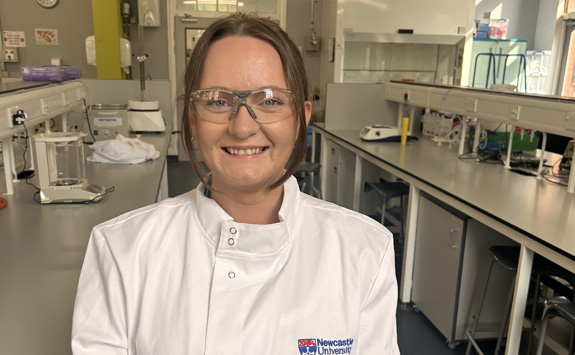

Lucy May from United Kingdom
Pharmaceutical Sciences PhD
Newcastle University gave me research opportunities, supportive supervisors, and the skills needed to work in both academia and industry.


Vaishnavi from India
Chemical Engineering PhD
Choosing the UK felt like a step that would not only strengthen my academic journey but also support my long-term career development.


Farhad from Iran
Electrical and Electronics Engineering PhD
Newcastle University has helped me shape a clear vision for my future by giving me the knowledge, confidence, and research experience

Fulong from China
Computer Science PhD
I chose Newcastle University because of its strong research profile in machine learning and the opportunity to work with leading academics.

Hilary from United Kingdom
Population Health Sciences PhD
I chose to study at Newcastle because I wanted to pursue a PhD at an outstanding institution with a reputation for excellence in health research.