
The future of work is more human than ever: How debating supercharges the skills employers value
Ahead of their 3-part debating CPD course starting this semester, NCL in Action partners Debate Mate share why learning how to debate effectively is an essential practice needed to thrive in the future of work.
6 January 2026
Why the future of work belongs to human skills – not AI – and how debating can help graduates level-up their career journey
The story we’re often told about the future of work is all about technology: automation, AI, data. But look a little closer and a different picture emerges. As AI takes over tasks that rely on logic, memory and precision, the skills that are rising in value are the ones that can’t be automated: empathy, clear communication, adaptability, collaboration and leadership. Soft skills are fast becoming “the new global currency”, not a nice-to-have, but the deciding factor in who progresses and who plateaus.
The numbers reflect this shift. Global investment in soft skills training is projected to keep growing steadily over the next decade, as organisations realise that technical skills may get graduates into the room, but it’s human skills that determine what happens once they’re there.
For Newcastle University alumni navigating careers across sectors – from healthcare to finance, law to tech – that raises a crucial question: how do I ensure I continually develop these skills?
Debate: a training ground for human skills
When most people hear “debate”, they picture a podium, a timer, maybe a slightly intimidating adjudicator. In reality, debating is less about winning an argument and more about rehearsing the exact skills modern workplaces can’t do without. Here are 5 things that are really being trained every time someone stands up to speak, listens to an opponent, or rebuilds a case on the fly.
1. Critical thinking under pressure
Debaters learn to interrogate assumptions, sift evidence and build arguments. They practice asking: What’s the claim? What’s the proof? What’s missing?
There’s growing evidence that this practice translates into sharper thinking more broadly. Students who participate in structured debating have been shown to score significantly higher on critical thinking assessments than their peers – in some cases up to 40% higher.
In the workplace, that looks like being the person who spots the flaw in the business case before it derails a project, or who can weigh competing priorities and make a reasoned decision instead of defaulting to “the way we’ve always done it.”

2. Empathy and perspective-taking
Good debaters don’t just argue for their side; they can argue against it, too. Being asked to build the best possible case for a position you personally disagree with forces you to step into someone else’s worldview.
That kind of perspective-taking is strongly linked to better civic engagement and more inclusive workplace cultures. When you’ve repeatedly practised saying, “I still disagree, but I genuinely see where you’re coming from,” it becomes much easier to work with colleagues, clients or stakeholders whose instincts are very different from your own.
3. Communication that actually lands
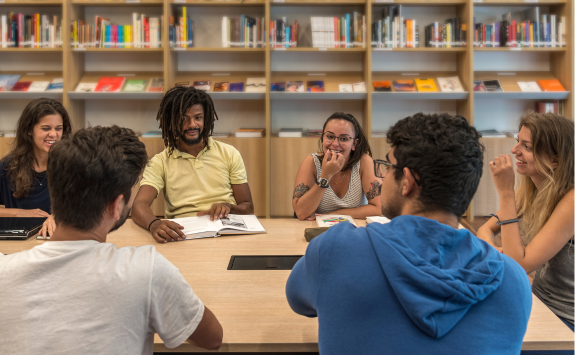
Debating is a crash course in making complex ideas simple, memorable and engaging. You learn to find the core message in a mess of information, structure it clearly, so people don’t get lost, and adapt your language to your audience in real time.
Those are precisely the skills employers say many graduates are missing: they arrive with technical competence but struggle to present ideas clearly, handle pushback in meetings or speak up with confidence.
4. Collaboration and disagreement done well
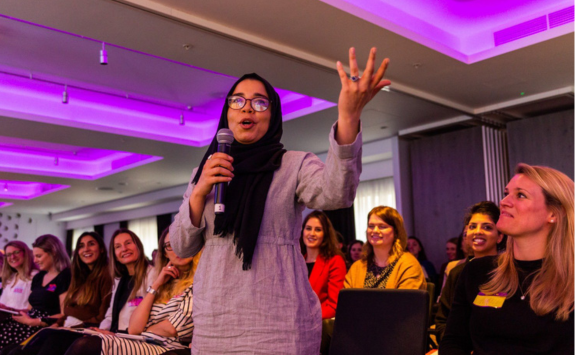
Behind every strong speech is a team who have divided research, challenged each other’s arguments and built a coherent line together. Crucially, debate normalises structured disagreement: ideas clash, not people. Participants practice separating the argument from the individual, and framing conversations as joint problem-solving rather than point-scoring.
In workplaces where 70%+ of employees admit they hold back honest views to avoid conflict, that’s a game changer. Teams that can disagree constructively tend to make better decisions, share knowledge more openly and innovate faster.
5. Confidence, resilience and adaptability
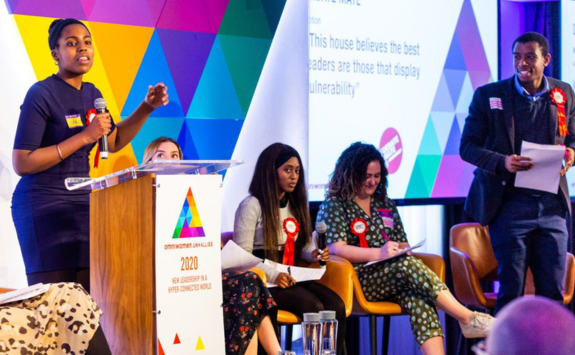
Standing up to speak in front of others is never entirely comfortable. That’s the point. Debate offers repeated, low-stakes risk exposure: the risk of being challenged, of changing your mind, of not having the perfect answer yet.
Over time, participants build what we at Debate Mate call “applied confidence” - not bravado, but the calm knowledge that even if you’re nervous, you can still think, respond and contribute. In a world of hybrid work, constant change and career zig-zags, the ability to stay composed under pressure and adapt quickly is one of the most transferable skills you can have.
Why we need disagreement - and why debate is the safest place to learn it
There’s a paradox at the heart of modern communication. On the one hand, we’re told we live in an age of outrage and polarisation. On the other hand, researchers are increasingly worried about “disagreement avoidance” - the culture of false harmony where people bite their tongues, meetings end with artificial consensus, and underlying tensions never surface.
Surveys show that large majorities of employees say they routinely alter how they speak at work to avoid conflict, and hold back opinions for fear of how they’ll be received. That might feel polite, but the cost is real: weaker decisions, missed risks, and a rising sense of burnout as people quietly disengage.
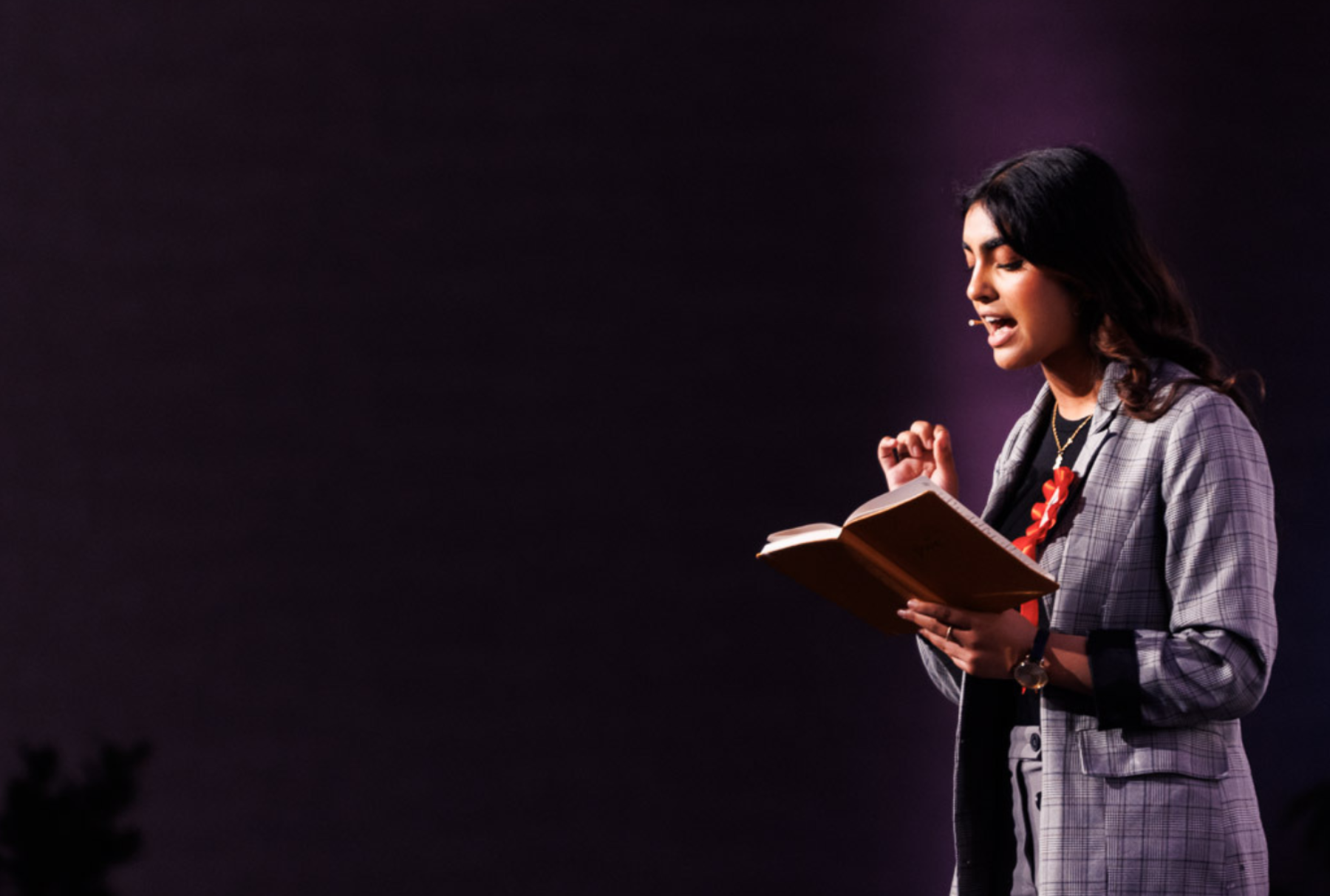
Debating offers an antidote. It treats disagreement not as a threat, but as a discipline. You learn to challenge ideas without attacking identities, listen actively, and not just plan your next argument, ask questions that lower defences instead of raising them, and pause and reset when things get heated, rather than walking away entirely.
In other words, debate rehearses the exact behaviours that drive psychological safety – the belief that you can speak up without being punished or humiliated. And psychological safety is one of the strongest predictors of team performance we have.
Debate rehearses the exact behaviours that drive psychological safety – the belief that you can speak up without being punished or humiliated.
From seminar room to stand-up meeting: what this means for Newcastle graduates
Whether you’re a recent graduate in your first role or a seasoned alum leading teams, here are four ways to practice these
human skills in your every day:
Turn disagreements into mini-debates
Next time you and a colleague see a problem differently, try a simple three-step format: define the assumptions on each side, swap roles and argue the other person’s case as fairly as you can, then identify one insight you’re taking away.
Build “better disagreement” into meetings
Nominate a rotating “devil’s advocate” whose job is to stress-test the group’s thinking. Ask, “What might we be wrong about?” before you lock in decisions.
Create spaces where early-career voices go first
One of the quiet powers of school and university debating is that it gives young people the microphone. In your team, experiment with letting newer colleagues frame the problem before senior voices weigh in.
Reconnect with debating communities
Many alumni networks – including Newcastle’s – have societies, events or informal forums where big questions are on the table. Joining (or starting) a discussion group, book club or “Friday debate” is a deceptively simple way to keep your human skills sharp.
Debate as a lifelong practice
At Debate Mate, we often say: the skills people need most to succeed in today’s world aren’t technical, they’re human. Speaking, listening, empathy, critical thinking – these aren’t traits you’re born with, they’re muscles you build through practice.
Debating is one of the most powerful practice grounds we have. It turns disagreement into a tool for learning, not a trigger for division. It connects classrooms and boardrooms through a single through-line: giving people the skills and confidence to speak well and disagree better.
For Newcastle University alumni, that practice doesn’t have to end with graduation. Every team meeting, project discussion, strategy away day or difficult conversation is an opportunity to ask: “How can I approach this more like a debate, and less like a win-or-lose argument?”
The future world of work will reward those who can think critically, communicate clearly and disagree better. Debating just happens to be the perfect place to start.
Debate Mate is a global leader in communication, leadership and soft-skills education and works with young people, universities and organisations to develop the human skills that increasingly define success in the modern workplace. Their programmes use debate as a high-impact training tool - building confidence, critical thinking, empathy and communication through structured practice.
And this year, Debate Mate have joined our NCL in Action programme to help Newcastle’s alumni and student community tackle the rifts and shifts facing the world. Starting in mid-February, Debate Mate will be facilitating a 3-part accredited webinar series for the Newcastle University community to learn how to communicate with confidence. The free CPD workshops will explore how to present with impact, navigate difficult conversations and adapt messaging to different audiences.