
Happy International LEGO Day!
To celebrate International LEGO Day today (28 January), we caught up with alumni working at The LEGO Group around the world to hear about their career journeys and which iconic Newcastle building they would want to see immortalised in bricks.
28 January 2026
Today is International LEGO Day, celebrating the day in 1958 when the patent for the famous plastic brick system was filed.
The history of the iconic play company dates back to 1932 , when Danish carpenter Ole Kirk Christiansen began making wooden toys in his shop, who decided to name his company LEGO after combining the Danish phrase ‘leg godt’ – play well.
Following World War II, the availability of plastics in Denmark changed the company’s trajectory and the first iteration of what we know today as LEGO bricks – then Automatic Binding Bricks – was launched in 1949.
The patent for what we know today as LEGO was filed on 28 January 1958 by Ole’s son, Godtfred Kirk Christiansen. To celebrate the anniversary of this date, we caught up with Newcastle University alumni working at The LEGO Group around the world today.
Read on to hear about how they’ve built their career brick-by-brick, and to discover which iconic Newcastle building they would want to see immortalised in plastic!
Yousef Mensli (BA Business Management, 2018)
An Account and Field Sales Manager for The LEGO Group in Dubai, Yousef graduated from Newcastle University Business School in 2018 and started his career with an internship at L’Oreal – a six-month opportunity that progressed to a full-time position as a Trade Marketing Executive!
In early 2020, Yousef joined The LEGO Group to work on the company’s direct-to-retail execution strategy of the brand in the MENA region. This was a new focus for LEGO, with the Dubai office only opening in 2019. He later transitioned into the sales side of the organisation, becoming an account manager for an array of partners such as toy specialists, department stores, discounters and distributors. Yousef told us:
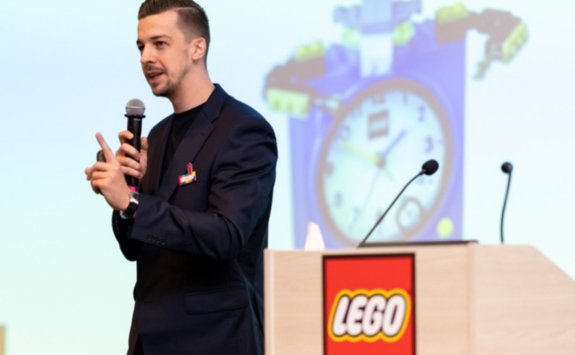
“It was an exciting opportunity to help build a global brand within an immature market for toys.
“I have a wide range of responsibilities within my role, but managing is at the centre of everything that I do to ensure people, relationships and business actions are smoothly carried out.”
Which Newcastle landmark would you like to see made into a LEGO set?
As I am a massive Newcastle United fan, it would be St James Park without a doubt. At the LEGO Group we have launched stadiums in the past so you never know, it could happen.
Rowan South (MMath Maths and Statistics, 2017)
Class of 2017 graduate Rowan has worked at The LEGO Group for almost five years, and today he is a Senior Data Scientist in the organisation’s Demand Forecasting team. This means producing forecasts for every LEGO set in every region across the globe!
During his degree, Rowan completed a Data Analytics internship. After graduating from Newcastle, Rowan stayed on campus for another year as the Education Officer at Newcastle University Students’ Union, before kickstarting his career as a Data Scientist. He joined The LEGO Group in May 2021, telling us:

“The LEGO Group has a fundamental value of 'Learning Through Play' and that is definitely what I did at university. I was the social secretary of the Maths society, a volunteer for Freshers and RAG crew and a regular visitor of Luther’s (Mensbar back in my day).”
Which Newcastle landmark would you like to see made into a LEGO set?
No question, St James' Park, my favourite place in the city!
Philip Percival (BSc Marine Biology, 1998; MPhil Marine Sciences and Coastal Management, 2001; PhD Biogeochemistry, 2004)
A Newcastle graduate three times over (!), Phil joined The LEGO Group in January 2025 as Senior Technical Programme Manager. In this role, he is responsible for modernising how data is managed, accessed, and shared around the business, helping enhance collaboration and anchoring AI within a LEGO-specific context. Speaking of his time on campus, Phil said:
“Having a science-based background and a marine biology undergraduate degree doesn’t mean you’ll be the next Jacques Cousteau, but it does help change the way you think, process information and rationalise things, which is eminently transferrable. Like myself, I know many fellow graduates who have had successful, but diverse careers spanning a variety of roles not directly linked to their degree subject.
“My favourite memory of being at Newcastle was the camaraderie y built with my classmates. The compactness of the city meant you were always with friends and bumping into people you knew.”