
From Diagnosis to Determination: How Newcastle Alumnus Peter McCleave Is Turning His Battle into Hope for Others
An interview with alumnus Peter McCleave conducted by Global PR student Joshua Wanless
20 January 2026
When Peter McCleave graduated from Newcastle with a degree in Physiology, he
could never have predicted that one day his life would revolve around saving others.
After university he followed a path into investment banking, spending more than sixteen years in London. “I liked responsibility, and I liked pressure,” he says. “Finance gave me both.” But in 2016, his world shifted when he was diagnosed with Myeloma, an incurable form of blood cancer. Doctors told him he might have seven years left to live.
Rather than accept that, Peter redirected his energy into something that gave him purpose and control. “I needed to do something,” he says. What began as an act of defiance quickly became a global campaign. He founded 10,000 Donors to recruit new stem-cell donors and raise awareness for blood-cancer patients.
The real breakthrough came not from Peter himself but from his son Max who was 6 years old at the time. Max wrote to a local paper asking people to help his father’s cause. That small act of love changed everything. The letter went viral, and the family soon appeared on BBC Breakfast. Within days, over 14,000 new donors had registered with DKMS, the charity that matches patients with compatible donors.
“That was the moment it stopped being about me,” Peter says. “It became a movement about all of us and what happens when people realise how powerful they can be.”
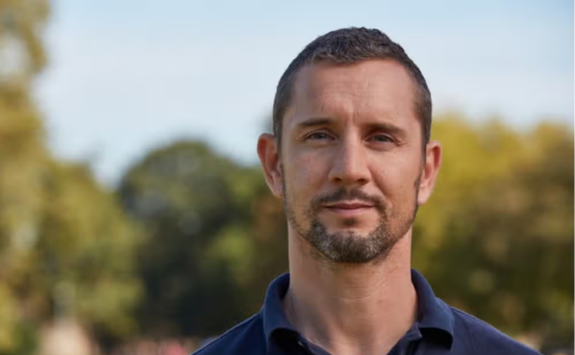
The campaign also reconnected Peter with Newcastle University, where he helped fund research into the genetics of myeloma. “It felt right to come full circle.”
He speaks fondly of both his student days and childhood connection to the city “Newcastle has always been an honest place,” he says. “It’ll tell you when you’re wrong, but it’ll back you when you’re right. That shaped me more than I realised.”
After years of volunteering with DKMS, Peter joined the charity full time and now serves as its managing director. Moving from banking to the non-profit world brought its challenges. “I went in with that push-hard mentality,” he admits. “In finance, everything is fast and measurable. But in the charity sector, change takes time. You can’t lead by force.”
One of his key goals is challenging misconceptions about stem cell donations. “People still imagine drills in spines and painful procedures,” he says. “In reality, it’s no more complicated than giving blood. Most people just don’t know that.”
DKMS now focuses on outreach on younger audiences, especially university students, who represent both the healthiest donors and perhaps the most socially conscious generation. “Students care about doing something meaningful,” Peter explains. “They don’t just want to talk about change; they want to be part of it.”
His leadership has taken the campaign to new arenas, from sports partnerships to creative fundraising events like charity balls, wing walks, and even a cross Europecar rally in a £500 banger to Monaco. “I just wanted to make sure I’d done everything I possibly can,” he says. Whether it’s turning a castle red for charity or driving a banger to Monaco for DKMS, every project reflects that same resolve to keep moving, to do something, and to never simply accept what life dictates.
At the heart of Peter’s philosophy is a belief in connection. “Cancer doesn’t discriminate,” he says. “It doesn’t care who you are, where you’re from, or what you believe. When you find your genetic match, you realise how much we all share.” He sees stem-cell donation not just as a medical act but as a metaphor for empathy and global unity. “For one moment, it doesn’t matter if you support Newcastle or Sunderland, if you’re rich or poor. Cancer doesn’t care, and neither should we.”
His message to universities is simple: be part of the network “If one person convinces one friend to register, that can ripple outward faster than any marketing campaign,” he says. “Change happens through people, not platforms.” That belief has inspired DKMS to build student led volunteer groups across the UK including at Newcastle University in the coming year.
Despite the attention his work has received, Peter remains humble. “Legacy isn’t something I think about,” he says. “I don’t do this to be remembered. I do it because it’s the right thing to do.” The drive that once fuelled his corporate career now burns for something deeper. his corporate career now burns for something deeper. “Banking gave me skills, but this work gives me purpose,” he reflects. “It’s the difference between earning a living and making a life.”
Asked what advice he would give to Newcastle graduates, Peter didn’t hesitate. “You’ve got more control over your life than you think,” he says “Even when you’re young and uncertain, you’re still the best person to make decisions for yourself. Don’t just follow the path laid out for you; create your own.”
Peter’s story is proof of that philosophy in action. From a hospital bed to the skies above a wing walk, from spreadsheets to stem cells, he has redefined what resilience looks like. His life now stands as a testament to what can happen when courage meets compassion and when one Newcastle graduate decides saving lives and not giving in is the most important investment of all.