
Tracing New Paths in the Old World: a global crossing through anthropology
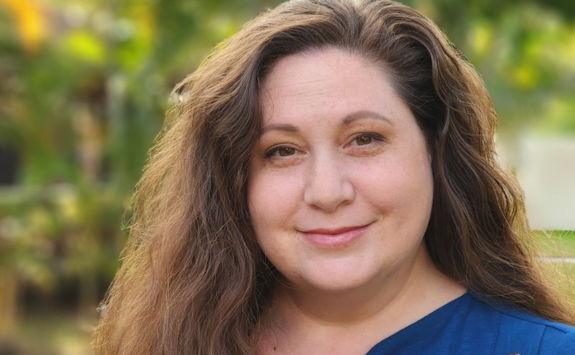
An interview with alumna Stephanie Chill conducted by Global PR student Kirsten Ballard.
20 January 2026
“I had no clue what I wanted to do, so I took a catalogue of the courses offered and circled every course I was interested in... And most of them fell under the anthropology department.”
Laughs the virtual voice of Stephanie Chill, sitting across from me, simultaneously half a meter away and four-thousand miles across the North Atlantic sea via my beat-up laptop screen and the glitching powers of a Zoom call. She is reminiscing about her days at university in Florida, then to Newcastle and the cold - she mentions having never met frostbite until her masters here in the north, and from my cold stoop at the desk I instantly envy her. "I thought it was sunburn," she reflects, so used to east-coat sunshine. It makes me wonder how anybody could leave it for a city that sees sunset at 4pm.
“When I decided to return back to school for an MA,” She says, “I was looking for a museum studies program. The International Centre for Cultural and Heritage Studies stood out as a program that could let me study museum work alongside a much more comprehensive program. Heritage studies isn’t a program that we really have in the US.”
Redefining heritage
Back at home in the U.S, she often finds herself explaining what heritage studies really means. “Here, when people hear the word ‘heritage’, they usually think of ethnic background of ancestry.” she explains. “But heritage studies prepare people to work in historic spaces through management, research, interpretation, and community engagement. We help communities understand and appreciate these places while also assessing and protecting them from manmade and natural challenges.”
The study, she notes, isn’t widely established, which made Newcastle University’s approach especially appealing – the tools the program offered her were not only important in learning how to care for the past, but how to make it meaningful in the present. “Especially not in Florida; we just don’t have the same depth of history,” She laughs. “The thought the lecturers put into creating such an engaging course was wonderful.”
Connecting forward
Beyond the coursework, Stephanie fondly recalls the sense of community that developed both within her program and across the university. “There were always student activities going on,” Something I have learnt too well with my own experience after hers, watching her reminiscence as she leans back in her home office. “Some friends from my program and from the dorms would go to student nights or gatherings. I also had a couple of my papers checked at the writing centre to double-check terminology and spelling – I didn’t want to lose marks for forgetting a ‘u’!”
After completing her master's and leaving the toon, Stephanie’s path in heritage work continued to evolve. Her first curatorial internship was only a short-train ride from her home-away-from-home at the Oriental Museum in Durham, gaining hands-on experience in collections management and exhibition planning for a few months until she was finally home bound, back to “solid sunshine”, she notes. In Florida, she became curator and grant coordinator at the Dunedin Historical Museum and developed educational materials that made local history more accessible to the local community. Each job opportunity is a footstep closer toward her goal, it seems, blending research and storytelling with enriching the community.
As she speaks, the same curiosity that guided her hand to circle courses with a marker-pen in an old, printed catalogue is still there – glittering sharper now by experience in her field. While her passion is alive and still beating, there have been obstacles in a world still so fresh to preserving culture and memory. Nothing worth doing comes without its challenges, especially when it feels like history is eroding faster than anybody can protect it.
Whether assisting with the management of local heritage sites, preservation efforts, or helping non-profit organizations interpret their stories, Stephanie persists on connecting people to their place. She raves to me about how much she looks forward to engaging the community soon with a culture market – a mix of Japanese and Mexican this time, and I know Florida is in safe hands.