International Women in Engineering Day: Meet the alumna building bridges and brighter futures
From designing major UK infrastructure to championing ethical supply chains in emerging economies, Newcastle University alumna Karen Britton (née O’Keeffe) is using the foundations she built on campus to create lasting global impact.
23 June 2026
When Karen Britton arrived at Newcastle University in the late 1990s to study Civil Engineering, she dreamed of leaving a mark on the world. More than two decades later, the Class of 2002 graduate has done exactly that - from helping deliver landmark aviation and transport projects across the UK to leading international initiatives that support communities in the Democratic Republic of Congo.
In celebration of International Women in Engineering Day, we sat down with Karen to reflect on the student experiences that shaped her, her rise through the engineering profession, and why she is now focused on creating fairer futures through the Kumi Foundation.
In this interview, we cover realising childhood dreams and building a mile-long viaduct, the importance of allies as a woman in a male-dominated industry and the importance of championing the developing communities that modern society is so reliant on. Read on to find out more.
Hi Karen! You first arrived on campus in 1998 to embark on a Civil Engineering degree. Can you tell us a bit about your student experience at Newcastle?
My journey at Newcastle started before I officially enrolled as I was invited to do a week-long Insights into Engineering course the year before, while I was still studying for my A levels. We got to live in Castle Leazes for the week and experience student life, trying out all the different engineering disciplines and meeting lecturers – and then, of course, enjoying Newcastle’s nightlife too!
I was immediately attracted to the visibility and scale of the work that you do as a civil engineer, and the tangible impact you can have on society. I really wanted to make an impact on the world and leave a legacy. So come results day when I was accepted into Newcastle University, the four-year Civil Engineering course was the obvious choice.
My first year was spent at Henderson Hall. Two of the first people I met at breakfast on the first day are still my best friends today – and they were bridesmaids at my wedding! Coincidentally, I also married a fellow graduate; I met my husband, Andi, on the Tuxedo Princess’s revolving dancefloor!
A classic Newcastle meet-cute! What are your favourite memories of your uni days (other than meeting Andi of course!)?
I was, and still am, really into dance music – drum and bass, house, electronic music – and so there were lots of evenings dancing in Riverside and at Shindig every Saturday night.
I also had the opportunity to study and get involved in engineering projects abroad while a student. I spent two terms at Chalmers University of Technology in Gothenberg – I was the first engineering student to join the Erasmus programme! – with a focus on manufacturing and production engineering. I got to visit the headquarters of IKEA and Volvo and see how different employers operated in Sweden. I also learnt how to speak Swedish, which actually helped me out at work just a few months ago.
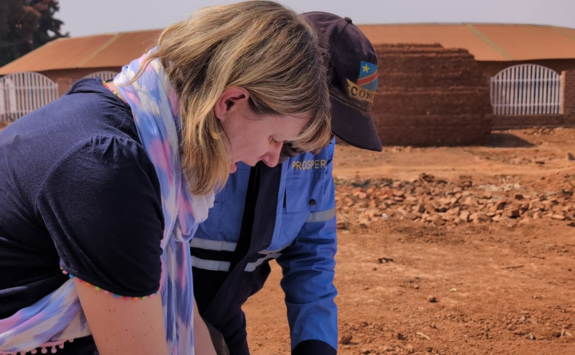
The Civil Engineering department also ran a summer trip to Ghana, so I spent several months on an engineering project there. This trip ignited a real spark of care for those in emerging economies, which has shaped my career trajectory and current projects I’m involved in, including the Kumi Foundation.
You pivoted from a traditional engineering career at the start of 2026 to set up Kumi Foundation. Can you tell us a bit more about the charity?
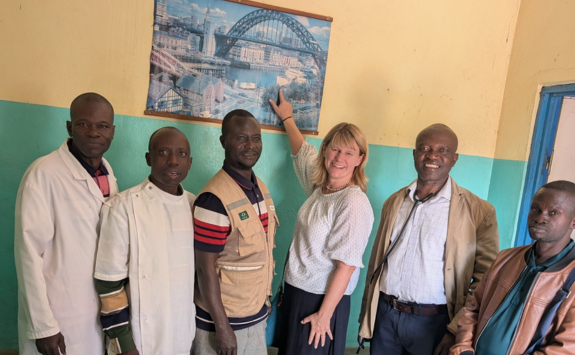
Kumi Foundation is a non-profit dedicated to creating shared prosperity in the communities that power global supply chains. We build the capacity, skills and resilience of local organisations that address poverty and human rights challenges affecting women and children in these communities. Our aim is to help ensure that the communities and workers who sustain global supply chains - especially those at the heart of the clean energy transition - share in the prosperity they help create.
Kumi Foundation sits alongside Kumi Consulting, the management consultancy firm that Andi leads. Kumi Consulting advises multinational companies, including some of the world’s leading brands, on responsible supply chains and human rights, helping them to strengthen their approach to responsible business. However, many of the challenges found in global supply chains, such as child labour, are rooted in wider social and economic issues that lie beyond the direct influence or control of any individual business. This is where Kumi Foundation comes in.
One of the key regions that we work in is the Democratic Republic of Congo (DRC). You may not know it, but a lot of the essential products to everyday life begin in the DRC: the critical minerals in your phones, laptops and cars, for example. We’ve been supporting community initiatives there since 2019, and the Foundation builds on this to help ensure people living locally share in the prosperity of the mining of critical minerals from their doorstep.
Since launching, we’ve supported projects helping young people in crisis – who may have lived on the streets or suffered from human rights abuses – to get on a pathway that leads them to education, vocational training and eventually jobs in supply chains. And we’re currently building a network of supporters and businesses to launch a pilot and hopefully have a positive impact right across the copper belt of southern DRC. which we can then expand in other areas.
While I’m not designing civil engineering infrastructure anymore, my career in engineering means I really understand how large, global businesses work so I can speak their language to create a bridge between them and community members who deserve to be championed a little bit more.
Our aim is to help ensure that the communities and workers who sustain global supply chains - especially those at the heart of the clean energy transition - share in the prosperity they help create.
Before Kumi Foundation, you spent two decades growing your career in the engineering sector. Can you share your journey and experience as a woman in the male-dominated industry?
Studying engineering at Newcastle gave me the confidence to pursue my passion, which at the time of graduating was aviation and defence engineering. I moved to London to join a specialist engineering consultancy, which was a bit of a dream come true, actually. They put me on a full graduate training pathway towards my chartership and really supported my development.
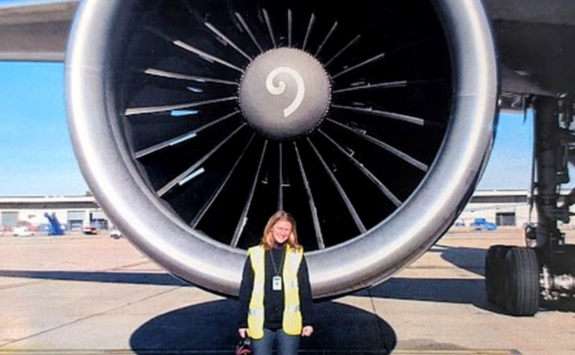
My job was basically to design military and civil aviation facilities. I reckon I’ve probably worked at most airports in the UK over the past 20 years, and even now when I see some infrastructure I’ve designed in one of the airports, I feel super proud.
After I got my chartership, I had a career break to raise my children. I used to not know how to say that, but now I’m a real advocate for championing career breaks. There are different routes for different people, but for me it was the right choice. My return to work seven years later was actually really straightforward because my engineering education and foundation was strong. That’s when I joined AECOM, with whom I stayed until the end of 2025 when we launched the Kumi Foundation.
AECOM are one of the biggest engineering consultancies in the world. I started off on the shop floor really, designing transport infrastructure. Then I rose up the ranks until I was managing the 500-person Future Mobility branch of the organisation, which looked at the future of transportation – from ports and aviation to road and rail. By the end of my time at AECOM, I was Director of Operations Strategy across 12 countries and over 10,000 people!
Part of my role at AECOM was helping to write their global policy for equity, diversity and inclusion. And during my 20-year career, the global conversation around all types of diversity has been really positive and I’ve definitely seen positive changes.
Wow, what a whistle-stop tour! What have been some of the highlights of your engineering career?
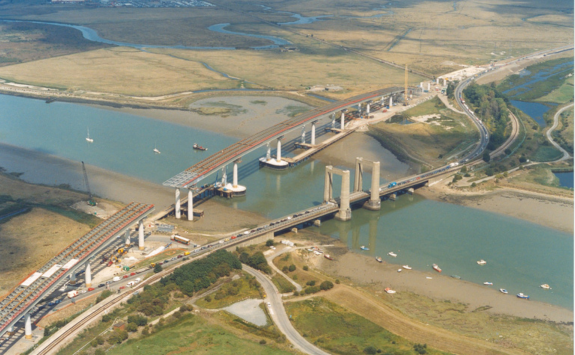
I spent a year on a construction site as part of my training and was a Site Engineer for a 2km viaduct bridge over to the Isle of Sheppey. At one point I was on the bridge pouring the concrete! As a student, one of my dreams was to build a bridge. And I got to build my bridge. My kids are bored of driving over it now!
I was also responsible for some of the works to prepare Gatwick and Heathrow airports for the A380 aircraft when they first came in. So as part of that, I was airside in amongst the aircraft, preparing the airport physically. How do you accommodate such a huge aircraft? Are the aircraft stands big enough? Are the runways and taxiways strong enough? That was a really interesting project.
Your technical knowledge can be your biggest ally. It’s also important to surround yourself with allies and role models who can give you advice when you need it most and be in your corner when you need that extra support.
What advice would you offer to current students, particularly female students, interested in embarking on a career in engineering?
This is my biggest recommendation to women going into engineering: prioritise your development! I joined the Institution of Civil Engineers (ICE) while I was still a student and got involved in local events in Newcastle. My involvement continued as I grew my career and I was able to hold positions of leadership and cut my teeth ahead of time. This led to me eventually becoming a trustee of ICE, an organisation with over 90,000 members!
Your technical knowledge can be your biggest ally. So being able to continue my education and become a Fellow of the Institution has really opened doors in my career journey and helped make me feel stronger and more confident in the workplace. It’s also important to surround yourself with allies and role models who can give you advice when you need it most and be in your corner when you need that extra support.
One of the things I do as part of my portfolio career is coach executives to support their career success through transition, often when they’re at, or approaching, the C-suite. A lot of the barriers I see, real or perceived, often come down to confidence. I am often so inspired to see what achievements are possible, especially when women have the time and space to align their personal values, with their capability and point it towards their greatest ambitions – and if I can play a tiny part in that – then that gives me huge pleasure and purpose!