
World Cancer Day: Honorary graduate Sir Bobby Robson’s legacy of world-leading cancer research in Newcastle
We’re celebrating the start of construction for a new £30m cancer research institute. Fully funded thanks to the generosity of the supporters of The Sir Bobby Robson Foundation the new Institute will bring together the expertise of Newcastle University, and clinical teams at Newcastle Hospitals to cement our city as a global leader in cancer research.
4 February 2026
Meet the alumni leading the charge for the new Sir Bobby Robson Institute at the Freeman Hospital in Newcastle, which will serve cancer patients in the North East, north Cumbria and North Yorkshire.
When former footballer and coach Sir Bobby Robson was referred to Newcastle alumna and oncologist Professor Ruth Plummer, he was facing his fifth and final battle with cancer. With no cure available, Sir Bobby spent the next 18 months undergoing revolutionary cancer trials and generously fundraising £500,000 to create a specialised cancer research unit at the Freeman Hospital which opened in February 2009. He died just a few months later.
Fast forward 17 years, and today the Sir Bobby Robson Foundation, part of Newcastle Hospitals Charity is building on this legacy to launch an ambitious plan to develop a new £30 million world-leading research centre which will double the capabilities of the existing cancer research unit, meaning more innovative trials for local cancer patients who’ve run out of options, and more world-leading breakthroughs in the world of cancer care.
With one in two people in the UK developing cancer in their lifetime, clinical trials are the single best way to turn advances in science into life-saving outcomes.
The existing centre is at capacity, with 44% of early-phase and 39% of late-phase trials being turned down due to a lack of space. 30% of cancer patients on waiting lists for trials become too poorly to take part by the time a space becomes available. With one in two people in the UK developing cancer in their lifetime, clinical trials are the single best way to turn advances in science into life-saving outcomes. The new Sir Bobby Robson Institute, which is planned to open its doors in 2028, will increase our capacity to conduct trials and provide new options to North East patients by 50% over five years. It’s a massive win for our region.
Ahead of us breaking ground on the Freeman Hospital site in spring 2026, we caught up with Ruth and fellow Newcastle University alumni Dr Ashraf Azzabi and Lauren Mole to hear how the new centre – honorary graduate Sir Bobby Robson’s legacy for the region – will make a difference to cancer patients locally and worldwide.
“We’re trialling kinder cancer treatments to improve the standard of care worldwide”
Professor Ruth Plummer MBE gained her MD at Newcastle University following medical training in Oxford and Cambridge and is Professor of Experimental Cancer Medicine on campus as well as Director of the Sir Bobby Robson Cancer Trials Research Centre at the Freeman Hospital. As an oncologist in the early 2000s, it was Ruth who treated Sir Bobby Robson upon his fifth and final diagnosis of cancer. Speaking of this time, Ruth said:
“Sir Bobby was referred to me when his cancer was no longer curable. We didn’t have a good treatment option at the time as a standard of care, so I talked to him about trials and to quote him, “why would you not try a trial if there are no options?”
“He was treated by the trials team for over 18 months, and during that period, we were also fundraising to be able to kit out the new unit on the Freeman site when the whole regional cancer centre moved over there. He and Lady Elsie decided to help by setting up The Sir Bobby Robson Foundation, and within six weeks raised the £0.5M we needed to find - what had seemed an impossible target to us!”
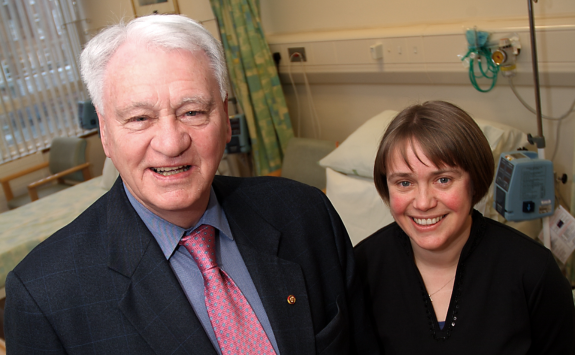
Ruth trained in oncology at Newcastle under Professor Hilary Calvert, having started out in palliative care after completing her core medical training. It was here she became interested in the trials and drug discovery side of oncology. Throughout her clinical career, Ruth has been at the cutting-edge of cancer research, with her main areas of interest being DNA repair and early phase clinical trials of novel agents. She broke new ground in 2003, taking the first in class PARP inhibitor into the clinic, then again in 2012 with ATR inhibitors and 2014 with MCT1 inhibitors. When asked what the highlight of her career was, she told us:
“The moment that stands out is starting to see patients respond to the first PARP inhibitors - and the fact that newer kinder cancer treatments we have had in trials are now standard of care worldwide. The most important things remain the stories of the patients who took a chance and went on a trial with us, then really benefited.”
Ruth was elected a Fellow of the Academy of Medical Sciences in 2018 for her work developing PARP inhibitors as novel cancer treatments and in 2021 she was awarded the ESMO-TAT Lifetime Achievement award for her work in early phase trials. In 2022, she was awarded an MBE in the Queen's Jubilee honours for services to medicine.
It is under Ruth’s expertise and leadership that the new Sir Bobby Robson Institute will grow. She said:
“The institute will allow us to expand the number and complexity of trials we offer, continuing to work with the drug discovery team and other scientists at Newcastle University to take potential new cancer treatments into the clinic. We will also bring together all clinical research staff working in the cancer space, so we can learn from each other, and have promising new drugs move through all the phases of clinical trials within one unit.”
.png)
“We can be world leaders in radiotherapy research with the correct environment and space.”
Fellow Newcastle graduate Dr Ashraf Azzabi joins Ruth in her hopes for the new institute, particularly the opportunities it will present in the field of radiotherapy research.
Ashraf joined Newcastle Hospitals in 1997 as a registrar in medical oncology and completed a research degree in early drug development at Newcastle University, also under the guidance of Professor Calvert. Today, he is clinical board chair for cancer and haematology at Newcastle Hospitals and treats testicular, urological and colorectal cancers. Until recently, he also led the late phase cancer research team.
When asked what he thinks the biggest impact will be of the new Sir Bobby Robson Institute, Ashraf told us about the opportunity to utilise the centre’s LINAC radiotherapy machines for more innovative outcomes. He said:
“We are the fourth biggest cancer centre in the UK. We have nine LINACs in the Freeman site and two in Carlisle - that's a big fleet of radiotherapy machines that are currently underutilised in clinical trials because of capacity. The new Sir Bobby Robson Institute might actually give us that ability to do that.
“We already have the technology, we have the machines, we have the expertise. We can be world leaders in radiotherapy research with the correct environment and space.”
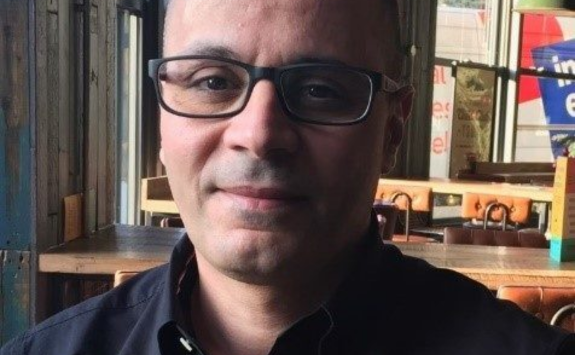
We have a big fleet of radiotherapy machines that are currently underutilised in clinical trials because of capacity. The new Sir Bobby Robson Institute might actually give us that ability to do that.
Having originally trained as a surgeon in Libya, Ashraf was drawn to Newcastle because of its reputation in oncology and because of the friendliness of the city. He was initially involved in early-phase pre-clinical trials before qualifying as a consultant. He also lectured on campus and led Newcastle University’s Master’s programme in Oncology and Palliative care – at the time the only online course offered by the university, training students around the world from Canada to Hong Kong. When reflecting on the standout moments in his career, Ashraf shared:
“Taking part in big clinical trials that changes the practise globally is obviously a standout point in your life: when you know that you've actually done this work and now everybody is doing the same because of your research and helping more patients get better.
“It’s also been a privilege to lead the service as a clinical director and a clinical board chair: it’s my responsibility that people are well looked after and the service is working as it should do.”
“Despite being hidden away in the lab, hearing patients’ stories and seeing the resilience they have in difficult circumstances motivates me.”
Recent graduate Lauren Mole (BSc Biomedical Sciences, 2021; MRes Immunobiology, 2022) is a Junior Biomedical Technician at the existing Sir Bobby Robson Unit. Being in the early stages of her career, Lauren is excited about the opportunities the new institute will offer for her development. She said:
“The Sir Bobby Robson Institute will enable us to open more trials and target a wider range of cancers, which will enable us to treat more patients and make a difference to more people's lives.
“We will also be able to take on trials with more complex lab processing, which is exciting for me as it means more of my lab skills from my degrees can be put to good use. I am also hopeful that the new institute will make Newcastle an even bigger name in the world of research, as I am incredibly proud to call Newcastle my hometown and I think the North needs more recognition.”
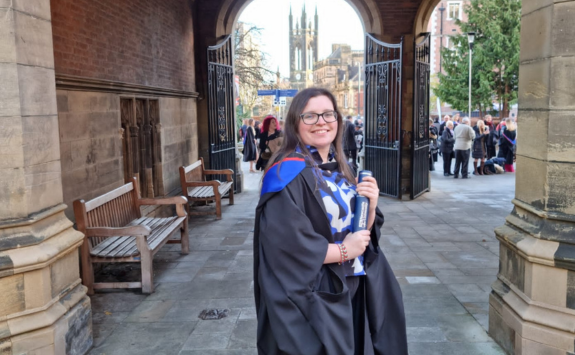
Lauren’s interest in research was fuelled by her own experience with an autoimmune condition which has benefited from novel therapeutics and having studied cancer modules in both degrees on campus (and being a lifelong Newcastle United fan!) the Sir Bobby Robson Unit was the perfect fit. She told us:
“The best part of my job is the difference we make to our patients. Despite being hidden away in the lab, I try to form connections with as many patients as I can. Hearing their stories and seeing the resilience they have, even in difficult circumstances, motivates me. Knowing we improved someone's quality of life or gave them extra time with their loved ones makes it all worthwhile.”
History of cancer innovation on campus
Newcastle University has been at the forefront of the fight against cancer for over 40 years with the aim of improving the management and outlook for cancer patients across the globe.
We have over 500 researchers who are undertaking ground-breaking work, which has led to the delivery of personalised therapies through novel diagnostics, new cancer drugs, medical devices, early cancer detection and prevention, and clinical trials.
Newcastle University’s long-standing partnership with the Sir Bobby Robson Cancer Trials Research Centre has a national reputation for its contribution to early-phase clinical trials and for pioneering approaches that move discoveries rapidly from the laboratory to the clinic.
This includes life-extending cancer treatments now helping thousands worldwide; Rubraca™ for ovarian cancer and Balversa™ for bladder cancer, Pemetrexed for mesothelioma and lung cancer, and Osimertinib for EGFR-mutated lung cancer.
"Together, our researchers and clinicians are developing and delivering cancer treatments that not only transform lives here in the North East, but have a lasting impact on patient care worldwide. This close collaboration accelerates the journey from discovery to delivery, ensuring that the very latest advances in cancer drugs reach those who need them most."
Professor Chris Day, President and Vice Chancellor of Newcastle University
How you can support the new Sir Bobby Robson Institute
Construction of the Sir Bobby Robson Institute at the Freeman Hospital will begin in spring 2026. Fully funded by the Foundation, part of Newcastle Hospitals Charity. The three-storey building will bring together the current Sir Bobby Robson Research Centre at the Northern Centre for Cancer Care and the hospital’s cancer and blood disorders (oncology and haematology) research team, providing much more capacity to increase the number of clinical research studies taking place in Newcastle, using the latest equipment and technology.
With over £20 million raised so far thanks to the generosity of thousands of supporters, donors, Trusts and businesses, the fundraising campaign is now entering a critical phase to turn the vision into reality and raise the final funds to complete and fully equip the Institute by 2027.
If you are an individual or organisation interested in joining us in this mission, please reach out to Kate Bradley, Campaign Director for the Sir Bobby Robson Institute.