
“I didn’t enjoy my university experience, and it’s made me determined to help students like me make the most of their time on campus”
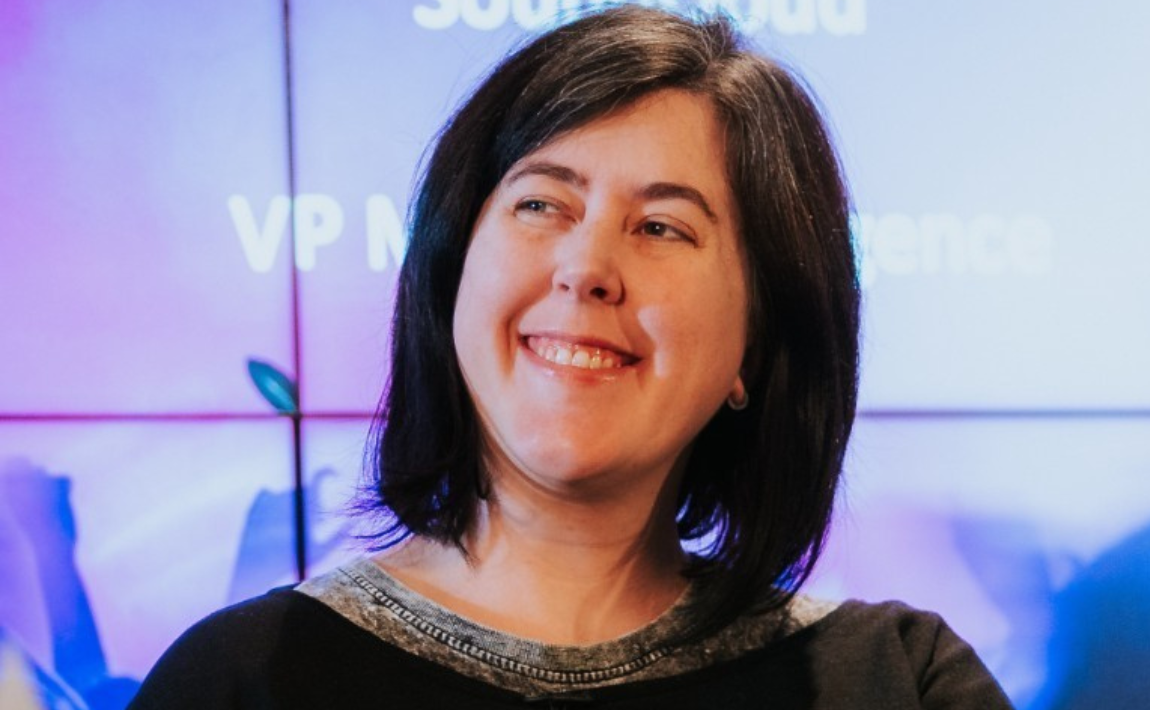
Class of 2005 graduate Hazel Savage left Newcastle University feeling disheartened that it hadn’t been the promised ‘best three years of your life’. Now a successful businesswoman in the music tech industry, she has pledged £30k to fund scholarships on campus so students like her can make the most of every opportunity.
15 June 2026
Hazel Savage arrived at Newcastle in September 2002 to study English Literature and Politics. Having grown up in the North East, her choice of university and degree subject was purely pragmatic: Hazel’s true passion was music.
A guitarist from a young age, Hazel was in an all-girl punk band in her teens – and even supported The Slits at Newcastle University Students’ Union before she arrived on campus to study! It is little wonder, then, that Hazel would eventually find her footing in the music tech industry.
From music encoding with Shazam in the early days to founding her own company bringing artificial intelligence to music libraries, Hazel has worked with industry stalwarts and traversed the globe. Today, Hazel is an investor helping entrepreneurs from minority backgrounds to flourish. And now she is also investing in future generations of Newcastle graduates by offering scholarships to students starting university in September 2026.
Around 30% of Newcastle’s UK student intake were from socio-economically challenged backgrounds in the last academic year, and the Office for National Statistics (ONS) have reported that current student loans do not cover the living costs for 58% of students.
Alumni-funded scholarships remove the financial barriers that could otherwise prevent people from accessing higher education and ensure that students can reach their full potential while on campus. If you'd like to have a conversation about how you can support the next generation of Newcastle graduates, email Alexa Charlton today.
To mark World Music Day (21 June), we sat down with Hazel to hear about her aspirational career in music apps and her motivation for funding five student scholarships starting next academic year.
The pressure to have ‘the best time of your life’ at university
I arrived at Marris House in September 2002 to start my combined honours course in English Literature and Politics. I really enjoyed the things I learned at university – particularly in politics with interactive things like the model United Nations or debating Nietzsche – and have fond memories of heading to the Union on Tuesday nights with housemates for the pub quiz.
Without my degree I wouldn’t have been able to work abroad and set up my own business while living in Singapore. I could never say I regret going to university. But I didn’t find my people on campus and spent my three years in Newcastle on the periphery of university life.
There’s an insane amount of pressure on students. Everyone tells you that university is the best time of your life, and so when you’re not necessarily having the most fun ever and haven’t found your people on campus, you feel like it’s something you’ve done wrong.
I graduated with a 2:2 in 2005, packing up the car on the last day of exams and not looking back. 20 years later, I do wonder whether I would have got more out of my time at university – and even achieved more in my exams – if I had the support network I was lacking. Now, I’m in a position to be that helping hand for students like me.
Everyone tells you that university is the best time of your life, and so when you’re not necessarily having the most fun ever, you feel like it’s something you’ve done wrong.
Being the change I want to see
When I was applying for university, I had no real career in mind – other than a rockstar! And it turns out the job I ended up in didn’t even exist at the time. Smartphones hadn’t come out yet, so how could I possibly know I would find myself specialising in music apps?
Over the past two decades, I’ve worked for global music brands like Shazam and Universal, and co-founded AI music tagging company Musiio, which sold to Soundcloud in 2022. Since then, I’ve been in the fortunate position of helping others as an angel investor and through guest lectures on my career journey.
It was in this capacity that I was reintroduced to Newcastle University in February 2025. The Alumni Office reached out and asked me to join their NCL in Action programme of events and give a talk on the use of AI in the music industry.
This isn’t unusual – my job is quite niche and so I often give talks about the industry. But the nerves I felt before my return to Newcastle were unusual. I was curious to come back to campus and see how things had changed, but apprehensive that I again would feel like the 19-year-old on the periphery.
It was actually really lovely to be back, once I got over the initial apprehension. I appreciated the architecture of the campus, which probably went over my head as a teenager, and all of the things that had remained the same. But then I also delighted in the things that had changed from my own time on campus – the diversity, the openness, the welcomeness. It was genuinely a healing experience!
Since then, I’ve kept in regular touch with the Advancement team and returned to campus to deliver workshops with students. This positive encounter has encouraged me to support students at Newcastle financially and be the support network that I needed when I was at uni. I can see that the university has changed massively, and there’s a huge effort in making higher education more accessible to people from all backgrounds. It’s important for me to come back and be part of the solution.
I like to be that role model because I didn't have that when I was starting out. It’s important that young people see people like them in positions that they are interested in so they can see that it’s possible. And then offering financial support through the scholarship alleviates that heavy financial burden that hangs over you as a student and frees you to focus on your studies but also on making those connections and memories.
I can see that the university has changed massively, and there’s a huge effort in making higher education more accessible to people from all backgrounds. It’s important for me to come back and be part of the solution.
How you can support Newcastle students
Thousands of our students rely on financial aid to support their education. Our scholarship programmes are designed to meet the individual needs of our students as effectively as possible.
Students in receipt of scholarships are also offered support from our wellbeing team during their studies. And, they have access to volunteering and/or paid work experience opportunities through our careers service.
Speaking of her experience liaising with the Advancement team to establish her scholarship, Hazel said:
“When people have exited a business like me and have their financial planning, it’s natural to want to give philanthropically. What often stops us is finding the time – and having the bandwidth! – to do so effectively.
“So working with a single point of contact at the university who is responsible for making sure my money goes to the people who need it most means I can have the biggest impact with little commitment on my schedule.
“The whole process has been really simple and straightforward, and I hope by sharing my own story I inspire a few other people to consider giving back too.”
If you’re feeling inspired by Hazel’s story and would like to find out more about giving back to our student community, please get in touch with Head of Philanthropic Partnerships, Alexa Charlton.