
King George VI Building: Where Newcastle’s health story took shape
As this year’s NCL in Action programme looks forward to the future of global health, we take a moment to look back at one campus landmark that has shaped the picture of health we see today.
1 October 2026
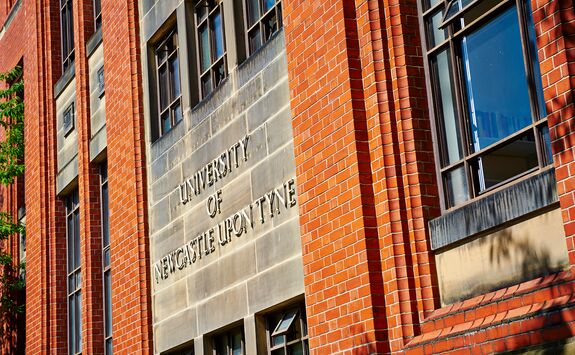
Few buildings tell that story better than the King George VI Building, the former home of the Medical School and a landmark that has witnessed generations of scientific discovery, innovation and student life.
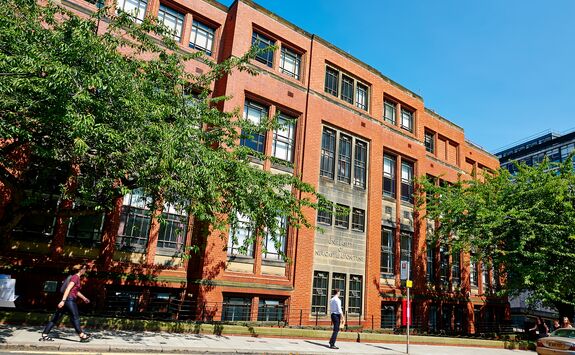
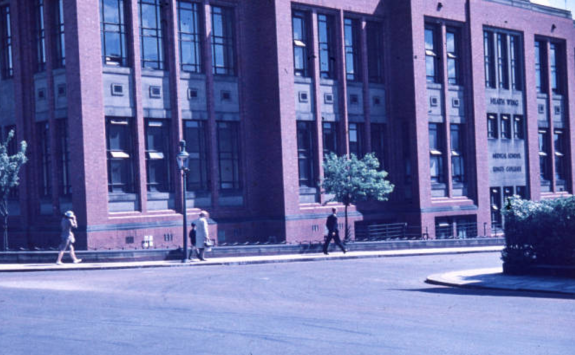
Opened in 1939, the iconic red-brick building has stood at the heart of the University through war, the birth of the NHS, dramatic advances in medical science and changing approaches to education. Today, as Newcastle looks to the future of health in an era of climate change, artificial intelligence and global uncertainty, the building offers a powerful reminder of how innovation is built on strong foundations.
In this nostalgic look back, we revisit the building's remarkable history and the memories that continue to resonate today.
A new home for medical education
The King George VI Building was constructed between 1936 and 1939, designed by architect P. Clive Newcombe and made possible through a remarkable donation of £200,000 from local shipowner and former Lord Mayor of Newcastle, Sir Arthur Munro Sutherland. The gift enabled King's College to create a modern Medical School close to the Royal Victoria Infirmary, strengthening the link between teaching, research and patient care.
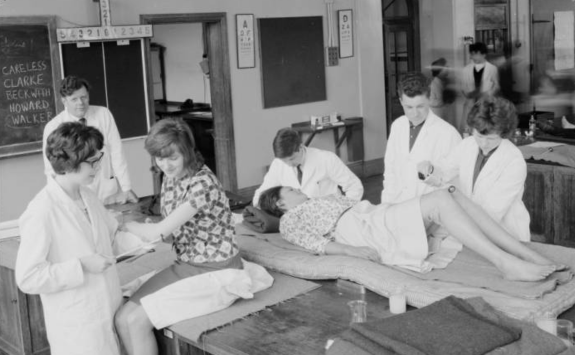
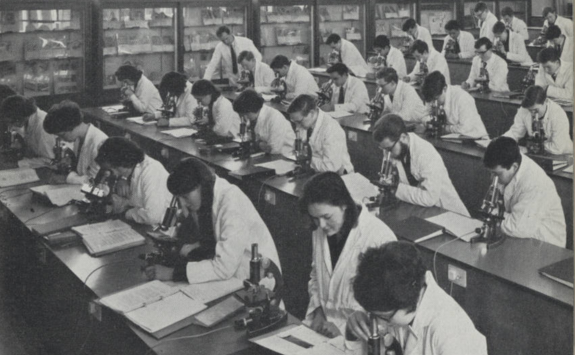
The building opened at a moment of transformation for higher education in Newcastle. King's College, the predecessor of Newcastle University, had only recently been created through the merger of Armstrong College and Newcastle's College of Medicine. At the time of the opening, 409 students were studying medicine, surgery and related disciplines, including 50 women.
A pivotal moment in history
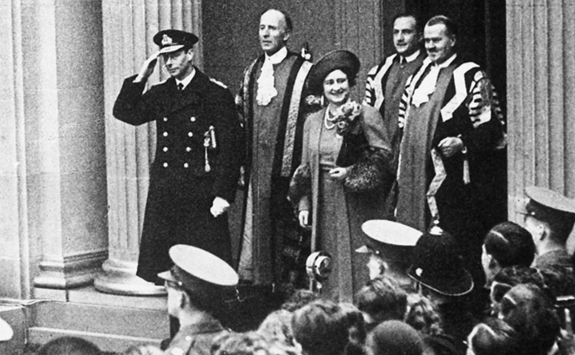
The excitement surrounding the new Medical School was soon overshadowed by world events. Students had begun studying in the building during autumn 1938, but its official royal opening in February 1939 came only months before the outbreak of the Second World War.
As wartime pressures mounted, hospitals faced increasing staff shortages and senior medical students were called upon to take on greater responsibilities. The King George VI Building became part of a wider national effort to train and support the healthcare workforce during one of the most challenging periods in modern history.
As remembered by students
While its historical importance is undeniable, alumni memories often focus on the building itself.
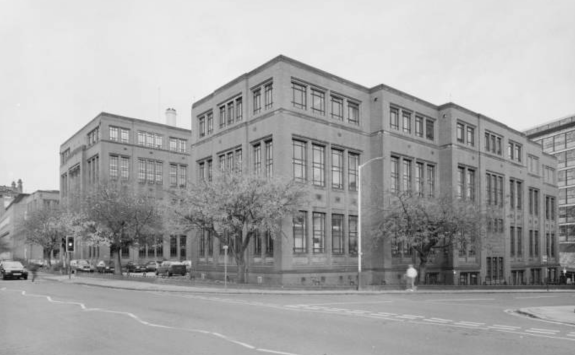
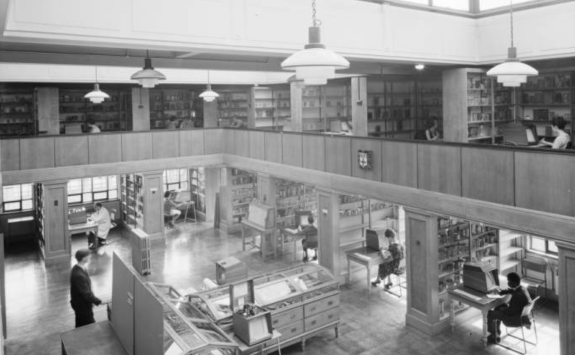
Architecturally, the King George VI Building is a fascinating blend of styles. Its red-brick exterior combines classical influences with the streamlined elegance of Art Deco, while inside, visitors are greeted by decorative panelling, ornate plaster ceilings and parquet flooring. Today, it remains Grade II listed.
Former students frequently describe the building as a labyrinth. Three interconnected blocks, linked by corridors, staircases and lecture theatres, made navigation an adventure in itself – and continue to confuse students today!
The old lifts, complete with sliding cage doors, became part of the daily routine, as did the common room just inside the entrance. Nearby stood another tangible link to Newcastle's medical heritage: the Bell's Court doorway, preserved from the building where some of the city's earliest medical lectures were delivered in the 1830s.
Formalin, finals and folklore
For generations of medical students, the anatomy department left a lasting impression.
Many alumni vividly recall the unmistakable smell of formalin drifting from the dissection rooms on the upper floors, while cadavers were stored in the basement until needed for teaching. Long hours spent studying anatomy formed a rite of passage for aspiring doctors.
The basement developed an almost mythical reputation. Its long corridors, service areas and teaching spaces inspired rumours of hidden passageways connecting the building to nearby hospitals. Like many historic medical schools, it also acquired its share of ghost stories, with students often describing the anatomy areas as particularly eerie after dark.
Yet perhaps the most memorable moments took place in the entrance foyer. After final examinations, nervous students gathered while staff read out the names of those who had passed before the results were pinned to the noticeboard. For many, it was one of the most nail-biting moments of their university experience. It was said that if there was a mix-up during these public announcements, your false pass couldn’t be revoked from medical education nationally. The School went on to educate internationally recognised neurologists, clinical geneticists, healthcare innovators and future leaders of the General Medical Council.
As student numbers grew and demand for medical training increased, plans were developed for a larger facility. In 1984, Newcastle Medical School moved to its new home at Framlington Place, behind the Royal Victoria Infirmary. Fittingly, Queen Elizabeth, later known as the Queen Mother, returned to open the new building, having attended the original opening with King George VI more than four decades earlier.
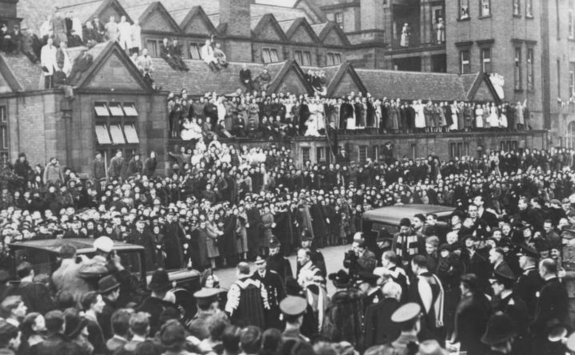
Crowds gather to see King George VI and Queen Elizabeth in 1939
Reinventing itself for new generations
When the Medical School moved to Framlington Place in 1984, the King George VI building's role did not diminish. Instead, it began a new phase as a home for disciplines that continue to shape health, wellbeing and society in different but equally important ways. Over the following decades, it housed the Department of Agriculture, the Centre for Lifelong Learning, the School of Education, Communication and Language Sciences, and, from 2017, the School of Pharmacy.
These departments brought new generations of students through the familiar red-brick entrance. Future teachers, speech and language therapists, researchers and pharmacists all made the building part of their own Newcastle story. The School of Education continued a teaching tradition that stretches back to 1890, while Speech and Language Sciences built on Newcastle's pioneering reputation as the first institution in the UK to offer a professional degree in speech and language therapy. More recently, Pharmacy's arrival reconnected the building with its healthcare roots, ensuring that the education of future health professionals remains part of its everyday life.
What does the future of health look like? How can we tackle rising inequalities, mental health challenges, workforce shortages and the opportunities and risks of artificial intelligence? And what role can each of us play in shaping a healthier future?
These are some of the big questions at the heart of NCL in Action 2026/27, Newcastle University's year-long series that brings together leading researchers, alumni, industry experts, students and communities to explore the issues shaping our world.
.png)