
Science for Engagement Conference 2025: Co-creating climate resilience
Written by Micah Thomas and Sheena Davis
12 December 2025
In a wrap
- Micah Thomas and Sheena Davis report on the Science for Engagement 2025 conference at Newcastle University.
- Scholars, practitioners, and community representatives explored how co-creation can shape the future of environmental research and practice at the event.
- The program covered themes including Co-Creating Climate Resilience, which examined how integrating scientific insight with lived experience can help societies respond to accelerating climate disruption.
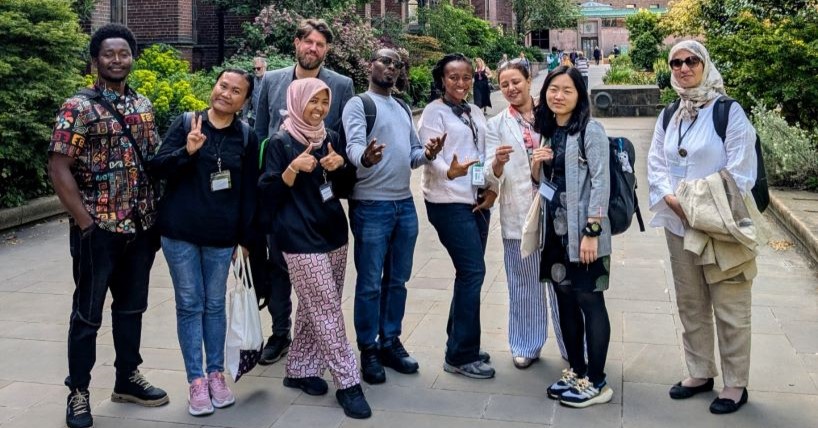
The Science for Engagement 2025 conference, held at Newcastle University, brought together an international community of scholars, practitioners, and community representatives to explore how co-creation can shape the future of environmental research and practice.
Hosted by the Centre for Climate and Environmental Resilience (CCER), the event addressed the urgent need to rethink the role of science amid the unfolding triple planetary crisis. While the program covered a wide range of interdisciplinary themes, one of the most compelling centred on Co-Creating Climate Resilience, examining how integrating scientific insight with lived experience can help societies respond to accelerating climate disruption.
Climate resilience is not built on data alone
The keynote lecture by Professor David Ludwig of Wageningen University, titled “Transformative Transdisciplinarity: Aligning Science and Society through Co-Production,” argued that resilience is not built on data alone. Instead, Ludwig said it was built on relationships of trust, reciprocity, and shared understanding between scientists, policymakers, and the communities most affected by climate change. He urged researchers to move away from one-sided partnerships and toward models where everyone learns from each other. He framed transdisciplinarity as a moral duty and a way to reconnect science and society on the basis of respect, responsiveness, and justice.
Climate science must embrace plurality and reflexivity
Adding depth to this vision, Professor Silvio Funtowicz of the University of Bergen and the European Centre for Governance in Complexity delivered a keynote titled “Why Science Can’t Speak with One Voice.” Drawing on his influential work on post-normal science, Funtowicz argued that in the face of complex, uncertain, and value-laden challenges like the climate and environmental crises, the idea of a single, authoritative scientific voice is neither possible nor desirable. Instead, he proposed that science must embrace plurality and reflexivity, acknowledging that different disciplines, cultures, and communities hold distinct yet valid forms of knowledge. In confronting “wicked problems” such as the degradation of ecosystems, he suggested, governance must be informed by extended peer communities as networks that include not only experts but also citizens, activists, and indigenous knowledge holders. Funtowicz’s call to democratise expertise resonated strongly throughout the conference, reframing co-creation as a practice of epistemic democracy rather than mere participation.
Making climate adaptation more equitable
During the conference, participants explored how co-creation can make climate adaptation more effective and equitable. Sessions featured case studies from across the globe, including research on glacial lake outburst floods in the Himalayas, participatory adaptation planning in Africa, and innovative design approaches for climate-resilient communities. One standout presentation by Amanuel Zenebe Abraha (Newcastle University) highlighted how enhancing indigenous knowledge can strengthen rainfed agriculture in Ethiopia, offering lessons on resilience that are both locally grounded and globally relevant.
Climate systems and community engagement
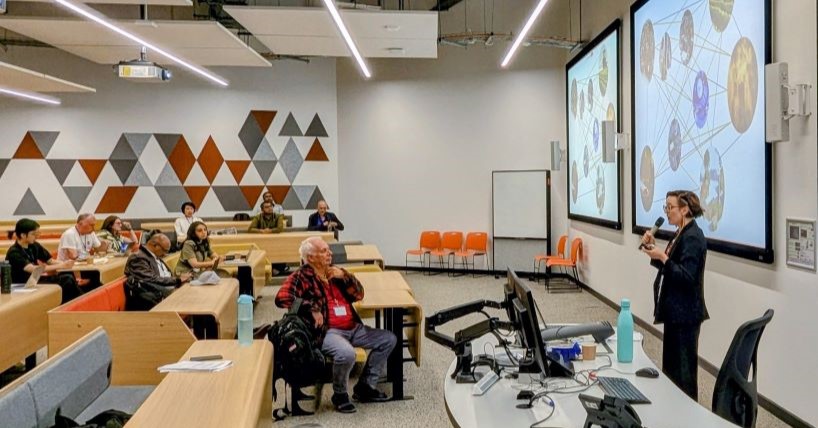
The conference also provided a platform for early-career researchers to present emerging work on climate systems and community engagement. Topics ranged from deep-sea upwelling patterns and methane flow studies to participatory approaches that bridge art, science, and social learning. These contributions underscored the importance of fostering cross-generational collaboration and creativity in tackling complex climate issues. A particularly engaging workshop led by Infi Ouidad and Ghizlan Elalaoui from Moulay Ismail University, Morocco, invited participants to bridge language, knowledge, and action in climate research. Through interactive methods such as photovoice, participatory theatre, and creative design, the session demonstrated how communication and imagination can unlock new ways of co-developing climate solutions.
Climate resilience through collaboration
Discussions repeatedly returned to a key insight: true resilience cannot be imposed from above. Technical adaptation plans often fall short when they fail to include those who live with climate impacts daily. Instead, resilience grows through collaboration—where scientific, cultural, and social knowledge converge. The poster session further illustrated this principle, with projects such as Dhama Susanthi’s “Climate Resilience through Cultural Roots” showing how traditional knowledge in Indonesia’s climate villages strengthens local adaptive capacity.
Climate resilience depends on solidarity
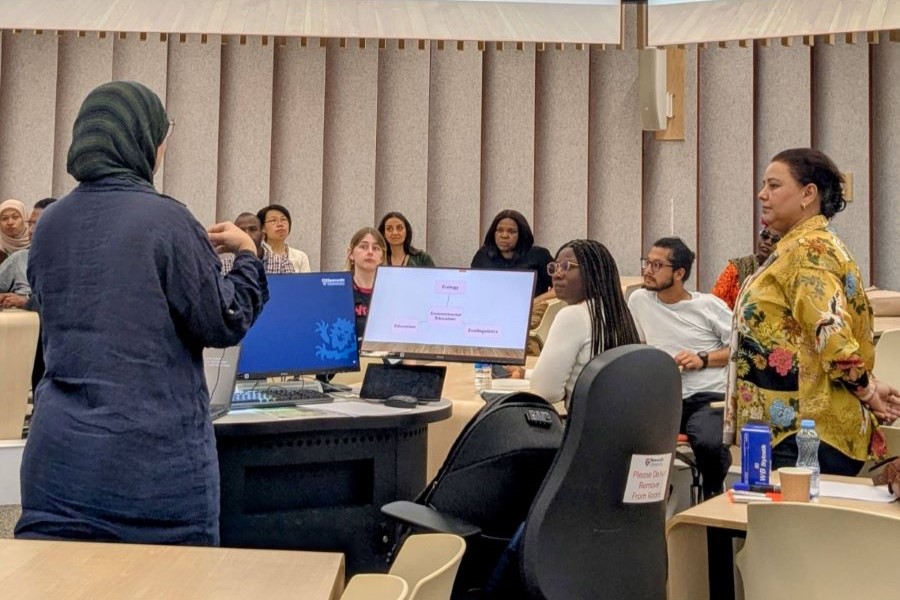
By the end of the event, a shared conviction had emerged: building climate resilience depends on trust, reciprocity, and solidarity. Co-creation is not just about integrating knowledge systems; it is about cultivating relationships that enable communities and researchers to face the future together. As part of Newcastle University’s commitment to addressing climate challenges through partnership and innovation, the Centre for Climate and Environmental Resilience continues to advance co-creative research that bridges disciplines and geographies. The success of Science for Engagement 2025 highlights the transformative potential of this approach.