Yan Cheng
About Me
Yan Cheng is a PhD candidate in Architecture by Creative Practice at Newcastle University. Her research uses Second World War and Cold War bunkers in Britain to explore intersections of architecture, memory, and heritage. Drawing on critical heritage studies and material culture, she examines how subterranean spaces carry stories of fear, resilience and identity across different historical periods. Her work examines how underground architecture gives form to delayed disasters, faint traces, and the lingering atmospheres of state anxiety. Through hand drawing and 3D scanning with point-cloud imaging, she is developing hauntological drawing methods to sense what has been partially erased or left unspoken. With experience in both architectural practice and theory, Yan’s research combines theoretical inquiry with creative practice, contributing to wider interdisciplinary debates on spatial memory, contested heritage, and the afterlives of wartime infrastructures.
Project Title
Hauntological drawing and the Heritage of British War Bunkers
Project Description
This research examines British wartime and Cold War bunkers as crisis architectures built to organise projected futures rather than commemorate settled past events. It argues that bunker heritage challenges the usual heritage timeline of event, trace, and aftermath, especially where the anticipated Cold War event never arrived yet the infrastructure remained.
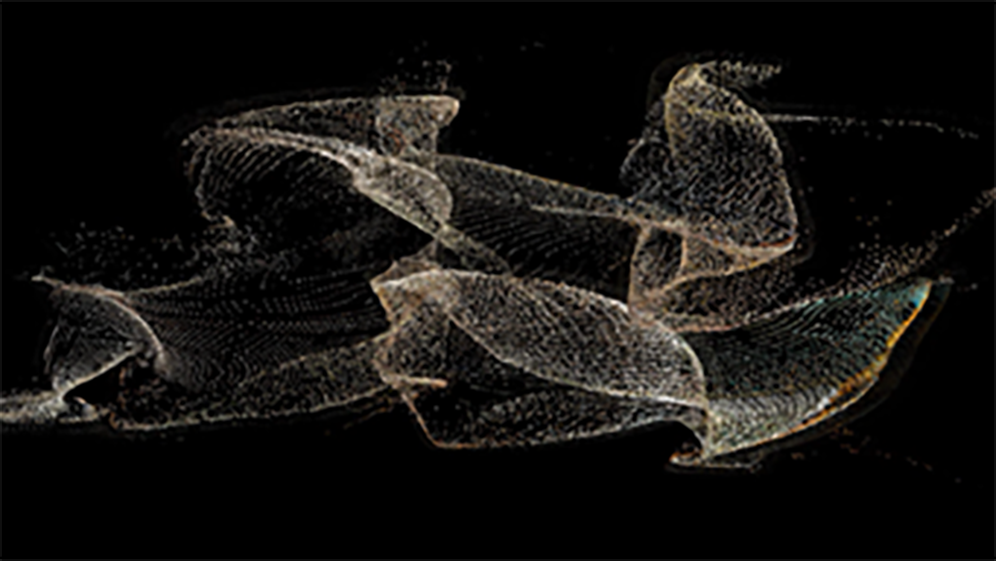
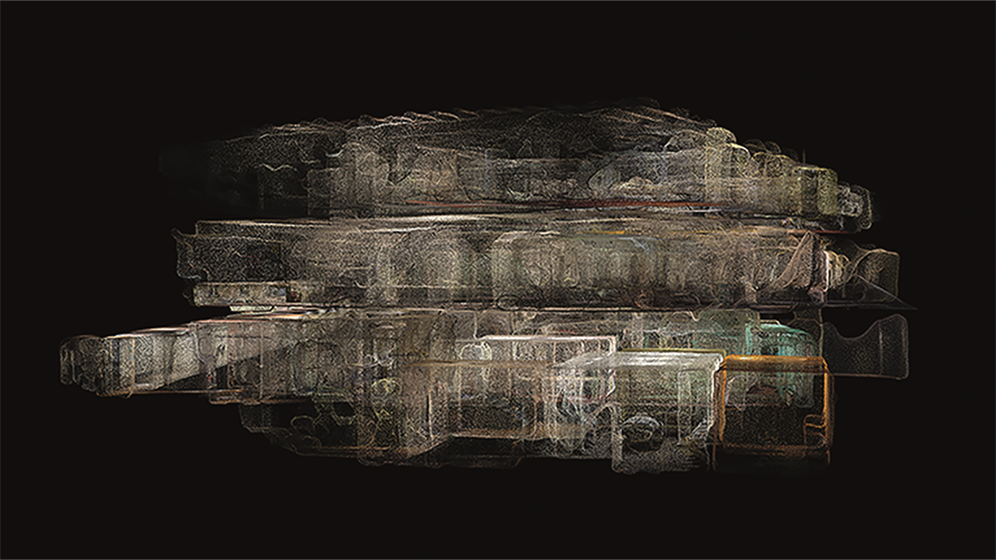
The project develops a practice-led method called hauntological drawing, treating representation as a form of heritage-making rather than neutral recording. “Drawing” is defined broadly as record-based spatial inquiry across two modes. Hand drawing is used to slow attention and reopen visible traces that have been absorbed into stable institutional narratives, particularly in the Churchill War Rooms. Point cloud scanning is used in Cold War sites to register restricted access, partial visibility, and non-arrival as part of the evidence. Because point clouds are stitched from multiple positions and moments, they produce time-thickened images in which gaps and occlusions can be read as meaningful, not simply technical errors.
Based on fieldwork and institutional materials from the Churchill War Rooms, Kelvedon Hatch, and Barnton Quarry, the thesis offers a temporal critique of heritage and a method for documenting unresolved time without forcing interpretive closure.
Supervisors
Qualifications
BSc in Architecture of Tianjin Chengjian University, China
MArch in Architecture of Newcastle University, UK
Chinese Class 1 Registered Architect
Contact