Omar Tahhan
About me
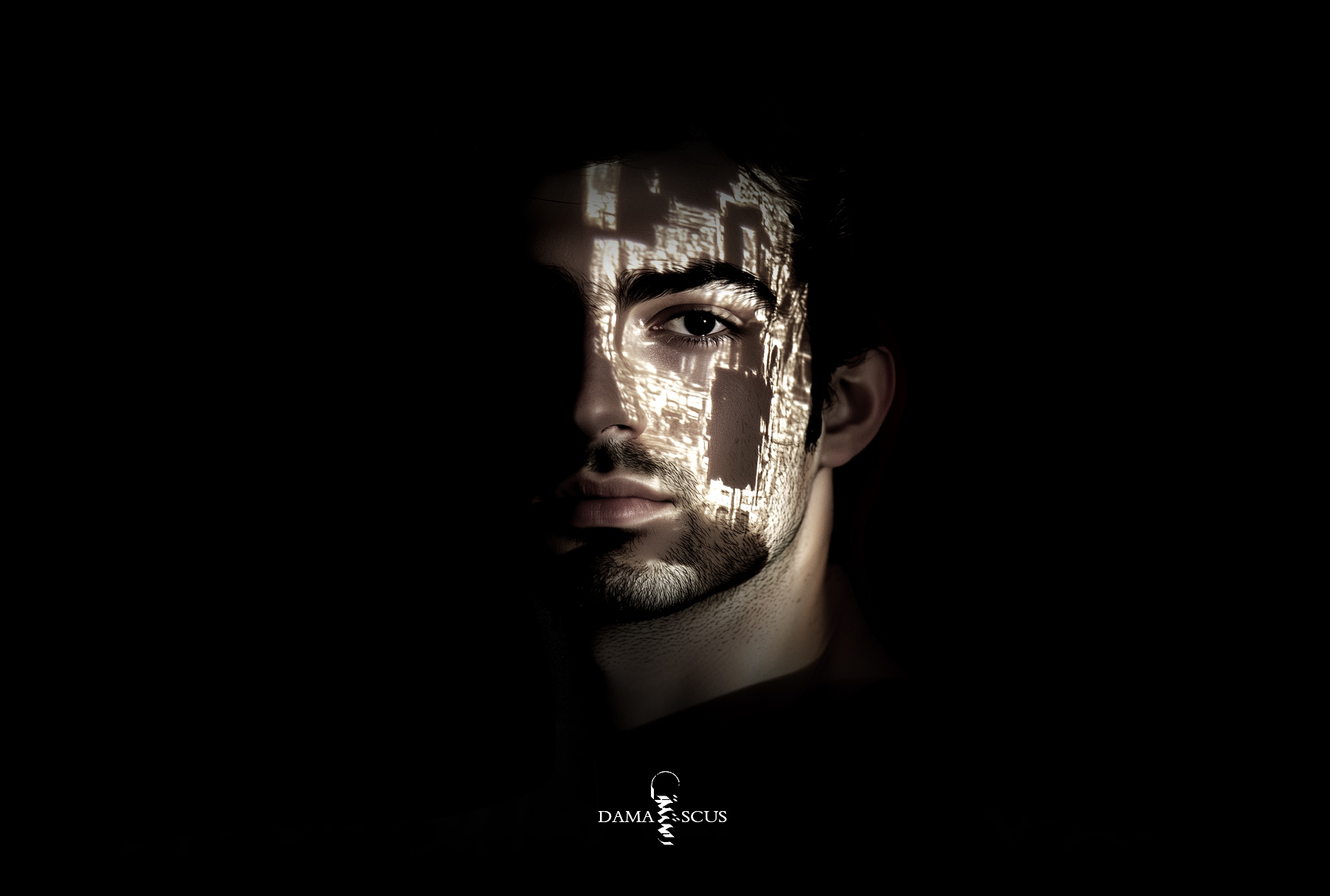
My name is Omar Tahhan, an architectural designer, creative practitioner, and Ph.D. candidate specialising in political geographies’ architecture and urbanism.
My creative practice research explores the spatial implications of the Syrian conflict on post-war Damascus. My work employs mapping and memory-oriented methods to investigate the interplay between body, identity, space, and memory.
With diverse academic and practical training from Newcastle University, University College of London, California Institute of the Arts, and Damascus University, I have presented my work across different geographies participating in international conferences and competitions in the UK, Middle East, and Europe; in particular, my master’s thesis, "The Spatial Amnesia: Identity Disorders and The Negative Heritage," was featured in INSPIRELI 9th ANNUAL AWARD as a global finalist in Prague 2024.
I've also showcased my work in numerous exhibitions, including the NCL Degree Show, and Damascus International Fair. In addition to my doctoral studies, I am an overseas-certified architect with over four years of professional experience in architectural and urban design. I create, support, and lead academic initiatives through non-profit networks to develop architectural pedagogy and critical discourse for Syria, specifically for Damascus.
Project Title
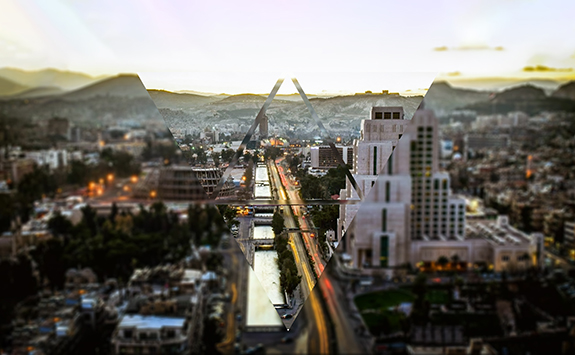
Reconstructing Cartographies of Memory and the Reclamation of Damascus: An autoethnographic study between socio-political topography and Ethno-religious divisions from the Civil War to post-Ba’athist Damascus.
Project Description
This project explores how memory, identity, and power are spatially inscribed and contested in post-war Damascus.
Using an autoethnographic and creative-practice methodology, it examines the intersections between urbicide, demographic engineering, and ethno-religious reconfiguration in the reconstruction of the city.
Through counter-cartography, forensic mapping, and visual storytelling, the study traces how personal and collective memories engage with landscapes of violence and urban erasure.
The research seeks to reclaim suppressed spatial narratives and propose new frameworks for understanding post-conflict reconstruction and the politics of belonging in divided cities.
Abstract
This doctoral research investigates the transformation of Damascus through the intertwined processes of urbicide, demographic engineering, and post-war reconstruction, analysing how these reshape the city’s socio-political and mnemonic landscapes.
Positioned within an autoethnographic and creative-practice framework, the project employs counter-cartography, forensic mapping, and narrative documentation to examine how spatial memory, loss, and return are negotiated between personal experience and collective identity.
It conceptualises Damascus as a palimpsest of power, where urban erasure and ethno-religious partitioning intersect with the politics of memory and reclamation. The study not only documents but also performs acts of spatial recovery, seeking to restore visibility to suppressed geographies and to contribute to broader discourses on post-conflict urbanism, spatial justice, and the ethical reconstruction of place.
Supervisors
Qualifications
-
2022-2023: MSc AAD (Distinction) Advanced Architectural Design: Architecture & Cities - Newcastle University
-
2021-2022: MSc Architectural Design (2 semesters) - Damascus University
-
2016-2021: BSc (First-class Honours) Architecture - Damascus University
Funding
- Northern Bridge Consortium (Standard Doctoral Award) - NBCDTP
Research Group Memberships
- Memory Studies Association (MSA)
- Association of Critical Heritage Studies (ACHS)
- Architectural Humanities Research Association (AHRA)
- Syrian Engineers Association (SEA)
Contact
- e-mail: o.tahhan2@newcastle.ac.uk