Environment
Environmental sustainability is increasingly important in shaping the future of agriculture, food systems, and rural communities. Research in this area explores how farming practices, innovation, and social change can support climate resilience, sustainable land management, biodiversity, and more inclusive approaches to environmental transition.
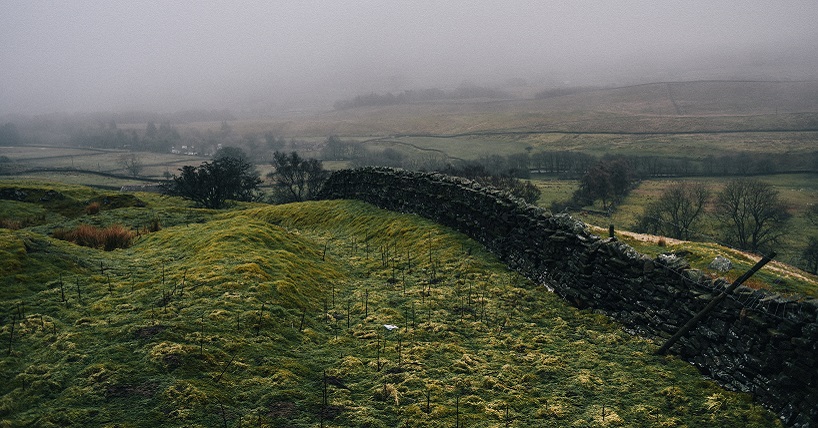
Environmental Change Organised within UK Family Farms
Farming in the UK is changing as new policies ask farmers to deliver environmental benefits such as improving biodiversity and reducing emissions. While most research looks at whether farmers take part in these schemes, less is known about what happens inside farms as these changes are put into practice. Most farms are run by families, where different members take on different roles.
This research examines how environmental change is organised within these family farms. It focuses on who makes decisions, who carries out the work, and who has the time, skills, and resources to manage new environmental requirements. By examining how these roles are distributed and coordinated, the research explains how environmental practices are implemented in everyday farming. This provides new insight into how environmental policy is translated into practice and how it can better support farms.
Dr Margaret Adesugba
Margaret.Adesugba@newcastle.ac.uk
Keywords: Environmental transition, Family farms, Farm organisation, Agri-environment schemes, Farm decision-making, UK agriculture
Improving Cropping Practices for Sustainability
European smallholder farmers and foresters face challenges including inefficient cropping practices, soil degradation, biodiversity loss, and climate pressures. Crop MATCHING is a four-year Horizon Europe project that tackles these issues by developing a thematic network to support the adoption of sustainable cropping practices. The project provides validated, evidence-based cropping practices through on-farm demonstrations and short training modules. Regional communities across 13 countries enable peer exchange, local events, and advisory support.
We coordinate the co-creation, training development, and stakeholder engagement, managing the behavioural change work across Europe. By combining practical tools, research, and multi-actor collaboration, the project empowers farmers to enhance soil health, biodiversity, climate resilience, and economic sustainability.
Professor Matthew Gorton, Dr Paul Bilsborrow, and Dr Barbara Tocco
Matthew.Gorton@newcastle.ac.uk | Paul.Bilsborrow@newcastle.ac.uk | Babara.Tocco@newcastle.ac.uk
Keywords: Environment, Sustainable cropping
Driving Sustainable Horticulture Across Europe
European horticulture faces major sustainability challenges, including continued reliance on peat and limited alternatives, inefficient use of agricultural inputs, and declining soil health from unsustainable practices. Hort2thefuture, a four-year European project bringing together 28 partners from 12 countries, aims to develop low-cost, scalable, and environmentally friendly growing media, innovative production systems that reduce inputs, and strategies to improve soil structure and prevent compaction.
We coordinate the behavioural change work across Europe. This involves identifying barriers to sustainable practices, co-creating strategies with professional growers and amateur gardeners, improving growing media labelling, and designing policy measures and incentives to encourage adoption of peat alternatives. By combining research, practical trials, and policy guidance, the project seeks to accelerate the adoption of soil-friendly, resource-efficient horticulture across Europe.
Professor Matthew Gorton, Dr Barbara Tocco, Dr Luca Panzone, and Professor Jeremy Phillipson
Matthew.Gorton@newcastle.ac.uk | Babara.Tocco@newcastle.ac.uk | Luca.Panzone@newcastle.ac.uk | Jeremy.Phillipson@newcastle.ac.uk
Keywords: Environment, Soil health, Sustainable practices
Women in Regenerative Agriculture and Innovation
GRASS CEILING was a three-year Horizon Europe research programme (2023–2025) involving a consortium of 29 partners across nine European countries. The project highlighted rural and farm women’s engagement in socio-ecological innovation. It identified gaps in existing support systems, the collection and use of relevant data, and promoted the integration of women’s experiences and needs into policy at both European and national levels.
A key component of the project involved working directly with women innovators in the nine participating countries. This collaborative model proved highly effective, and the research was recognised by the European Commission as a success story. Building on this work, we are currently replicating the model in the Scottish Borders in collaboration with women innovators. We are also involved in a related project on the Isle of Mull, working with women entrepreneurs to develop products using seaweed harvested from the community-owned seaweed farm.
Professor Sally Shortall and Dr Orla Collins
Sally.Shortall@newcastle.ac.uk | Orla.Collins@newcastle.ac.uk
Keywords: Women, Regenerative farming, Ecological transitions, Innovation