Nuclear Magnetic Resonance Spectroscopy
This non-destructive technique can determine sample purity and monitor dynamic processes or chemical reactions.
Nuclear magnetic resonance spectroscopy facilities at Newcastle University
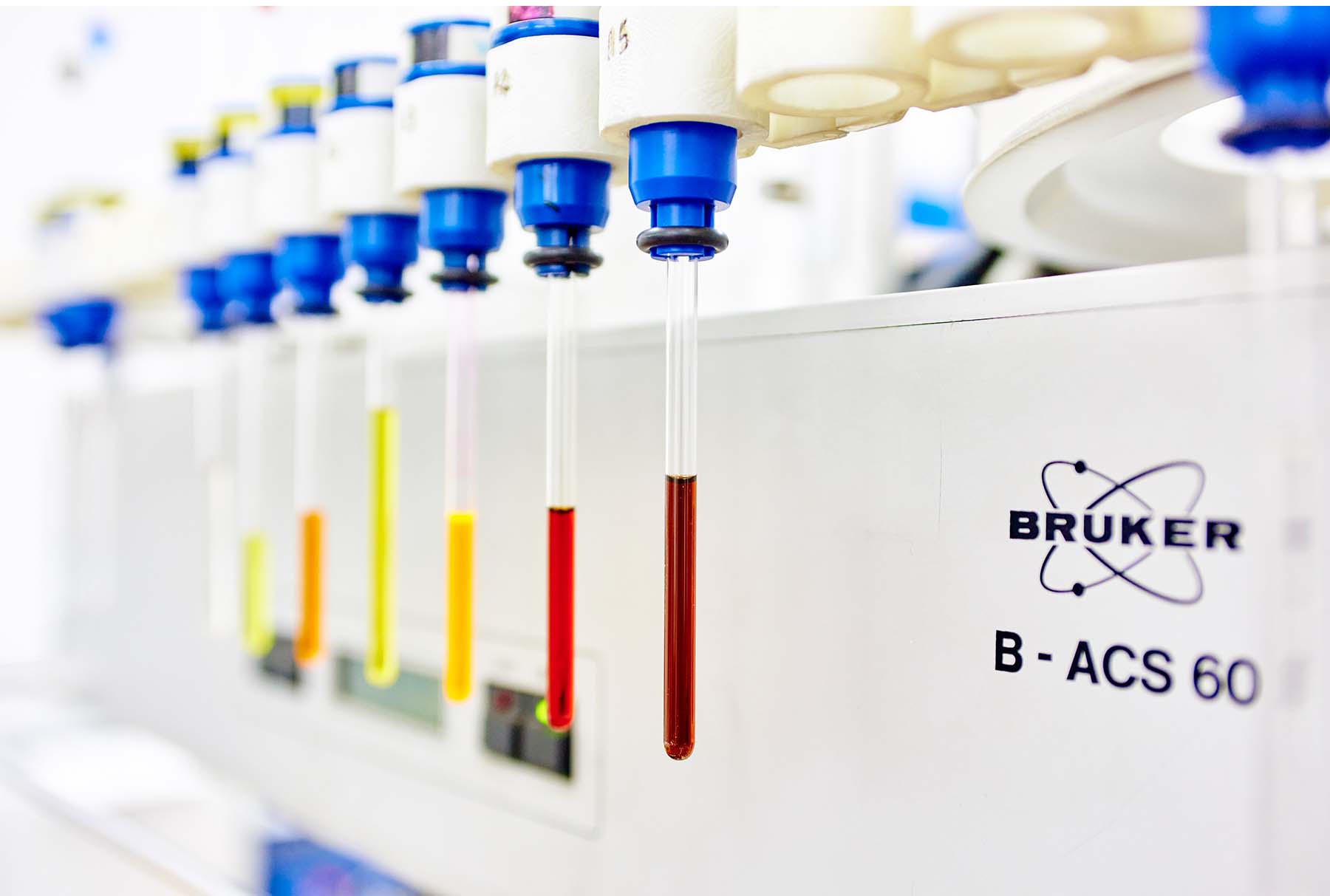
Nuclear magnetic resonance spectroscopy (NMR) provides detailed information about molecular structure. It may be the most common analytical technique used in structure determination. It can also determine sample purity and monitor dynamic processes or chemical reactions. It is a non-destructive analytical technique and requires only a few mg of material.
At Newcastle, we are able to observe almost all NMR-active nuclei including (but not limited to) 1H, 7Li, 11B, 13C, 19F, 29Si, 31P, 119Sn and 195Pt. Our spectrometers are equipped with a range of NMR probes and can analyse samples at a wide range of temperatures.
The NMR staff at Newcastle are experienced in the handling and analysis of a wide range of organic and inorganic compounds. All have backgrounds in chemical research and can advise on the use of NMR for analysis. They are confident in the handling of extremely air/moisture sensitive samples and have particular expertise in multinuclear Solution-State NMR.
Newcastle University offers a comprehensive selection of NMR experiments, which can be used with other analytical techniques, such as Solid-State NMR (SSNMR), Mass Spectrometry and Single Crystal XRD, to provide an in-depth structural characterisation service.
We've used Newcastle University NMR Spectroscopy Service for over 10 years. Their wide range of 1D/2D NMR experiments with rapid turnarounds has been crucial for us and our clients.