Durham University’s Oriental Museum for Cultural Exchange Programme
26 March 2026
Recently, the Confucius Institute at Newcastle University successfully collaborated with the Oriental Museum at Durham University to deliver a joint cultural engagement programme. The initiative was carried out in two phases—preliminary preparation and a group visit—combining on-site exploration with specialist-guided interpretation. The event offered staff and students a rich and meaningful journey into Chinese culture, while also laying a solid foundation for future collaboration between the two institutions.
Founded in 1960, the Oriental Museum at Durham University was originally established to support the teaching of Oriental languages and area studies. As academic work developed, the University recognised that language learning is deeply intertwined with cultural understanding. The museum was therefore created to complement teaching through artefacts and works of art. Its collections, largely built through donations and long-term acquisitions, span regions across Asia and North Africa. Highlights include Chinese ceramics, bronzes, and ancient Egyptian artefacts, making it one of the UK’s most significant museums dedicated to Eastern cultures.
The first phase took place on Sunday, 8 February. Led by Professor Su Yuxiao, all teaching staff from the Confucius Institute visited the museum for a preparatory survey. During this visit, they carefully reviewed the exhibition layout, interpretive routes, and interactive elements, and held in-depth discussions with museum staff regarding key teaching objectives for the upcoming student visit. This on-site preparation enabled the teaching team to gain a comprehensive understanding of both the content and spatial design of the exhibitions, ensuring thorough readiness for the second phase.
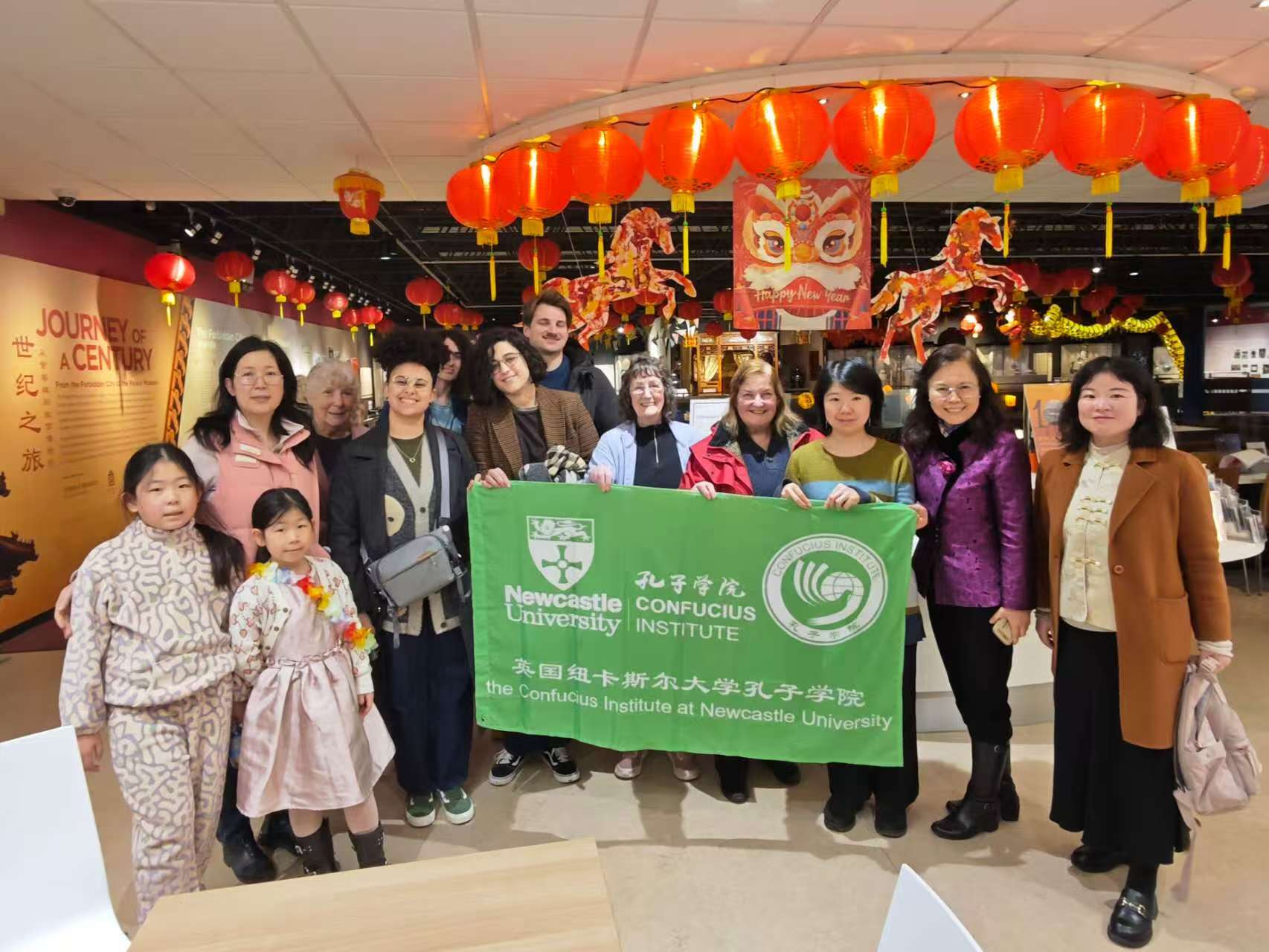
The second phase was held on Sunday, 1 March. Professor Su Yuxiao, together with government-sponsored teacher Wang Miao, led a group of 12 teachers and students to the museum for an educational visit. Participants included students from the Confucius Institute’s HSK evening classes, weekend Chinese school pupils, and members of Tai Chi classes held at local libraries. The visit focused on the special exhibition “A Century’s Journey: From the Forbidden City to the Palace Museum” as well as the museum’s permanent Chinese gallery.
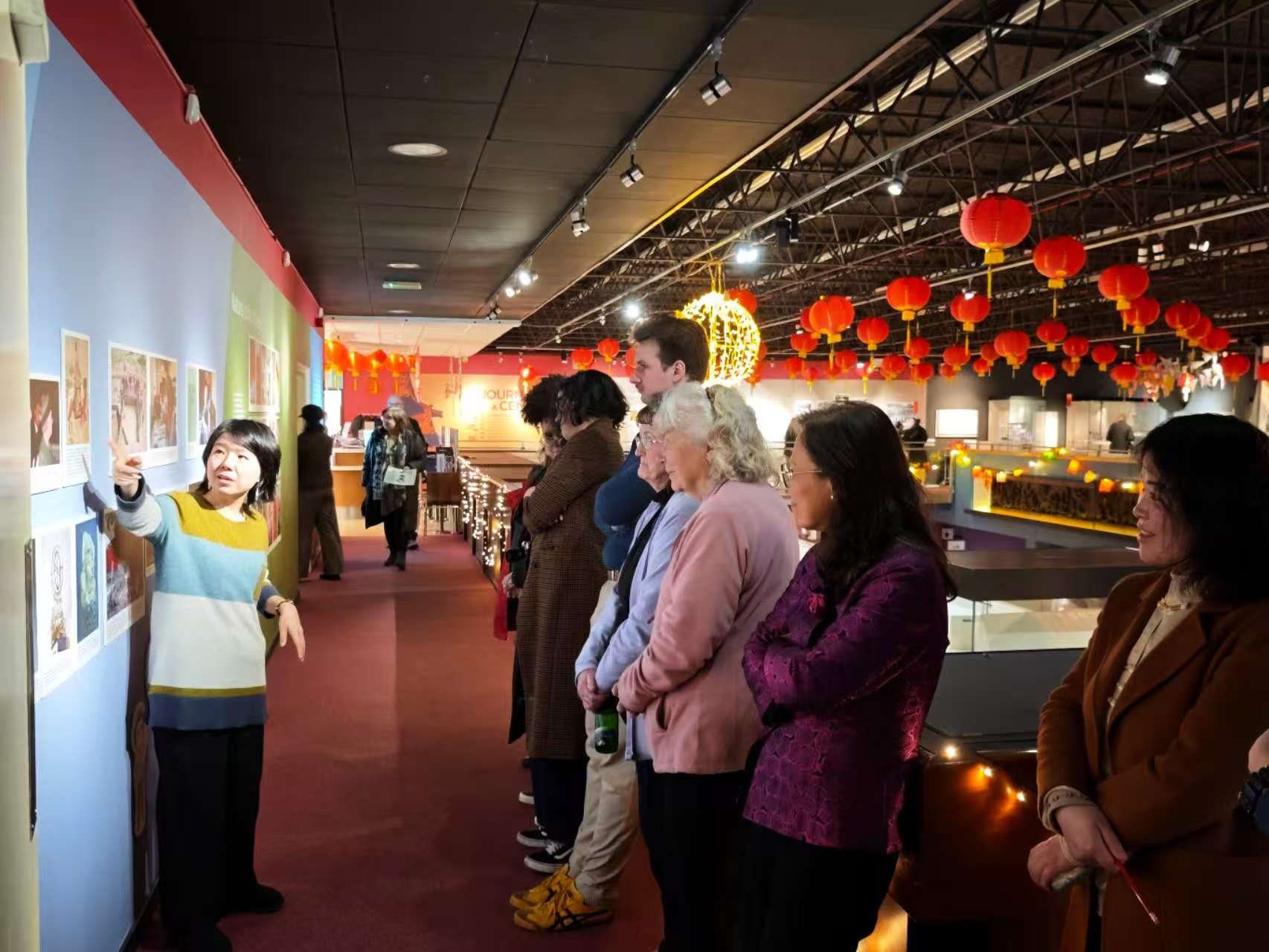
A major highlight of the visit was the full English-language guided tour delivered by Dr Qin Cao, Curator of the Chinese Collections at the Oriental Museum. Dr Cao holds a degree in Archaeology from the University of Oxford and specialises in Bronze Age material culture and numismatics in China. She has published extensively in leading international academic journals and authored scholarly monographs. Her professional experience includes roles at the British Museum, Manchester Museum, UNESCO Bangkok, and National Museums Scotland. Since 2022, she has also served as a trustee of the Compton Verney Collections Settlement. Her strong academic background and extensive museum experience ensured that her interpretation was both intellectually rigorous and engaging.
In the exhibition “A Century’s Journey: From the Forbidden City to the Palace Museum”, Dr. Cao provided a clear and structured overview of the development of the Palace Museum, tracing its transformation from an imperial palace of the Ming and Qing dynasties to a modern museum. She gave particular attention to the turbulent period during the War of Resistance Against Japanese Aggression, when cultural relics were relocated southwards for protection. Her account of the extraordinary efforts made by museum professionals to safeguard national treasures during wartime deeply moved the audience.
The exhibition also highlighted important moments of cultural exchange between China and the UK. For instance, the last emperor of China, Puyi, had an English tutor from Edinburgh, reflecting early educational exchanges between the two countries. In addition, the renowned architect and scholar Lin Huiyin contributed to the design of promotional materials for a major Chinese art exhibition held in the UK in 1935. These archival photographs and documents vividly illustrated the long-standing connections and cooperation between the two nations in the fields of cultural heritage preservation and dissemination.
Following this, Dr Cao guided participants through the permanent Chinese gallery, beginning with Neolithic pottery and progressing chronologically through Shang and Western Zhou bronzes and jades, Qin and Han funerary objects, Tang sancai ceramics, Song dynasty porcelain, and blue-and-white wares from the Ming and Qing periods. This clear chronological framework enabled students to develop a comprehensive understanding of the evolution of Chinese material culture. Many paused to closely observe the diverse bronze ritual vessels and the refined elegance of Song ceramics, listening attentively throughout.
The gallery’s interactive features were equally engaging, particularly the section on the Chinese zodiac, which encouraged active participation. Students discussed the origins and symbolic meanings of zodiac culture, deepening their appreciation of traditional Chinese culture in an enjoyable and relaxed atmosphere.
The visit and guided tour lasted approximately three and a half hours. The richness of the content and the accessibility of the explanations left participants thoroughly engaged. One student remarked that it was the longest time they had ever spent in a museum, a testament to the exhibition’s appeal and cultural significance.
After the visit, Dr Cao, on behalf of the Oriental Museum, held in-depth discussions with Professor Su regarding future collaboration. Both sides explored the possibility of integrating museum visits into the Confucius Institute’s language curriculum in the form of regular “field trips,” allowing students to learn Chinese within authentic cultural contexts while gaining a deeper understanding of Chinese history and art. Specific models and implementation details will be further developed in future discussions.
This collaborative cultural programme not only broadened the cultural horizons of Confucius Institute students, but also strengthened the partnership between the Confucius Institute at Newcastle University and the Oriental Museum at Durham University. Through shared academic resources and innovative teaching approaches, both institutions look forward to opening a new chapter of collaboration in the fields of Sino-UK cultural exchange and museum education.