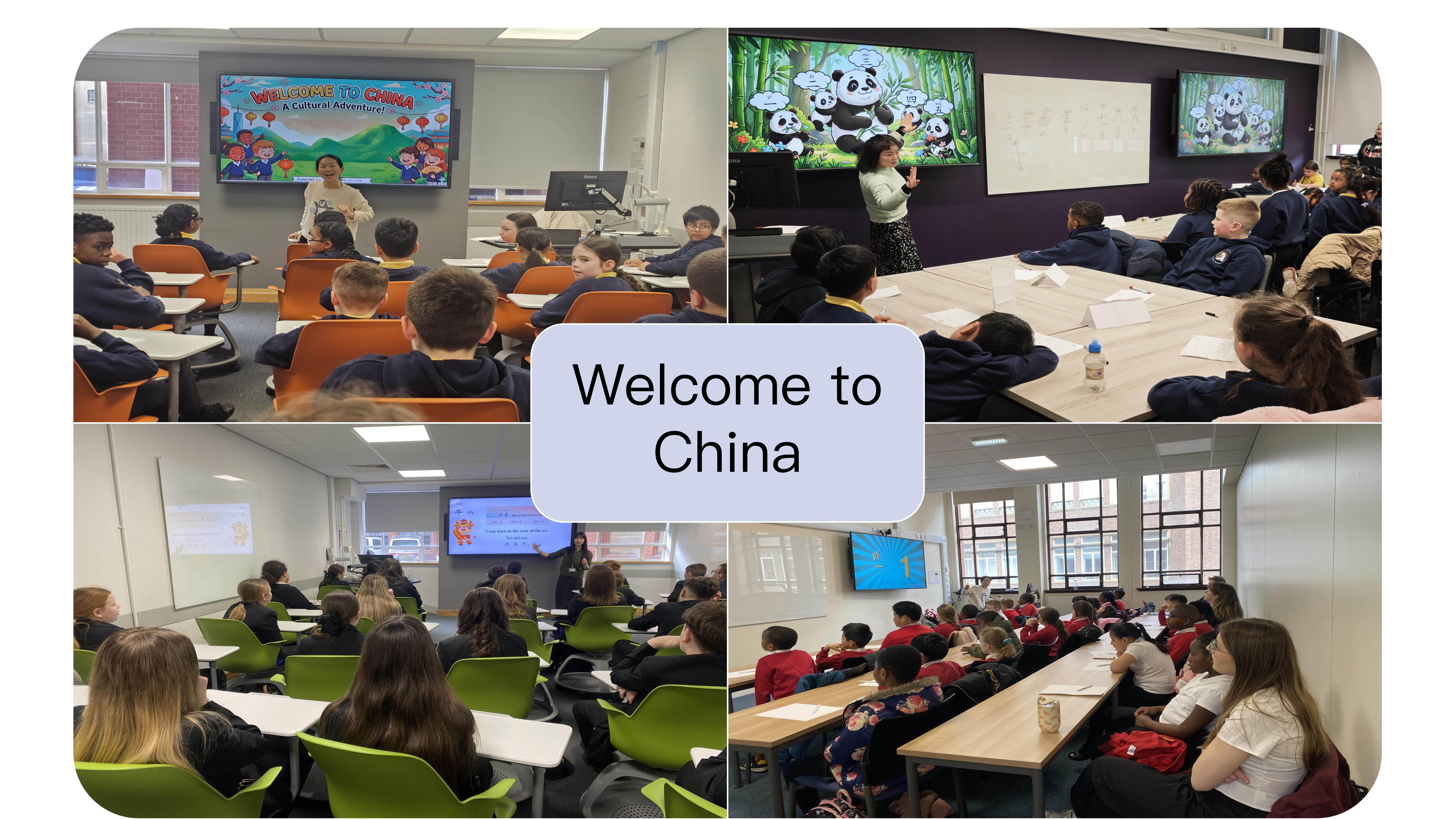
Fourth Welcome to China Event
24 March 2026
Spreading the Fragrance of Chinese Language, Composing a Chapter of Friendship
— The Confucius Institute at Newcastle University Successfully Hosts the 4th “Welcome to China” Programme
Accompanied by the gentle breeze of early spring, the Confucius Institute at Newcastle University successfully hosted its flagship cultural programme, “Welcome to China” Primary and Secondary School Experience Days, on 10–11 March and 17–18 March. Over the course of four days spanning two weeks, the Institute welcomed more than 210 teachers and students from seven local primary and secondary schools. Through immersive language learning and rich cultural experiences, a vibrant “Chinese cultural wave” was brought to life along the banks of the River Tyne.
I. Building a Recognized Brand: Four Years of Development and Growing Influence
As a signature initiative of the Confucius Institute at Newcastle University, the “Welcome to China” programme has now entered its fourth year. Since its inception, the programme has been dedicated to providing primary and secondary school students in North East England with opportunities to engage closely with Chinese language and culture.
Preparations for this year’s event began as early as last autumn. In November, the Confucius Institute collaborated with International Newcastle to launch a joint promotional campaign. Benefiting from the strong reputation established in previous years, the programme attracted widespread attention from the local education community as soon as it was announced.
By the application deadline of 20 December, a total of 12 schools had submitted applications. Due to limited capacity and scheduling constraints, seven schools were ultimately selected to participate. Although five schools were unable to attend, the high level of interest once again demonstrated the strong appeal of Chinese culture among local young people and the programme’s growing brand influence.
II. Engaging Lessons: Discovering the Charm of Chinese through Interaction
To inspire enthusiasm among first-time learners, the teaching team adopted an innovative “1+1” model, consisting of one hour of language instruction and one hour of cultural experience, enabling students to approach Chinese in an enjoyable and accessible way.
1. Fun with Chinese Numbers: A Language in Motion
In the language sessions, teachers Chen Shijia, Zhu Liujing, and Wang Miao designed interactive lessons centred on numbers for several participating schools. Through a combination of pronunciation practice, character writing, and physical activities, students not only learned to count from one to ten in Chinese but were also introduced to the unique Chinese one-handed number gesture system.
This “one-hand counting method” sparked great curiosity among students. As they proudly displayed the Chinese characters they had written, their sense of achievement and engagement was clearly evident.
2. The Chinese Zodiac: A Cultural Code of Personality
The Chinese Zodiac sessions proved to be one of the most anticipated parts of the programme. Through animated presentations and storytelling, students learned vocabulary such as “rabbit,” “dragon,” and “tiger,” while also identifying their own zodiac signs.
During interactive discussions, students explored the personality traits associated with different zodiac animals. This cross-cultural comparison fostered meaningful connections and brought them closer to understanding Chinese culture.
III. Immersive Cultural Experiences: Exploring the Beauty of Chinese Traditions
While language classes opened the door to understanding, the cultural workshops offered a deeper emotional connection. Four themed workshops—calligraphy, paper-cutting, lantern-making, and Tai Chi—allowed students to experience the richness of Chinese intangible cultural heritage from multiple perspectives.
1. Calligraphy: The Art of Brush and Ink
In the calligraphy workshop, students were introduced to the origins of Chinese characters and basic brush techniques. They carefully wrote characters such as “人” (person), “山” (mountain), “中国” (China), and “福” (blessing), experiencing the artistic and cultural depth embodied in each stroke.
2. Paper Cutting: Symmetry and Creativity
During the paper-cutting sessions, sheets of red paper were transformed into intricate window decorations and the character “春” (spring). As students unfolded their symmetrical designs, the classroom filled with excitement and a strong sense of accomplishment.
3. Lantern Making: Illuminating Cultural Traditions
Under the guidance of teachers, students created traditional Chinese lanterns using coloured paper and craft materials. In the process, they learned about the symbolic significance of lanterns during festivals such as the Spring Festival and the Lantern Festival, representing reunion, joy, and good fortune.
4. Tai Chi: Harmony of Body and Mind
In the Tai Chi sessions, students practised basic stances and movements, experiencing the balance between stillness and motion central to Chinese philosophy. The lively and engaging format allowed them to appreciate Tai Chi not only as a martial art but also as a means of relaxation and mental well-being.
IV. Lasting Impact: Sowing the Seeds of Friendship
Although the programme lasted only four days, its impact is expected to be long-lasting.
Professor Su Yuxiao, Chinese Director of the Confucius Institute, remarked:
“Seeing students progress from initial hesitation to confidently greeting others with ‘hello’ and ‘thank you’ in Chinese truly demonstrates the power of education. This is not only about language learning, but also about building connections between hearts.”
Participating teachers also gave highly positive feedback, noting that such immersive experiences significantly enrich students’ global perspectives and contribute meaningfully to multicultural education.
As the ancient Chinese saying goes, friendship between nations lies in the affinity between their peoples, and such affinity grows from mutual understanding. Through the “Welcome to China” programme, the Confucius Institute at Newcastle University has built a vibrant bridge of cultural exchange along the River Tyne. By learning through experience and interaction, young people in the UK are not only gaining knowledge of the Chinese language but also developing a deeper appreciation of Chinese culture—planting seeds of understanding and friendship for the future.