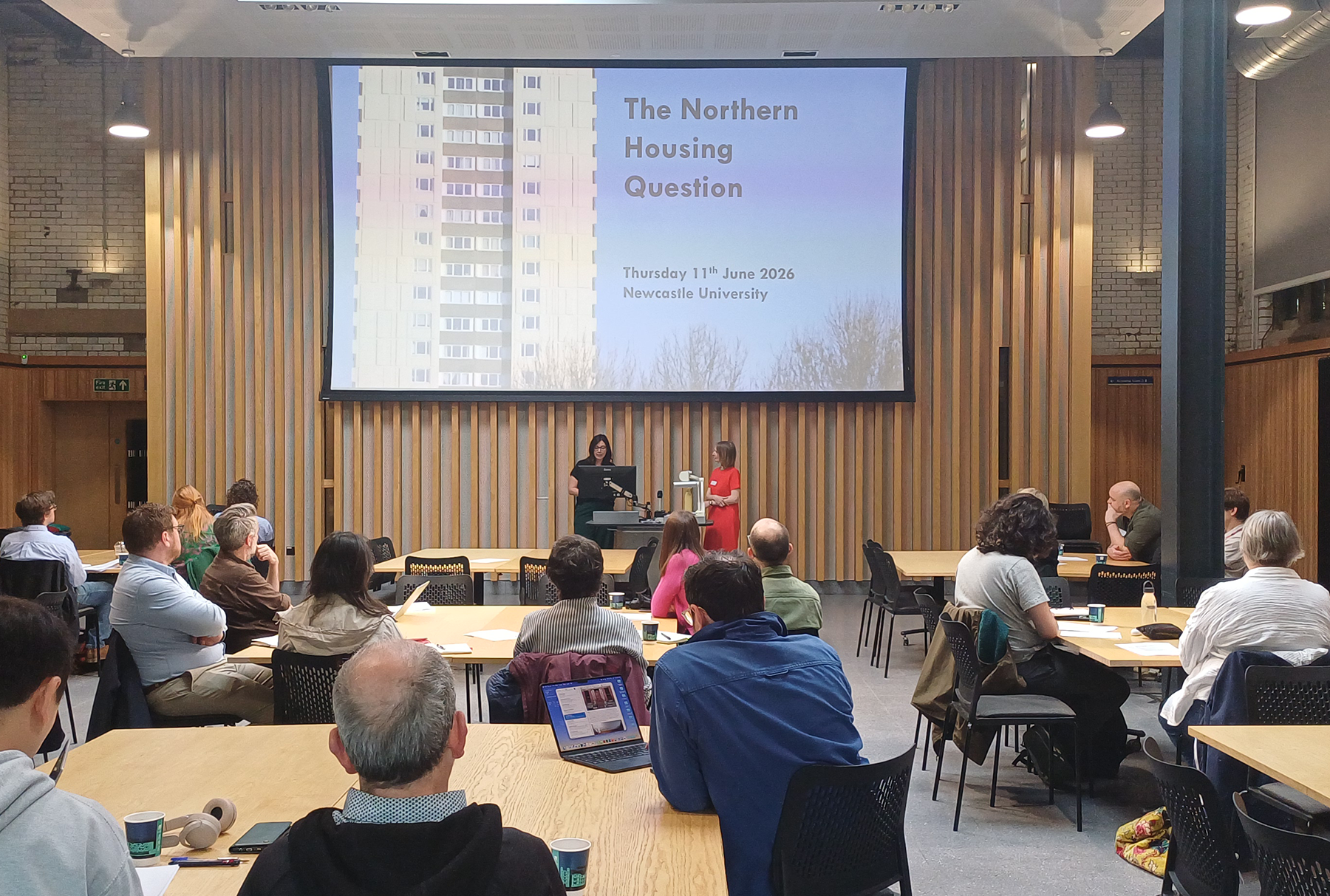
The Northern Housing Question
A one-day event held on Thursday 11 June at the Boiler House organised by Julia Heslop and Emma Ormerod
30 June 2026
On Thursday 11 June 2026, The Northern Housing Question symposium brought together policymakers, academics, housing practitioners, and campaigners at Newcastle University’s Boiler House to examine the pressing challenges shaping housing across the north of England. The event provided a critical platform for cross-sector dialogue, focusing on affordability, housing supply, tenant rights, and the structural barriers underpinning the housing crisis.
Organised by Julia Heslop (School of Architecture, Planning and Landscape) and Emma Ormerod (School of Geography, Politics and Sociology), the symposium responded to growing concern around the rising cost of housing. With more than a third of household income now typically spent on housing, speakers underscored the profound consequences this has for living standards, inequality, and overall wellbeing, particularly within the context of the ongoing cost-of-living crisis.
A key theme throughout the day was the persistence of housing unaffordability in northern England despite comparatively lower property values. Contributors highlighted how lower wages, insecure employment, and outdated housing stock mean that many households still struggle to access homes that meet their needs. Discussions also emphasised the legacy of economic and demographic change, which has left many northern communities with housing that is often unsuitable for modern living.
The introduction of the Renters Rights Act (1 May 2026) was recognised as an important milestone in strengthening tenant protections and improving security within the private rented sector. However, throughout the day there was broad consensus that policy reforms to date have not gone far enough. Speakers repeatedly pointed to deeper structural challenges—particularly the role of land ownership, land values, and availability—as central to the housing crisis. These factors continue to constrain housing development, drive up costs, and often lead to compromises in construction quality.
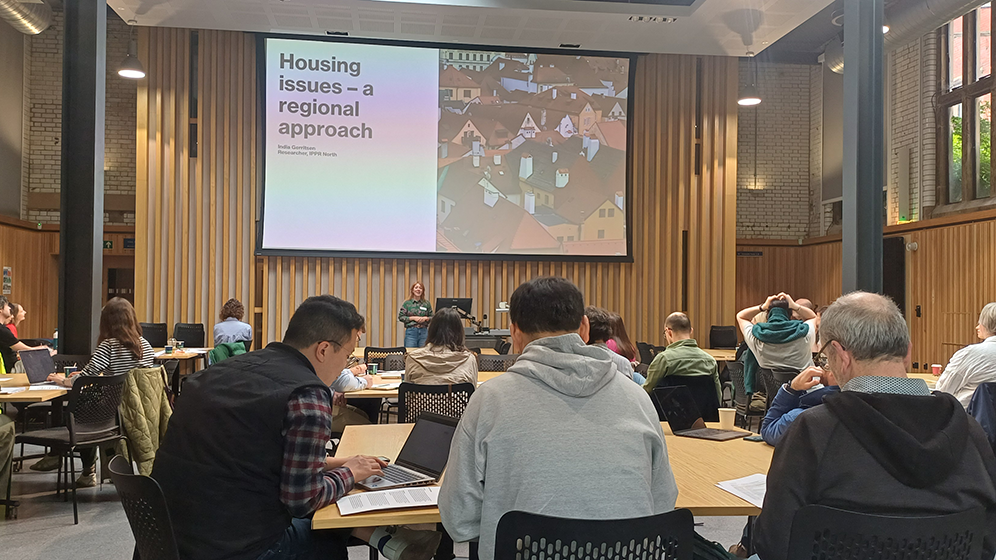
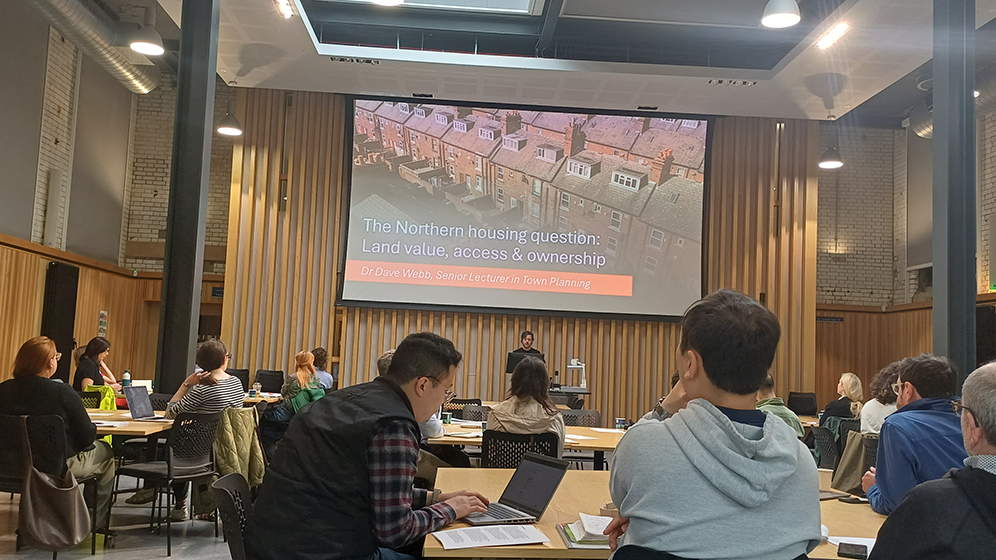
Event images
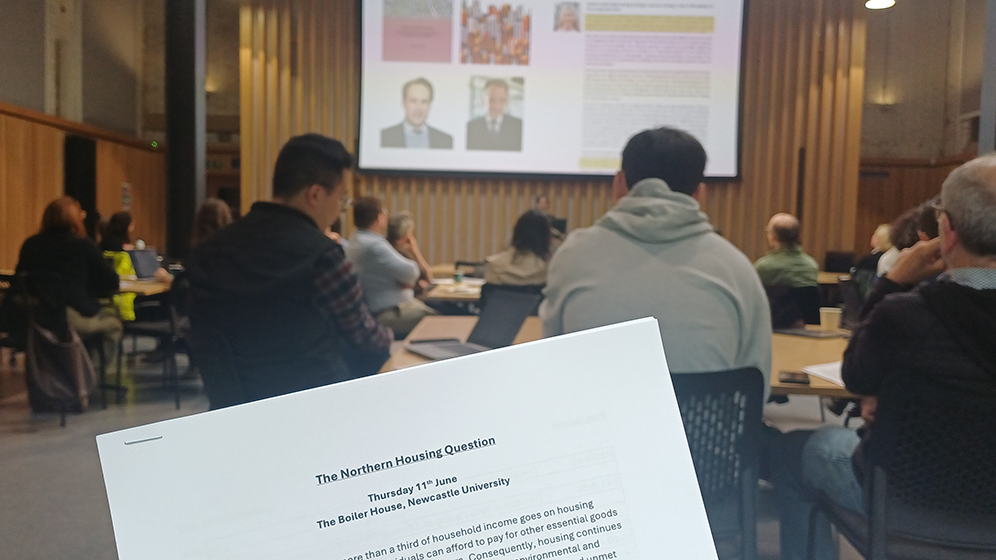
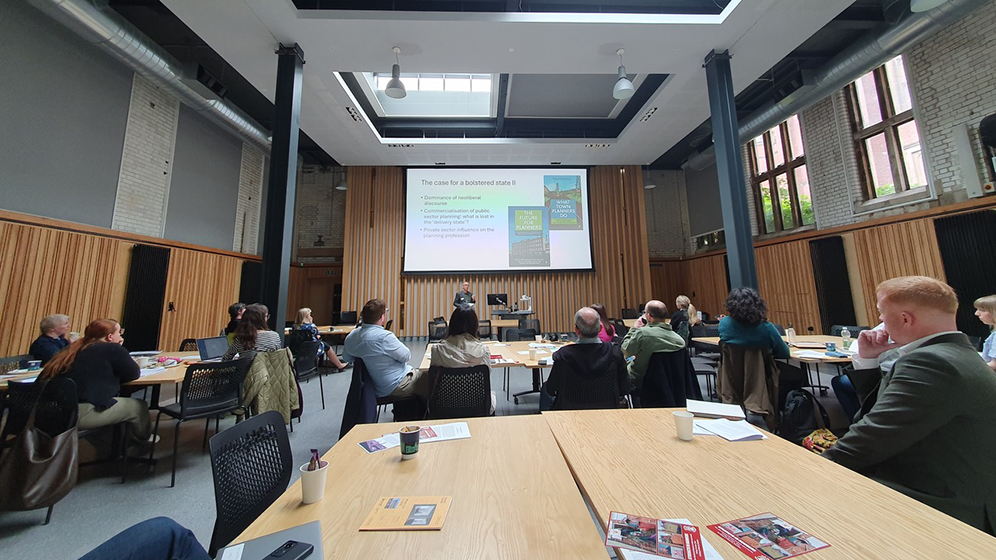
Image credit Minki Sung
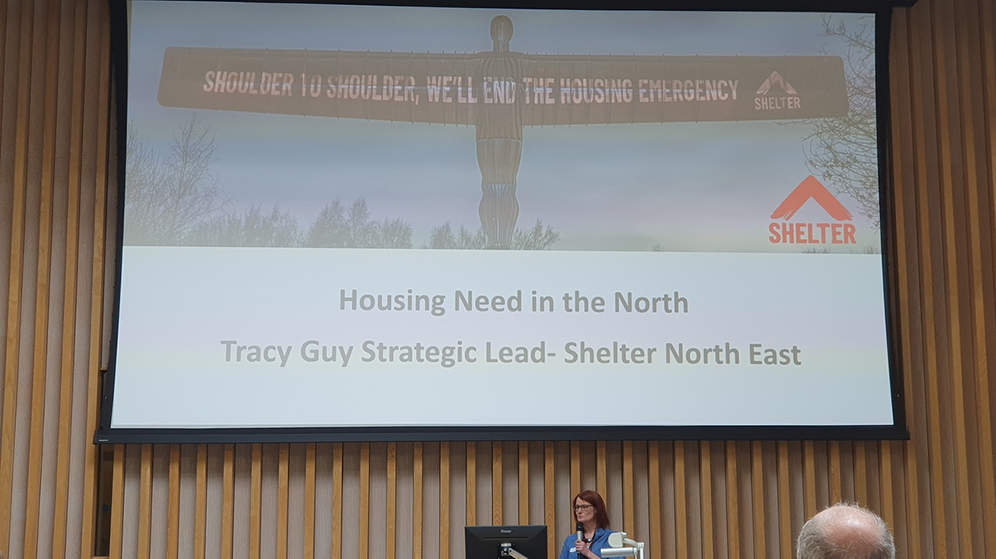
Image credit Minki Sung
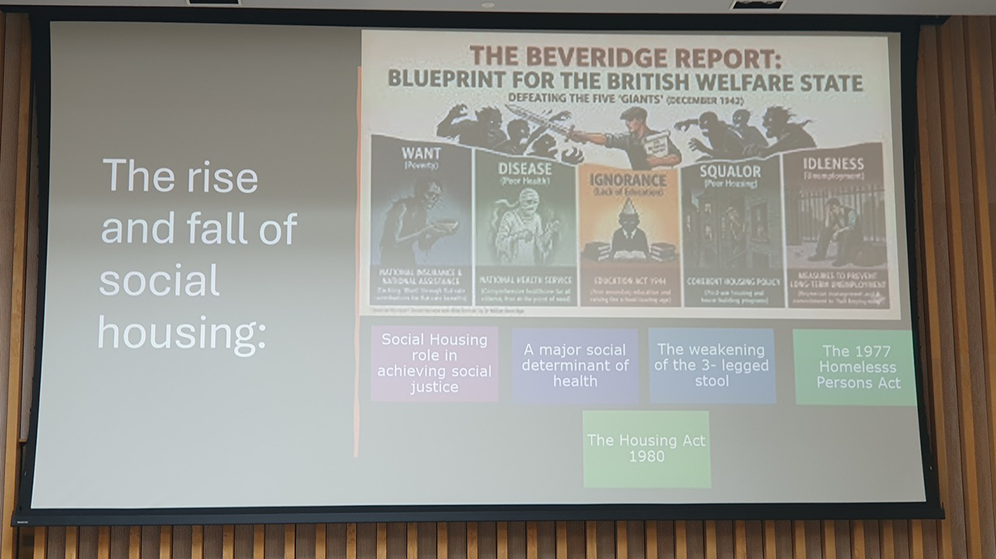
Image credit Minki Sung
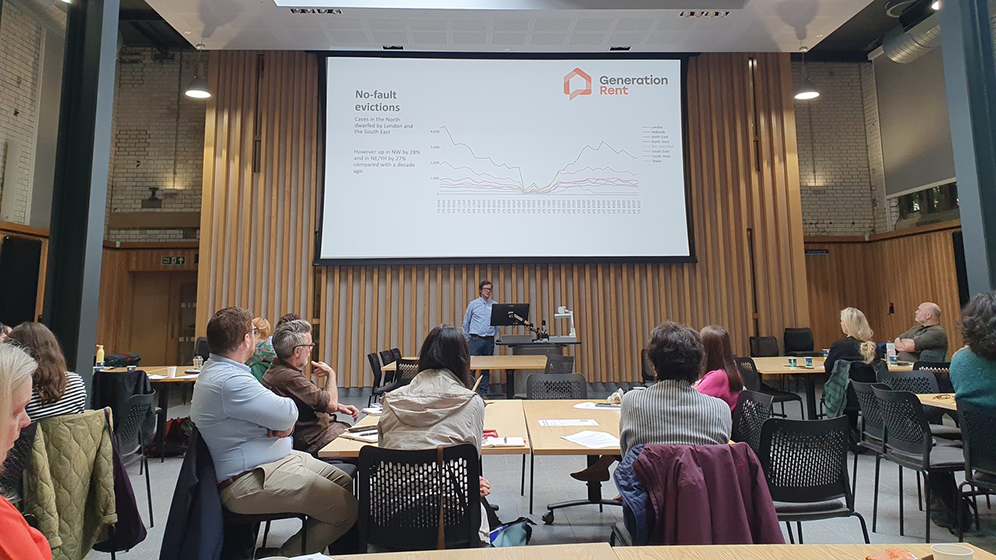
Image credit Minki Sung
The symposium explored four key areas:
- Land ownership and land values – examining how market structures influence development and affordability
- The private rental sector – focusing on tenants’ rights, regulation, and lived experiences
- Social housing and housing need – addressing shortages, waiting lists, and pressures on local authorities
- Housing decision-making and futures – considering policy approaches and regionally responsive solutions
The event featured a strong line-up of speakers representing a range of perspectives across the housing sector. Contributions were made by:
- Dan Wilson Craw (Generation Rent)
- Vicky McDermott (Director of Housing and Communities, Newcastle City Council)
- Tracy Guy (Shelter North East)
- Jimm Reed (Leeds Community Homes)
- India Gerritson (IPPR North)
- Steven Parkin (Homes England)
Together with support from Newcastle University speakers Dave Webb, Owen Hopkins, Rose Gilroy and Geoff Vigar, these speakers provided insights spanning local government, national policy, community-led housing, advocacy, and research, reinforcing the importance of collaborative approaches to tackling the housing crisis.
A consistent message emerging from the symposium was that the housing crisis must be understood as geographically uneven. While national policy frameworks shape housing outcomes, the north of England faces distinct challenges linked to its economic history, housing stock, and demographic patterns. As such, there was a strong call for place-based solutions that reflect regional realities, alongside more ambitious national reforms—particularly in relation to land and housing markets.
The Northern Housing Question offered a valuable forum for critical discussion and knowledge exchange. It highlighted both the urgency of addressing housing inequalities and the need for bold, systemic change to ensure access to safe, affordable, and sustainable housing across the north of England.