Case Study: Slow Shopping
See how our final year undergraduate marketing students helped Slow Shopping, a local not-for-profit. This case study highlights how the teams’ research informed recommendations and helped provide a fresh perspective to the work of Slow Shopping.
About Slow Shopping
Katherine Vero founded the charity Slow Shopping in 2016. She had seen the challenges faced in everyday shopping when caring for her mother who lived with dementia.
Katherine’s aim was to create environments where people with visible, invisible, intellectual, or cognitive disabilities could shop with dignity and independence.
Slow Shopping initiatives can help retailers better serve people living with dementia, as well as their families and carers.
As well as improving wellbeing, research suggests that inclusive retailing can also deliver strong commercial returns.
The collective spending power of people living with dementia, their families and their carers is sometimes known as the ‘dementia pound’. It is projected to be worth £22.7 billion by 2030.
The programme itself is unique. Unlike many inclusion initiatives that focus solely on physical adaptations, Slow Shopping combines:
- environmental changes, such as reducing or eliminating background sound
- staff awareness
- a compassionate ‘lived-in’ ethos
This combination helps to deliver a dignified shopping experience.
Katherine has run successful Slow Shopping pilots in places such as Newcastle’s Grainger Market and Wagamama. New projects in Cramlington are in development.
The challenge
The aim for Slow Shopping is to consolidate its foundation and develop a further four or five pilot programmes in the North East.
Our undergraduate marketing consultancy student team was asked to:
- investigate awareness and interest levels in shopping (in-person vs online). This included consumer purchase intention/behaviour and digital marketing consumption for Slow Shopping
- evaluate current retail perceptions of the company. This will help inform its strategy for future retailer involvement
- identify marketing techniques to effectively communicate with and influence customer segments, increasing awareness and uptake
- investigate the best ways to optimise Slow Shopping's brand and digital marketing approach
- establish how Slow Shopping can effectively expand into different segments
The approach
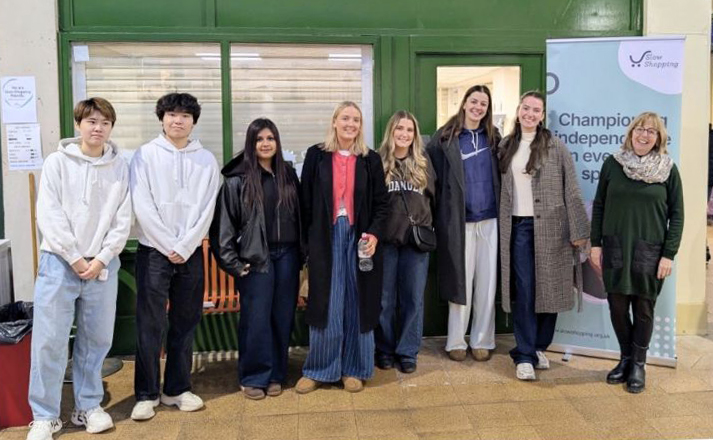
The student project team was made up of third-year marketing students, led by Sophie Tarbatt.
After receiving the live client brief in October 2025, they agreed the approach and research they would conduct.
They then worked closely with Katherine on the research proposal plan and presentation.
The team carried out their research in November. They conducted:
- competitor analysis
- online surveys
- face-to-face interviews in local shopping centres
The outcome
The team presented their findings and recommendations in March 2026. They submitted:
- an 8000-word client report
- a research portfolio
- an Executive Summary infographic poster presentation
Their recommendations included:
- further focus on digital marketing, including social media marketing and improvements to the Slow Shopping website
- using retailer badges, tote bags and other merchandise to raise funds and awareness
- scale expansion with intergenerational partners to assist with pop-ups and to expand slow hubs
- partnerships to access the ‘purple pound’ markets across the UK
By supporting the development of Slow Shopping, the students helped it on its mission to give dignity to all by making places more inclusive, understanding diverse needs through authentic research, and developing workable solutions that benefit wider society.
Growing older is a natural ageing process. Slow Shopping seeks to create a sustainable charity model, and the research and recommendations suggested by the students will enable its philosophy to be developed nationally and internationally.