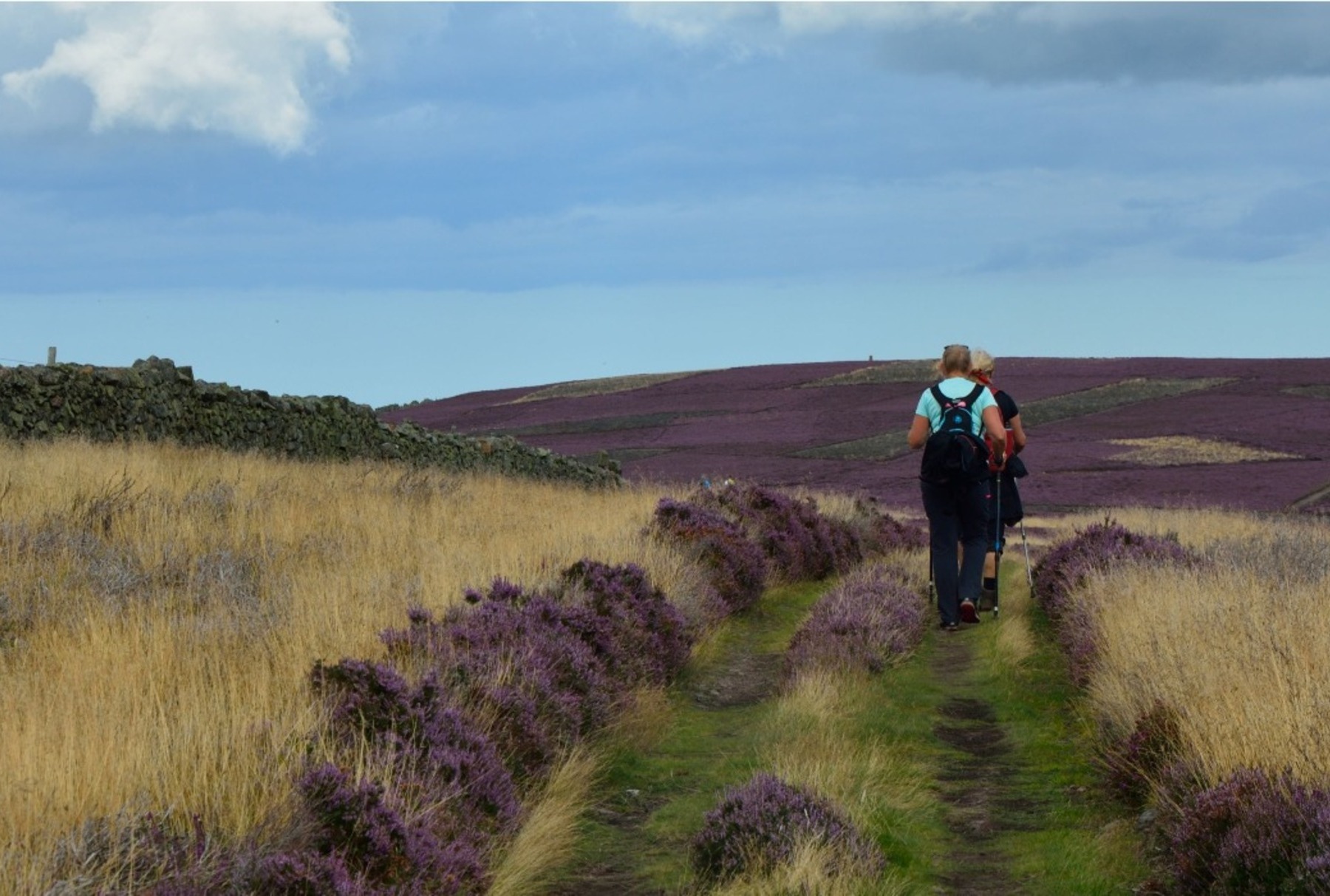
Farming & Fishing
Farming and fisheries are central to food security, rural livelihoods, environmental sustainability, and economic resilience. Research in this area explores how agricultural and marine systems can adapt to climate change, environmental pressures, and shifting policy landscapes through innovation, sustainable management, and collaborative approaches.
Managing Sheep Lameness
Research on UK sheep lameness management highlights how both structural and behavioural factors, as well as humans’ and animals’ lived experiences, shape farmers’ uptake of recommended practices (e.g. the Five Point Plan). As such, lameness management is inherently contextual and often involves balancing welfare value with the practical demands of running a flock.
Farmers’ behaviours and actions are influenced by a range of factors within (e.g. record keeping) and outside (e.g. market prices) of their control. This demonstrates that effective lameness control requires sector-wide support and collaboration. Vet–farmer collaborations, in particular, emerged as central to successful management. Our findings indicate that the use of sheep health recording systems are effective tools to support a reduction in lameness. The findings highlight that successful implementation of lameness control strategies depends not just on technical protocols, but on recognising and supporting the situated expertise of farmers.
Dr Beth Clark and Dr Niamh Mahon
Beth.Clark@newcastle.ac.uk
Keywords: Livestock, Sheep, Animal health, Animal welfare, Lameness
Securing Inshore Fishing Livelihoods
Our research continues to evidence the societal benefits that flow from sustainable and well-managed fisheries that operate in our coastal waters, providing a source of livelihood, supporting local economies, sustaining vibrant cultural heritage, and contributing to national food security. However, research also shows the current precariousness of the inshore fishing sector. These small boats, which make up 75% of the whole fleet, depend on local inshore fishing grounds and land their catch in the many towns and villages dotted around the coastline, benefiting rural coastal regions in particular.
In England, the inshore fleet is in decline. Within a 14-year period (2008–2022), one fifth of under 10m vessels have been lost and the number of full-time fishermen employed has almost halved. In many coastal areas, the inshore fleet is in real danger of collapse, accentuated by an ageing fishing population close to retirement and an uncertain future for new generations. Our research established a new Inshore and Small-Scale Fisheries (ISSF) consortium, which brings together inshore fishers with government and non-government stakeholders to collectively understand the reasons for the decline and identify viable solutions to address it.
Dr Sarah Coulthard
Sarah.Coulthard@newcastle.ac.uk
Keywords: Sustainable fisheries, Inshore, Small-scale, Livelihoods
Regenerative Agriculture
For many, farming regeneratively represents a shift from long-established high-input crop production models to approaches that maximise soil health and optimise biodiversity and the ecosystem services that flow from it. By reducing reliance on external inputs and introducing resilience into agricultural systems, methods such as companion cropping, cover cropping, arable livestock integration, and reduced tillage may offer economic as well as environmental gains, particularly when supported through policy incentives or private markets for natural capital.
Nevertheless, realising gains from regenerative agriculture is neither straightforward nor immediate and may be affected by farm context, location, and access to capital to support agri-technology investment that can facilitate change. Supporting farmers to most effectively make this transition through research, demonstration, and communication is therefore key for the future of regenerative agriculture and to realising its full potential as an approach to farming that maximises productivity, profitability, and stability in a changing climate.
Dr Dave George
David.George1@newcastle.ac.uk
Keywords: Regenerative agriculture, Soil, Resilience
Using Agritech to Support Resilient Farming in the UK
UK farming is under pressure from climate change, rising input costs, pests and diseases, labour shortages, and the need to reduce its environmental impact. Our research sits within agritech, where we work on digital and sensing tools that help farmers make better decisions and manage crops more precisely. This includes using sensors, imaging, AI, and field trials to detect crop stress earlier, reduce waste, and improve productivity.
We are particularly interested in how these technologies can support more resilient and sustainable farming systems in the UK while also being practical enough for real-world use. This work brings together research, industry, and policy, and also integrates teaching and knowledge exchange to help build the next generation of agritech skills. The overall aim is to support a more productive, climate-ready, and environmentally responsible farming sector.
Dr Ankush Prashar and Dr Dave George
Ankush.Prashar@newcastle.ac.uk | David.George1@newcastle.ac.uk
Keywords: Agritech, Digital agriculture, Precision farming, Crop resilience, Sensors, Artificial intelligence, Food security
Smarter Tools for Early Crop Stress Detection
UK farming needs practical ways to cope with climate change, rising input costs, pests and diseases, and growing pressure to reduce environmental impact. We focus on developing digital tools, sensors, and AI that can help UK agriculture become more resilient, productive, and sustainable. Working across potatoes and other field crops, we combine tractor-mounted sensing, drones, spectral imaging, and machine learning to detect crop stress earlier and support better decision-making on farms. This helps reduce unnecessary inputs, protect yields, and improve environmental outcomes.
We also explore how these technologies can support controlled and vertical farming, helping strengthen year-round food production closer to where people live. A major part of our work is ensuring research makes a real difference through collaboration with farmers, industry, policymakers, and the public. The aim is to develop practical and trusted tools that support food security and a more resilient future for UK farming.
Dr Ankush Prashar
Ankush.Prashar@newcastle.ac.uk
Keywords: Digital agriculture, Crop stress detection, Precision farming, Phenomics, Vertical farming, Food security, Machine learning
Farm Safety and Farmer Wellbeing
We are part of a Horizon Europe research programme examining farm safety across European farms through the SAFEHABITUS project. Our research also explores the wellbeing of farm families, with particular attention to the mental health of those living and working on farms. The project aims to develop practical solutions to improve occupational health and safety in agriculture.
Our work highlights important gaps in existing policies and regulations, which tend to focus primarily on hired agricultural labour, often migrant workers. While protecting this group is essential, the majority of farm work across Europe is carried out by self-employed farm families, whose safety needs are frequently overlooked. Many work long hours under demanding conditions that can compromise both physical safety and wellbeing. There is also limited research on the safety needs of pregnant women in farming, and medical professionals often receive little training on this issue. At the same time, farmers face growing pressures linked to policy uncertainty, land-use change, and market volatility.
Professor Sally Shortall and Dr Salvatore Barilla
Sally.Shortall@newcastle.ac.uk | Salvatore.Barilla@newcastle.ac.uk
Keywords: Farm safety, Mental wellbeing, Practical solutions
Driving Sustainable Farming with Video Advice
Working alongside DEFRA’s Behaviour Team in a project assessing the value of alternative formats of farmers’ advice, we researched how to effectively advise farmers to encourage the uptake of sustainable farming practices that deliver high environmental benefits when implemented at scale across farm boundaries. Given government goals to expand participation and the strain on scarce advisory resources, we explored alternative formats for delivering advice to increase environmental benefits through the joint adoption of scheme options that merit consideration.
In a survey experiment with English farmers and land managers, we recreated a sandbox agri-environmental scheme application and found that short-form video advice to farmers increased the overall uptake of options, but not the relative frequency of choosing specific high-benefit options.
Dr Diogo Souza Monteiro, Professor Susan Chilton, Dr Irene Mussio, Dr Matthew Walker, and Dr Till Weber
Diogo.Souza-Monteiro@newcastle.ac.uk | Susan.Chilton@newcastle.ac.uk | Matt.Walker@newcastle.ac.uk | Till.Weber@newcastle.ac.uk
Keywords: Farmer’s advice, Agri-environmental schemes