Chinese Culture Week with Lecture on Chinese Language and Culture in the AI Era
11 May 2026
On 20 April 2026, coinciding with UNESCO’s International Chinese Language Day and the traditional Chinese solar term Grain Rain (Guyu), the Confucius Institute at Newcastle University (NUCI), in collaboration with the School of Modern Languages (SML), officially launched its six-day Chinese Culture Week.
The programme featured a rich combination of cultural workshops and academic lectures, attracting strong participation from Newcastle University staff and students, local Chinese language teachers, and members of the wider community.
The event was jointly coordinated by Professor Yuxiao Su, Chinese Director of NUCI, and Dr Su Fang of the School of Modern Languages, with the active involvement of all NUCI teaching staff.
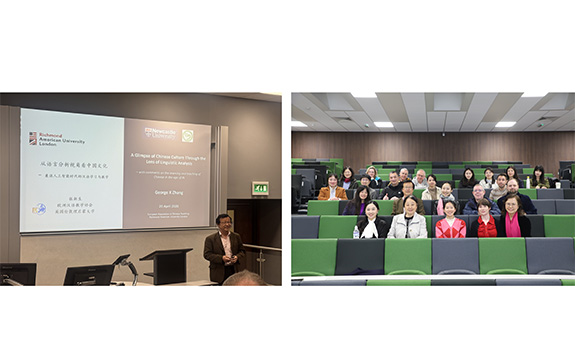
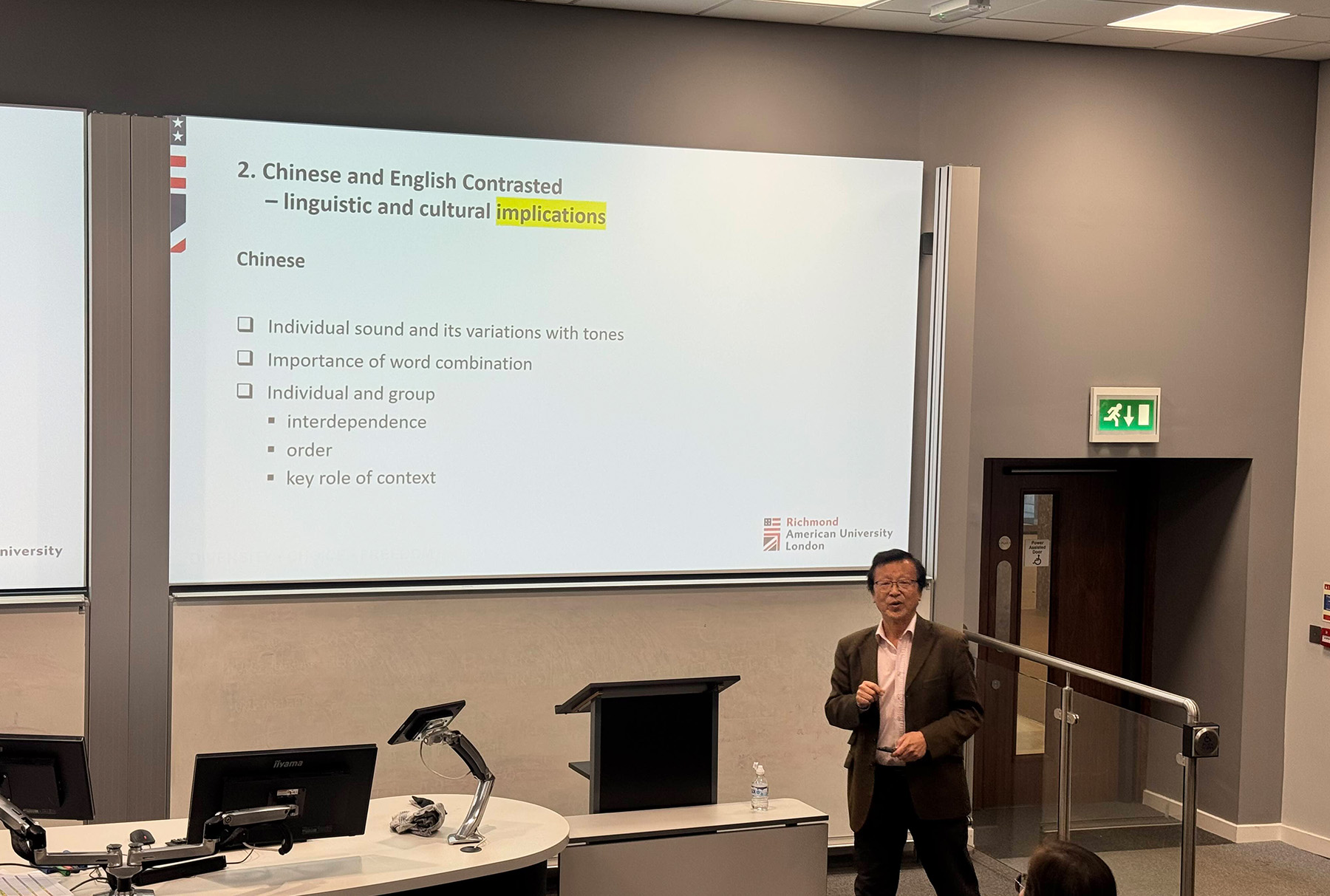
As the opening academic event of the week, NUCI invited Professor Zhang Xinsheng, a respected scholar in Chinese language education in Europe and expert of the European Association for Chinese Language Teaching, to deliver a lecture titled “Viewing Chinese Culture from a Linguistic Perspective: Chinese Language Learning and Teaching in the Era of Artificial Intelligence.” The lecture took place in the Herschel Building and attracted an engaged audience of more than twenty participants.
Professor Zhang explored the close relationship between language and culture through a comparative perspective on Chinese and English. He highlighted how Chinese characters, sound systems, vocabulary, and sentence structures reflect distinctive Chinese cultural and cognitive traditions. Referring to the historical and symbolic significance of Grain Rain — traditionally associated with the legendary creation of Chinese characters by Cangjie — he also discussed the deep connection between written language, civilisation, and cultural memory.
Particular attention was given to the challenges and opportunities presented by artificial intelligence in language education. Professor Zhang acknowledged the increasing accessibility AI offers to language learners, while emphasising that language learning ultimately remains a deeply human process involving cultural understanding, empathy, and meaningful communication.
The lecture concluded with a lively Q&A session, during which participants discussed topics including Chinese character teaching in UK GCSE programmes and the role of character-based approaches in Chinese language pedagogy.
The opening lecture set a strong academic tone for the remainder of Chinese Culture Week, which continued with a wide range of interactive cultural activities, including calligraphy, Chinese zodiac crafts, rubbing art, lacquer fan painting, pitch-pot (touhu), Tai Chi, and dumpling-making workshops. Reflecting the intellectually rich atmosphere established at the opening of the programme, the Culture Week concluded with another major academic event: a lecture by the world-renowned French sinologist Professor Joël Bellassen. The lecture was graced by a welcome address from Professor Li Li, Pro-Vice-Chancellor (Global) of Newcastle University. A separate report on this landmark event will follow as Part II of the Culture Week report series.
Through this series of events, Newcastle University Confucius Institute and the School of Modern Languages once again demonstrated their shared commitment to promoting Chinese language education, intercultural dialogue, and community engagement in the UK.