Comment: Reflecting on the UK Autumn Budget 2026
Francesco Fusari, Lecturer in Macroeconomics, and Dr Claudia Udroiu and Dr Joe Marlow, both Lecturers in Economics, reflect on the Labour Government's recent Autumn Budget.
2 November 2026
Background
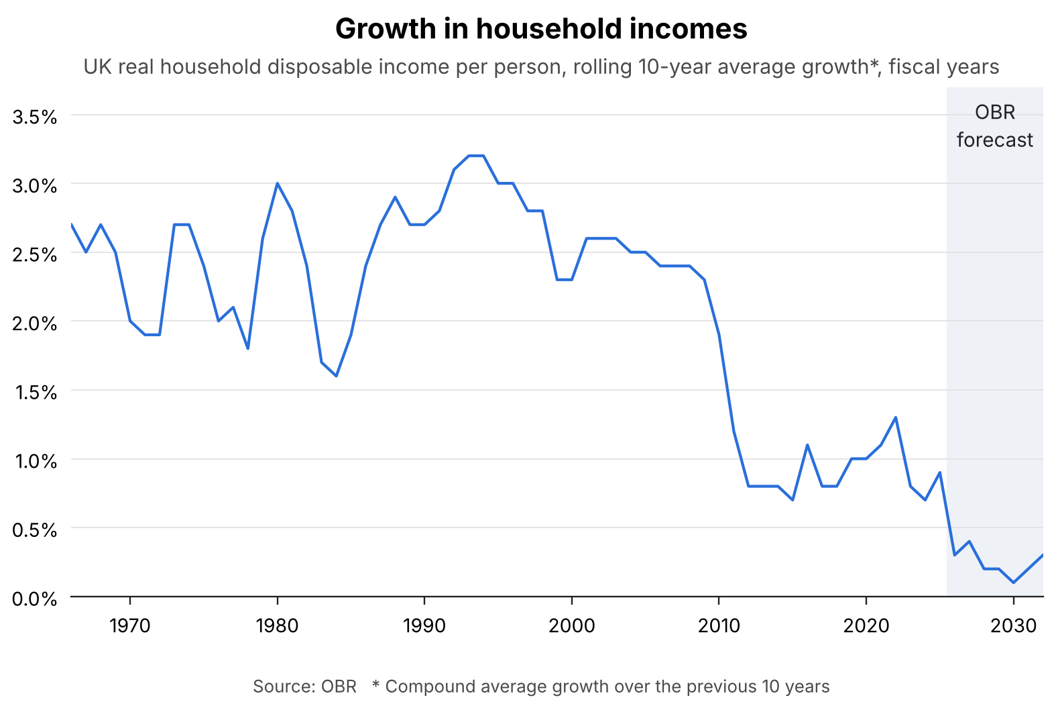
Growth in real household disposable income in the UK has been slowing since the 1990s, and the slowdown accelerated after the global financial crisis.
Since then, weak productivity growth has left living standards close to stagnant, and the pandemic and a succession of geopolitical shocks have made matters worse.
More recently, the energy crisis caused by the wars in Ukraine and Iran has pushed inflation up again. Looking ahead, real household disposable income is forecast to grow only modestly over the next decade, making a return to the pre-crisis trend difficult.
Key measures
In his Budget, the Chancellor focused on helping households with higher living costs. Measures include:
- removing gas standing charges by the end of 2027
- moving renewables to fixed-price contracts
- a one-off £100 payment to around 20 million households in council tax bands A to D in England. Equivalent measures were announced for Northern Ireland, Scotland and Wales. To help pay for this, the bank surcharge will rise from 3% to 6% for 15 months from January 2027.
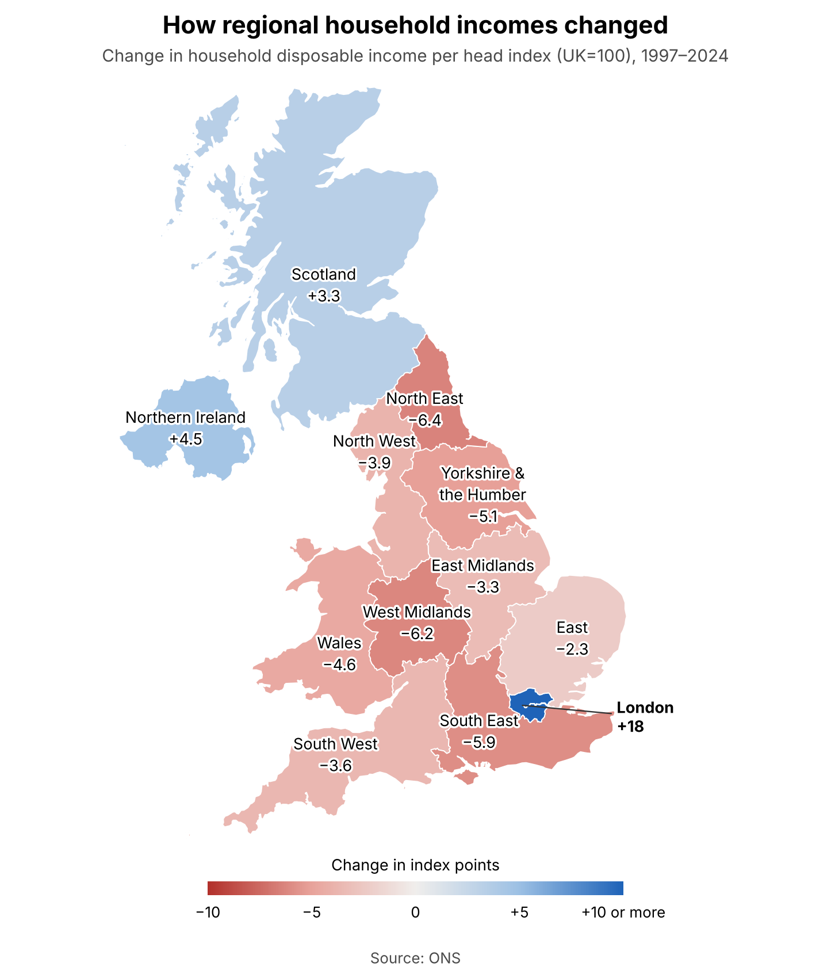
The £100 payment will matter most to households in lower-income areas, which underlines the importance of the new Fiscal Devolution Roadmap.
Devolution has been one of Andy Burnham's main priorities since he became Prime Minister. Under the Roadmap, Mayors will keep 20% of local business rates from April 2027, rising to 100% for local and regional government by the end of the decade. The aim is to shift power away from Westminster to regional mayors and boost economic activity across the country.
Alongside the support for households, the Chancellor announced tax measures expected to raise around £2bn a year. These include an extra 2p tax on income from property and savings, worth £1bn a year, and a rise in the tax on high-stakes gambling machines from 20% to 25%, worth £150m a year. Defence spending is set to reach 2.7% of GDP in 2027-28, with a commitment to reach 3.5% of GDP by 2035.
Despite these measures, the main concern for the public finances remains the high cost of government debt. The OBR expects debt interest to be £14bn a year higher than it forecast in March, with public debt heading towards 97% of GDP. Headroom against the fiscal rules falls to £15bn in 2029-30, down from the £23.6bn left by Rachel Reeves in the spring, leaving little room to absorb economic shocks.
Market reaction
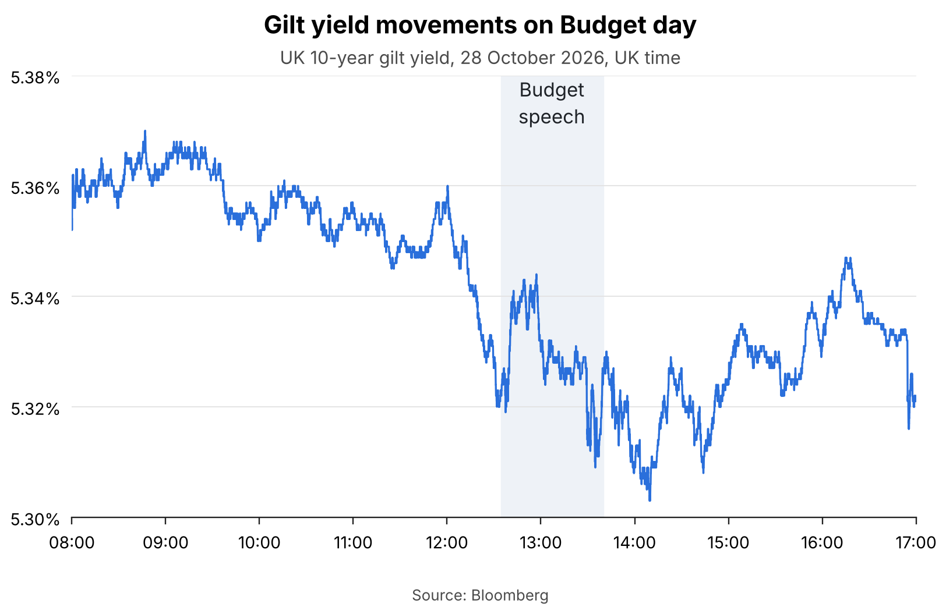
The bond market barely reacted to Healey's first Budget. The 10-year gilt yield opened at around 5.35%, lifted by a wider sell-off in global government bonds, and peaked at 5.37% within the first hour before easing through the rest of the morning.
Most of the movement came while the Chancellor was speaking. Yields dropped to around 5.32% as he began, bounced to 5.34% after the fiscal headroom figures were published, and fell to 5.30% about half an hour after the speech ended. A late-afternoon recovery took them back to around 5.35%, before they ended the session at about 5.32%.
Compared with the much larger moves that greeted some recent Budgets, it was a calm reaction, suggesting investors found few surprises in the package. That being said, UK government bond yields remain elevated compared to those of many other developed economies, creating additional pressures on government finances through interest payments. The OBR estimates that these will amount to 4.2% of GDP by 2030.
Attention now shifts to the Bank of England, which announces its next rate decision on Thursday 5 November. With inflation at 3.5% and three members of the Monetary Policy Committee already voting for a rise in September, 54 of 63 economists polled by Reuters expect Bank Rate to rise from 3.75% to 4%. Market reports suggest the Budget did little to change that view, so gilts may react more to the Bank's decision than they did to the Chancellor.