
From Boardroom Leadership to Entrepreneurship and Empowering Women
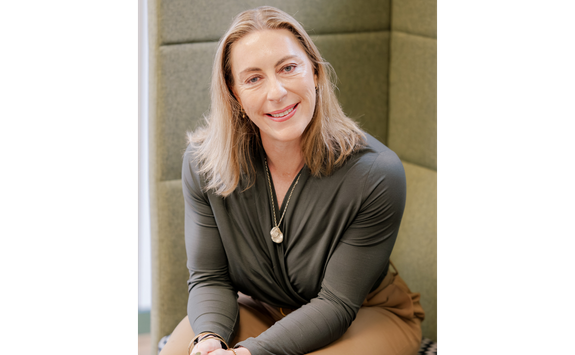
Former corporate leader and now entrepreneur, Carole O’Neil has been appointed Dean’s Visiting Professor of Innovation and Enterprise at Newcastle University Business School.
10 November 2026
Passionate about championing women in business, Carole will bring a wealth of experience to the role.
A former Managing Partner, Carole has built a distinctive career working across continents within professional services firms, the built environment sector and executive leadership. She's successfully balanced an impressive professional career with competing internationally in powerlifting and today she runs Infrasound, a female-focused coaching practice with a purpose to help ambitious women choose their next chapter deliberately, build the confidence to pursue it, and lead on their own terms.
Carole will be the School’s 22nd Visiting Professor of Innovation and Enterprise. The appointment is made on an annual basis to a leading entrepreneur or influential figure who can inspire and motivate future entrepreneurs and business leaders.
Bringing experience to influence
Carole describes her corporate career as “largely unplanned, and definitely not linear”. After graduating from the University of Oxford with a law degree, she chose to pursue a different path from her long-standing ambition to become a lawyer, spending the first decade of her career building and leading people teams in professional services firms.
In 2007, she moved into the built environment sector, taking on increasingly senior responsibilities across the UK and Ireland, Europe, the Middle East, Asia and Australia. Her international career culminated in a four-year term as Managing Partner of Cundall, where she became the first woman and the first non-engineer to be elected to the position.
In 2026, Carole stepped away from corporate leadership and into entrepreneurship with her venture, Infrasound, a female-focused coaching practice.
Alongside her coaching work, Carole continues to compete internationally in powerlifting, representing her country at multiple Commonwealth and World Championship events, winning medals and breaking records.
Carole is a Chartered Director with the Institute of Directors and a former Chartered Director of the Year. She is also a certified performance nutrition coach, reflecting her belief that looking after personal health is fundamental to sustaining high performance across all areas of life.
Inspiring the next generation
Carole’s appointment brings a valuable perspective on leadership, career development and enterprise to Newcastle University Business School. Her experience of navigating international organisations, challenging established expectations and building a new career gives students an opportunity to learn from a career shaped by adaptability, ambition and resilience.
She will deliver her lecture, Untapped: Why the North East's Next Growth Story Runs Through Its Women, in the Business School on Wednesday 25 November, where she will draw on her experiences in entrepreneurship and corporate leadership, alongside her passion for powerlifting.
Q&A
- You’ve enjoyed a successful corporate career before taking the step of running your own business. How has that journey evolved, and what motivated you to make the transition?
I never thought I would run my own business, not for a million years! My corporate career gave me some amazing opportunities to do things I never imagined I would get to do. I learned a huge amount along the way and eventually found myself leading a global business, which was never something I had expected, particularly coming from an HR background and working in an engineering practice as a non-engineer.
Over time, an idea began to take shape, and I started thinking that my career might hold another, different chapter as an entrepreneur. When the opportunity came to step away from corporate life in 2026, the stars aligned, and it felt like a real “now or never” moment.
The transition was a little scary because it was a jump into the unknown, but it was also incredibly exciting. I initially thought I would take the summer off and start building the business in the autumn. Instead, I began reaching out to people, having conversations and meeting new contacts. The response was so positive that the business started to take shape much sooner than I expected.
- What have you learned from working both within large organisations and as an entrepreneur, and what advice would you give to anyone considering a significant career change?
One of the biggest lessons has been the importance of having a team around you. In my corporate career, I was fortunate to work with brilliant people who could do things I couldn't do, and vice versa. Being able to rely on that team is a really important leadership skill.
When you run your own business, suddenly you're doing everything, from marketing and IT to delivering the work. Your support network looks different, but it is just as important. That network might include friends, family, business contacts and professional advisers. You don't have to do everything alone.
My advice to anyone considering a significant career change is to feel the fear and do it anyway. All the big leaps I've taken in my career have been scary in some way, but I've learned that the world doesn't end if a decision doesn't work out as planned. There's usually scope to pivot and try something different. It's much better to regret having tried something that didn't work out as you hoped than to regret never trying it at all.
- Alongside your business career, you've achieved remarkable success in powerlifting. How have you balanced the demands of elite sport with leadership and business responsibilities?
Two things have been particularly important: having the right people around me and setting boundaries.
When I was balancing powerlifting with a demanding managing partner role, the support of my team was invaluable. I had a brilliant PA who understood what I needed and helped manage my diary so I could make space for both work and sport.
The other key factor is being able to set and maintain boundaries. I believe this is not just a nice-to-have in a leadership role; it's a core leadership skill. Leadership responsibilities can easily expand into every aspect of your life, so if you want to remain productive, effective and focused, you need to be disciplined about protecting your time.
That applies whether you're pursuing a sporting ambition or have other important commitments outside work. It's important to create space for the things that are important to you.
- Are there particular lessons from powerlifting that have shaped your approach to leadership, resilience, or decision-making?
Powerlifting has had a huge impact on my confidence. When you realise you can put 150 kilograms on your back and stand up, you start to feel that you can deal with almost anything that comes your way in a professional setting.
It has also taught me to be more coachable: to reflect on what's going well, what isn't going so well, and what lessons I can take forward. I've learned a lot about emotional regulation, too: how to deal with setbacks, bounce back and avoid allowing one difficult experience to affect everything else.
I've also developed a growth mindset. I went through a difficult period in my lifting when I had to step back and ask myself whether I wanted to continue. Rather than dwelling on the negatives, I had to consider how I could move forward. Changing my coaching team made a real difference, reinforcing the importance of finding the right people to support you.
Perhaps most importantly, sport has taught me to remember my “why”. Whether it's in sport, business or life more generally, having a clear sense of what matters to you and why you're doing something can be a game changer.
- Through Infrasound, you work to support and empower women in business. What drives that passion, and why is investing in female leadership so important?
My passion comes from the journey I've been on and the lessons I've learned throughout my career. I've been incredibly fortunate, but it hasn't always been easy. Women can face different challenges in the workplace, and the support they need is sometimes different. In the early stages of my career, I didn't always see women getting the right kind of support, although things have improved.
Having a strong support network has been a real game changer for me. I've been fortunate to have brilliant coaches in my professional and athletic lives. I know first-hand the impact that great coaching can have.
That's why I established Infrasound. I wanted to give something back and help other women who might be navigating a similar path. I bring not only coaching skills developed through my HR experience and qualifications, but also the experience of having lived through the challenges of senior leadership myself.
There is so much talent among women that we are not making the most of. The business case for greater diversity in leadership is well established, but we still have work to do to ensure that women's talent and potential are fully recognised and supported, and that women really back themselves to make the contribution that we all know they are capable of.
- Your Visiting Professor lecture focuses on how women are key to unlocking the North East's potential. Can you tell us more about that idea and why it's particularly relevant today?
When you look at the evidence around female entrepreneurship, we're simply not making the most of the talent available. Women aren't starting businesses at the same rate as men, and when they do, they're not attracting investment at the same level. Economically, that doesn't make sense.
This is particularly relevant as we move towards a more technology-driven economy. The North East has significant opportunities in technology, but evidence suggests women are not developing their skills in AI to the same extent as men. That's something we need to address.
Confidence is also part of the picture. From my conversations with women, I hear that they don't always feel confident putting themselves forward or backing themselves when seeking investment or pursuing opportunities.
If we want to unlock the North East's potential, we need to make sure women have the confidence, skills, support and opportunities to participate fully in entrepreneurship and the changing world of work. There's a huge amount of talent available, and we need to do more to harness it.
- You've built an impressive career spanning leadership, culture, people development, and entrepreneurship. How do you hope to draw on those experiences in your role as Visiting Professor?
There are lots of opportunities to explore. I'd like to support women across the University community, including students and academics, and look at opportunities for mentoring and collaboration with the Business School's Women's Network.
I'm also interested in guest lecturing, drawing on my experience in HR and people leadership, as well as exploring how lessons from sport and performance can be applied to business.
Another area I'd like to investigate is the relationship between women and AI. I'd be interested in undertaking research to explore some of the questions around why women may not be engaging with AI skills and opportunities to the same extent as men.
My experience across leadership, people development, business and sport gives me different perspectives to bring to the role. I'm looking forward to exploring how these experiences can be useful to the Business School community.
- What aspects of the Visiting Professor role are you most excited about, and what are you hoping to contribute to the Business School community?
I'm excited about all of it. The conversations I've had with people at the University have shown me how much is happening, both in terms of academic work and connections with the local business community.
Throughout my corporate career, I've been passionate about developing the next generation of talent. Building a strong talent pipeline and helping people progress into early-career roles is really important for businesses and for economic growth.
I see this role as an opportunity to engage with the next generation of business leaders and entrepreneurs, share what I've learned and hopefully help them see what's possible.
I'm looking forward to contributing to the community, learning from others and finding practical ways to make a difference.
- What advice would you give to students and early-career professionals as they navigate an increasingly complex and fast-changing world of work?
Do the thing that scares you. Take the risk, seize the opportunity and give it a go. The big leaps I've taken in my career have all felt scary in some way, but I've learned that even if a decision doesn't work out as you'd hoped, there's usually scope to change direction. It's better to have tried than to spend your time wondering what might have happened if you had.
I'd also encourage people to keep developing their critical-thinking skills as we move into an increasingly AI-enabled world. We need to make sure we're not simply accepting AI outputs without evaluating or analysing them properly.
Finally, don't neglect your human skills. So much of our working and social lives now takes place behind screens, but the ability to relate to other people remains incredibly important. That includes having difficult conversations, giving meaningful feedback and managing conflict. AI can't replace the experience of navigating complex relationships with other people, so these are skills that students and early-career professionals should continue to develop and nurture.