Civil and Geospatial Engineering Facilities
Our teaching facilities
- Heavy structures
- Geotechnics and materials
- Climate controlled bi-axial material testing
- Environmental engineering including microbiology and pilot-scale laboratories
- Driving simulator
- Hydraulics and hydrology
More facilities
- Flood defence schemes
- An instrumented river catchment system on the River Eden
- Geometry: a hydro-borehole facility
- BEWISe Biological Engineering: Wastewater Innovation at Scale
- Urban Observatory
- The Key, which is part of Newcastle Helix, a £350million flagship project
- An instrumented engineering embankment
- Urban traffic management centre
- Novak lab used for practical projects
More about labs and facilities
Venturi flumes 3m
Practicals:
- open channel flow - verifying energy curves and discharge equation, measuring flow based on conservation of energy
Rainfall and runoff simulator
Practical:
- experiments to determine unit hydrographs and how they form
- used to model flow
Wide flume 12m × 1m
Our new state-of-the-art hydraulic flume opened in September 2019.
Practicals (not formal teaching):
- demonstrations of open channel flow
Projects:
- experimental investigations of behaviour of leaky barriers, flow around structures such as bridges
Sediment transport channel (small flume)
Practicals:
- demonstrates the full range of bed forms that occur in a mobile bed as flow changes
Multi-Function lab
The Multi-Function Lab is used for practicals using self-circulating small benches.
Pressurised flow
- pipe friction loss
- verifying the pipe friction equation, turbulent and laminar flow
Weirs
- measuring Q and head over various weirs to investigate the relationship
- use of discharge equation, determining discharge coefficients
Bernoulli effect
- investigating variations in pressure heads and velocity heads when a steady flow goes through convergent/divergent pipe
- practise Bernoulli equation, investigate energy losses
Buoyancy
- determining the metacentric height of a floating body in static equilibrium
Hydrostatic pressures
- examining the effect of changing immersion of a vertical plane on the hydrostatic forces acting on it
- use of hydraulic thrust equation
Building and city as a lab (BaaL, CaaL) at the rrban observatory
The Urban Observatory deploys sensor networks and collects data across scales. We can observe these systems as part of a nested ‘living laboratory’.
The Urban Sciences Building is an instrumented building. It sits within the 24-acre instrumented Newcastle Helix site, within an instrumented city. It functions as a ‘living lab’ where the building itself becomes a test bed.
The Building as a Lab (BaaL) initiative includes:
- whole building monitoring systems (electricity, heat, water, CO2)
- multi-system real-time intelligent control
- energy storage and novel DC grid
- sensor infrastructure within the building
- a framework for building user participation with research
The data is open source and available through the Urban Observatory.
The Urban Sciences Building is also home to the multidisciplinary UKCRIC Water Urban Science and Engineering Research (USER) laboratory. This laboratory provides infrastructure for modular and treatment train testing of:
- novel sustainable urban drainage (SUDs) technologies
- Green Infrastructure (GI)
- Natural Flood Management techniques
The laboratory extends to the Newcastle Helix site and the wider city through the Urban Observatory sensor networks. The reach of these networks is constantly growing. All the data is open source and available through the Urban Observatory.
Geometry: Borehole array
Groundwater Engineering Operations Monitoring Evaluation and Testing Laboratory
The geometry field laboratory focuses on hydrogeological field measurements and data interpretation associated with boreholes. It is one of the Earth Systems Laboratories managed by the School of Engineering. It supports some of the Masters courses taught by the School of Engineering by providing:
- a teaching facility, giving students practical experience in borehole measurements and data collection, and an appreciation of the complexities of applying science to real situations
- a resource for MSc students to undertake research projects as part of their course.
The laboratory is located on the University's farm at Cockle Park near Morpeth, with the co-operation of the School of Natural and Environmental Sciences. This facility is used and managed by the School of Engineering and is also available as a research tool and training facility for the University's other Schools and Research Institutes as well as industrial partners.
Urban Observatory
The Newcastle Urban Observatory is one of the largest urban sensing and data initiatives of its kind in the world, providing a rich, long-term record of how cities function in real time. The Observatory curates and manages billions of measurements collected from a diverse network of sensors deployed across Newcastle and partner locations, capturing data on environmental conditions, transport, pedestrian movement, water systems, air quality, weather, and urban infrastructure.
Its data holdings combine high-frequency live streams with extensive historical archives, creating a unique resource for research, innovation, teaching, and evidence-based decision making. The Observatory's open-data approach enables researchers, public sector organisations, businesses, and communities to access and analyse urban data at multiple spatial and temporal scales.
By integrating heterogeneous datasets into a single platform, the Newcastle Urban Observatory supports interdisciplinary research on urban resilience, sustainability, climate adaptation, public health, mobility, and smart city technologies. The resulting data infrastructure provides an invaluable digital laboratory for understanding urban systems and developing data-driven solutions to the challenges facing cities in the 21st century.
The National Green Infrastructure Facility (NGIF) forms part of UKCRIC (EPSRC reference EP/R010102/1). UKCRIC is a UK-wide portfolio of research and innovation facilities and programmes. It informs the renewal, sustainment and improvement of infrastructure and cities in the UK.
NGIF is a ‘living lab’. It investigates challenges in water and sub-surface behaviour for urban sustainability. The lab:
- generates real world insights into sustainable drainage systems
- develops novel approaches and technologies for improved surface water management
- increases our understanding of the interaction between the climate and the urban landscape
- NGIF is on the prestigious Newcastle Helix site, with our programme of work extending into the wider city
- all data collected feeds into Newcastle’s Urban Observatory
We have installed experimental monitoring across a range of field sites.
As founding members of UKCRIC, we host the National Green Infrastructure Research Facility. We also host the Newcastle Urban Observatory. These facilities and more support our teaching. They include:
- hydraulic laboratories
- our own dedicated set of full-scale boreholes at the University’s Cockle Park Farm.
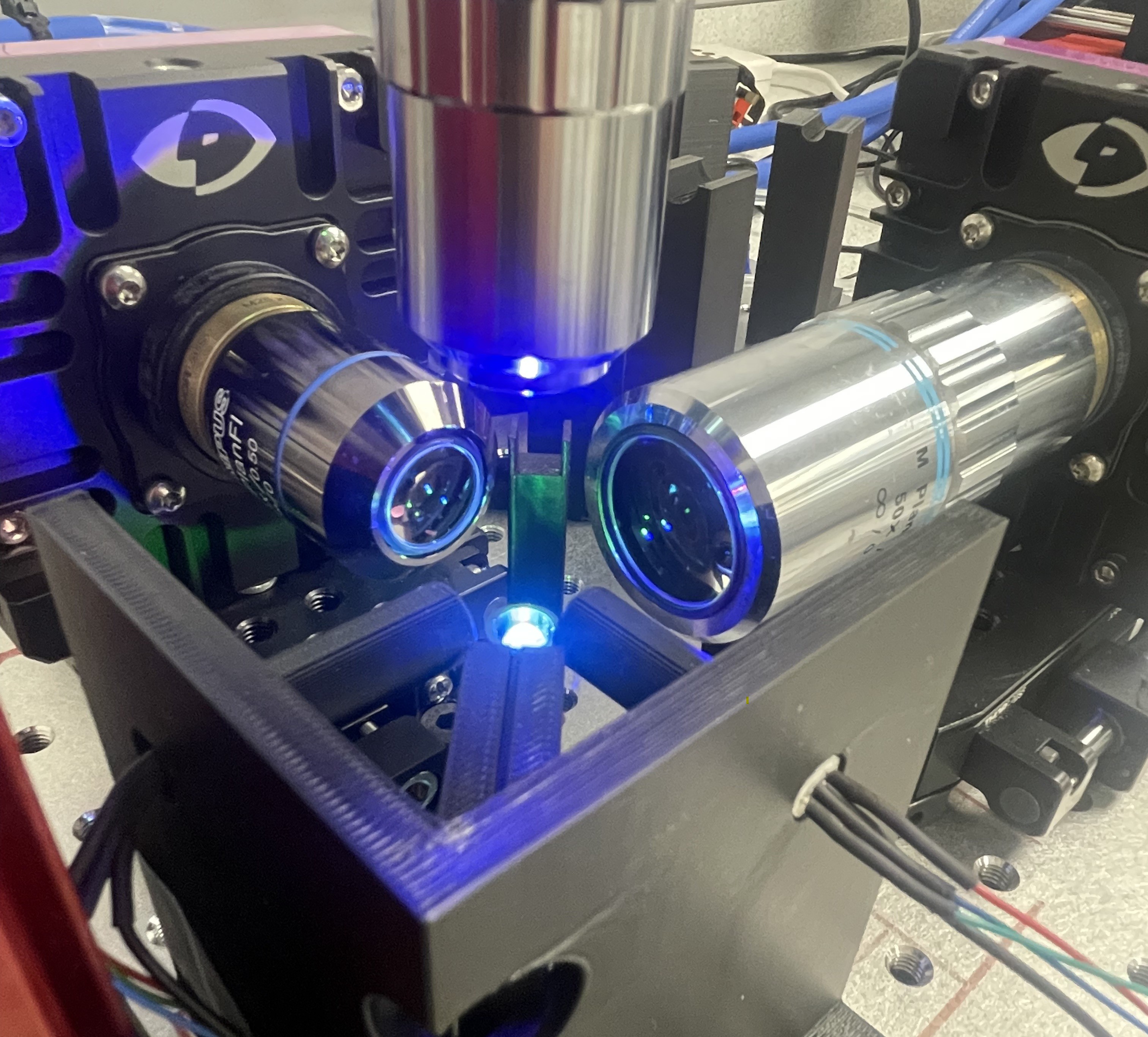
We benefit from advanced ultra-high-speed image acquisition technology designed specifically for dynamic image monitoring and analysis. We use this capability to capture and analyse rapidly evolving particulate systems, revealing particle motion, morphology, fragmentation, and flow behaviour in real time. Our imaging platform combines high-speed cameras with proprietary optical and AI-driven analytics, enabling the acquisition and processing of hundreds of particle images per second.
More about Electro-Kinetic-Geosynthetics
Heavy reaction frame and strong floor
This system is highly adjustable. It gives us the ability to apply loads in a wide range of configurations. It uses single and double acting hydraulic rams capable of providing both compressive and tensile forces up to 1300kN.
Additionally, we can use these rams in parallel to provide many loads simultaneously.
A servo-controlled actuator system allows us to apply complex load histories, including cyclic and full dynamic testing.
Landslide flume
This high-angle flume is 4m long, 0.3m wide, and 0.3m thick with recirculating flow and the ability to tilt up to 45 degrees. It has glass sides to enable particle tracking using our array of high speed cameras. It has seven pressure transducers to measure flow thickness down the centre line of the flume.
Shaking table
We use this equipment to impose seismic loading on model structures and foundations. We can upload data from real seismic events in the control system to recreate real earthquake conditions.
We monitor displacements and accelerations within the model structures during testing to assess performance.
Climate control chambers
Two chambers of dimensions 0.6 × 1.2 × 1.0m are each capable of maintaining temperatures of 0-70°C and humidities of 10-80% RH at 40°C). Positionable ICH-compliant UV/Vis light sources and internal data logging enable customisable environmental time-series sequences.
We use the chambers to:
- condition samples
- run tests of water vapour sorption (eg shrinkage/swelling and cracking)
- construct BET plots of surface area
Dynamic vapour sorption
This equipment is similar to a climate chamber, but on very small samples (eg 50micrograms).
It has a temperature range 5-40°C and humidity 0-98%. It also has extremely precise (to seven decimal points) weight change measurement via microbalance. We can use this to draw sorption isotherms and compute mesopore size distributions (1-50 nm pore diameters). It also allows us to measure specific surface area via the BET method.
We are currently using the equipment to:
- study concrete damage due to fire-induced drying
- characterise of the specific surface of artificial bone (hydroxyapatite)
Laboratories and field sites
Our exceptional range of laboratories has a wide variety of analytical and experimental instrumentation. These facilities support our research, teaching, and commercial work.
As founding members of UKCRIC, we host the National Green Infrastructure Facility.
We’re also home to the Newcastle Urban Observatory, which has the largest set of publicly available real-time urban data in the UK. These and our other facilities support our research, teaching and commercial work. They include:
- heavy structures
- geotechnics and materials
- BIONICS Embankment Research Facility
- the Key: the UK’s first fabric workspace
We have a variety of instrumented, full-scale research facilities.
Future Mobility
This full-scale transport infrastructure embankment forms part of the Biological & Engineering Impacts of Climate Change on Slopes (BIONICS) project (EPSRC reference GR/S87430/01).
The structure is 90m long, 6m high at its crest, and constructed from typical boulder clay derived engineered fill. The slope stability research facility has hosted a variety of national and international collaborations and trials, including:
- iSMART: Infrastructure slopes: Sustainable Management And Resilience Assessment
- ACHILLES: Assessment, costing and enhancement of long life, long linear assets
- COST Action TU1202: Impacts of climate change on engineered slopes for infrastructure
- PRIME: Proactive Infrastructure Monitoring and Evaluation
- Slope ALARMS: Assessment of Landslides using Acoustic Real-time Monitoring systems
Total number of sensors: 83
Total parameters measured: 271
Contact: Dr Ross Stirling
Digital image correlation
This equipment is state of the art. It provides the capability to measure shape, displacement, and strain in either two or three dimensions.
The system can analyse specimens ranging from <1mm to >10m. It maintains high levels of accuracy while displaying the real-time analysis results.
Within the lab at Newcastle University, we primarily use it to determine the strain characteristics of metal, soil, fabric, and composite samples.
More about Geotechnical and Structural engineering
Laboratory capabilities
We carry out our teaching and research in labs with state-of-the-art equipment.
130kN Bi-axial tension/shear rig: An in-house custom-built rig specifically designed for the testing of composite materials, and particularly bi-axial loading of woven and non-woven structural fabrics.
Large testing frames: Avery-Denison 250kN, 1000kN and 5000kN tension/compression loading machines
Advanced triaxial testing rigs: we use these to conduct triaxial, effective stress analysis on weak rocks (mudstones, shales etc) and soils.
Local strain measurement: used to measure small strain behaviour in soils and to determine their initial stiffness properties. Methods include Bender Elements and Hall Effect Gauges.
Unsaturated soil triaxial testing: enables sample testing under conditions approaching the in-situ stress state, degree of saturation or partial saturation. The Stress Dependent Soil Water Characteristic Curve (SDSWCC) may be obtained using the axis translation technique. Capable of measuring volume change: directly using an air pressure/volume controller, by HKUST inner cell, double walled cell and on-sample strain transducers.
Dynamic/cyclic loading: this apparatus can apply monotonic or cyclic loading to simulate earthquakes and other cyclic/dynamic loading of soils.
Soil direct tensile strength test
We have developed a direct tensile strength testing method for soils in saturated and unsaturated states. The apparatus uses a classic direct shear (shearbox) rig to enable a range of strain rate controlled testing options.
Soil-water retention determination
Our labs have the following equipment/techniques:
- filter paper method
- dewpoint potentiometer (WP4C)
- SoilMoisture Corp pressure plates
- HYPROP simultaneous suction-volumetric water content determination equipment
In addition to the proprietary equipment, we are developing in-house high capacity tensiometers capable of suction measurement in excess of 2.5 MPa.
Thermal and hydraulic conductivity testing equipment
We use this equipment to determine thermal and hydraulic characteristics of soils and rocks. It has applications associated with energy piles, buried pipelines, geothermal energy and soil-plant-atmosphere interactions.
Field sites
We have a range of cutting-edge resources to support our world class research and teaching.
Instrumentation and collecting representative data is vital. It leads to innovation and the development of system understanding across catchments in both rural and urban environments.
We have extensive expertise in designing and instrumenting catchments and urban environments. Our instrumented sites enable us to understand:
- river flows
- floods
- groundwater
- water quality
- general hydrological processes
We have catchment wide studies in Belford, Eden, and Tyne in the UK.
Abroad, we have deployed equipment in Ethiopia and other parts of the Nile Basin, Iwokrama (Guyana), and Palestine.
We also co-lead the design and deployment of the Urban Observatory, the UK’s largest network of sensors and open data in the urban environment. It looks at water, infrastructure, air quality, biodiversity and other factors.
More about water
Our instrumented sites in Northern England include the following.
Eden DTC
A National Demonstration Test Catchment
Ouseburn
The group have been involved with a number of projects on the River Ouseburn, Newcastle.
They include the Making Space for Water Project pilot project on the Upper Ouseburn, and several related water quality studies.
The Ouseburn Catchment Steering Group (OCSG) also produced The Ouseburn Catchment Action Plan (The OCAP) in 2009.
Data
High-quality data is at the heart of our innovative research.
The water group collects, generates, stores and uses enormous volumes of environmental data. This includes data from:
- catchment studies
- continuous monitoring
- collation of global datasets
We have established catchment-scale network projects, including rain gauges and flow meters.
We have permanent deployments in and around Newcastle itself. The Urban Observatory operates an X-band rainfall radar and multi-million pound real-time sensor network. We work with communities to monitor their local environment.
At a larger scale, our research is collating a global sub-daily rainfall dataset. We are producing extreme rainfall indices which describe rainfall patterns around the world.
We work with colleagues in Geomatics. Together, we generate and use remote sensing and geographical data. We collect this data using satellite and airborne platforms including UAVs