History of Electrical and Electronic Engineering
The successful story of Electrical and Electronic Engineering at Newcastle.
Responding to the needs of the Industrial Revolution
The Industrial Revolution sparked a growing demand for electrical engineers, particularly in the area of electrical machines. The North East of England played a pivotal role in advancing this discipline, driven by pioneers such as Sir Joseph Swan and Sir Charles Parsons.
To meet the need for advanced technical education, Armstrong College established the Department of Electrical Engineering in 1871. The department grew after World War 1, under Professor WM Thornton, who later became President of the Institution of Electrical Engineers. He was followed by Professor JC Prescott, another world leader in the area of electrical machines.
Between the wars, there was a requirement for improved communication systems. The department responded by expanding its courses, and Dr Emrhys Williams produced one of the earliest textbooks on communication and radar systems.
In 1947, the department moved out of the Armstrong building to an empty church opposite the Students’ Union. Electronic Engineering, Digital Electronics and Automatic Control were soon added to the curriculum and Mr FJU Ritson played a major role in this using his wartime experience in radar.
Growth and expansion
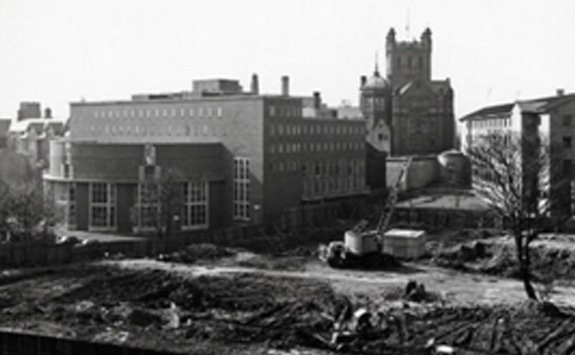
In 1963, Electrical Engineering moved into Merz Court, named after the famous electrical engineer, Charles Merz. The building was officially opened in 1965 by Prime Minister Harold Wilson.
In 1969, Professor Hans Hartnagel established a new team focussing on semiconductor devices. This led to the construction of the department’s first cleanroom, which attracted many researchers from across Europe. Reflecting it’s expanding scope, the department was renamed Electrical and Electronic Engineering (EEE).
By 1980, the department had grown to 16 academics with specialisms in electrical power, electronics and communications. Around 40 students enrolled each year.
Pioneering chip design and manufacture
In 1982, a new computer facility was installed in the department to support a new research activity in computer-aided design of very large integrated circuits. A spin-off from this was the establishment in 1985 of a consortium of five universities, led by Newcastle, to support the teaching of chip design. The course was among the first in the UK to manufacture undergraduate student designs.
Robotics
A Robotics Group was established in 1984 with Dr Charles Allen, Dr Mohammad Farsi, Professor John Finch, and Dr Karam Karam. This team had strong links with industry and were pioneers in Industrial Networks such as CANopen. A robotics laboratory was created in 1994, several patents were produced and a new MSc course on Automation and Control was established that now attracts over 70 students every year.
Digital Signal Processing and underwater communications
In the late 1980s, Professor Alan Holt’s research on digital signal processing began to focus on sonar systems and underwater acoustic communication to support subsea robotics and instrumentation. With the addition of Professor Oliver Hinton, Mr Alan Adams and Professor Bayan Sharif, this area grew into a flourishing research team. The team were funded by EPSRC and EU projects throughout the 1990’s, culminating in licencing agreements for underwater communication technology with UK companies.
Collaboration with Computing Science
During the 1980s and 1990s, our student community grew, with over student 100 students graduating each year. This period also saw the launch of a new undergraduate programme in Microelectronics and Microprocessor Applications. This was developed by the EEE and Computing departments working collaboratively. The course combined elements of hardware and software engineering, and has evolved over the years into the subject now called Electronics and Computer Engineering.
Extending global reach and industry connections
Attracting thousands of students from across the world, EEE has created strong lasting collaborations with industrial partners like Dyson, TRW, BAE Systems, Black & Decker and Rolls Royce.
Research expertise
In 2000, a Microelectronics team led by Professor Alex Yakovlev joined the School. This expanded our research into four key areas:
- Electrical Power
- Microelectronics Design
- Communications and Signal Processing
- Semiconductors
Our researchers have led the way in developing cutting-edge technologies:
Electrical Power
- Professor Paul Acarnley and Dr David Atkinson were internationally leading in their work on sensorless drives
- Professor Alan Jack pioneered the use of soft magnetic composites
- Professor Barrie Mecrow FREng was renowned for his work on switched reluctance machines and fault tolerant drives
- Professor Volker Pickert made important contributions in health monitoring in the field of power electronics and electric drives
- Dr Bashar Zahawi was known for his work on power systems
Microelectronics Design and Semiconductors
- Computer Systems Design Professor Alex Yakovlev FREng is known for his work on Asynchronous Logic
- Siemens Professor of Microelectronics Anthony O’Neill and Dr Sarah Olse are known for their work on strained silico
- Professor Nick Wright is an expert on SiC semiconductors who went on to be the University PVC for Research
- Dr Nick Coleman is known for his work on the European logarithmic microprocessor and Dr Graeme Chester for work on microelectronics.
Communications and Signal Processing
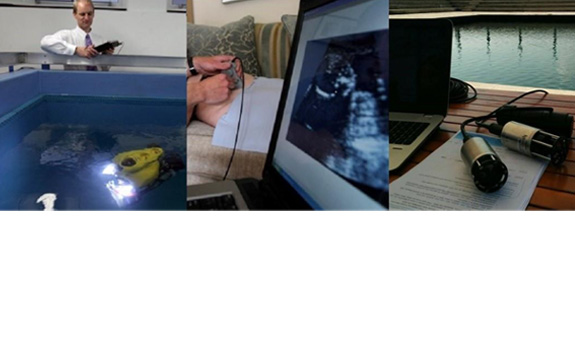
Professor Oliver Hinton worked with Professor Bayan Sharif, Mr Alan Adams and Professor Jeff Neasham to create the SEAlab research facility. This leading group for subsea acoustic signal processing and ultrasonic technology continues today.
Signal and Image Processing was led by Professor Satnam Dlay. The team was further strengthened with the addition of:
- Professor Rolando Carrasco, specialising in wireless communications
- Professor Gui Yun Tian, an expert in sensor systems
- Professor Said Boussakta, who focused on signal processing
- Dr Alun Harris, who established a team working on Optoelectronics
Energy Systems
In 2015, Siemens Professor of Energy Systems Phil Taylor joined the team, bringing Power Systems research and expertise into the school. This area grew quickly, establishing Newcastle as a leader on critical energy infrastructure. This resulted in research collaborations and key projects such as Hi-Act led by Professor Sara Walker and the Supergen Energy Storage Network coordinated by Professor Haris Patsios.
Expanding globally
Newcastle University in Singapore
In 2015, Newcastle expanded its global footprint by launching an Electrical Power Degree in collaboration with Singapore Institute of Technology (SIT). A team of eight staff were appointed to teach Electrical Power Engineering degrees to around 70 students each year.
Emeritus Professor Ian Postlethwaite FReng was Dean and CEO in Singapore leading Newcastle’s operation before becoming Acting Deputy Head and then Head of the new School of Engineering.
The School of Engineering
In 2017, the University brought together all Engineering schools, including EEE, in a single, unified School of Engineering. The School was initially led by Professor Phil Taylor and then Professor Ian Postlethwaite. The former schools became known as disciplines and in 2020 Professor Pickert became the inaugural EEE Director.
Current Structure of Electrical and Electronic Engineering
EEE is led by Discipline Director Professor Damian Giaouris (Control of Energy Systems) with support from Deputy Director, Dr Martin Johnston (Information Theory and Error Control Coding). The discipline consists of 3 research groups:
- Electrical Power
- Microsystems
- Intelligent Sensing
Future vision
After 4 industrial revolutions (mechanisation, mass-production, automation, robotisation) the world is at the brink of a fifth, the electric revolution. Our vision is to drive this revolution forward by:
- educating and training students from all over the world, who will contribute to and lead this electric revolution
- conducting sustainable and ethical impact-based electrification research
- supporting the North-East ambitions to become the UK’s lead on manufacturing in electrification
- being inclusive and diverse to provide a vibrant place of study and a supporting research environment