History of Mechanical Engineering and Marine Technology
The growth and success of Mechanical Engineering and Marine Technology at Newcastle.
At the heart of the University
Mechanical Engineering and Marine Technology have been central to the University since its establishment in 1871. The institution was founded as a College of Physical Science to support the North East’s growing industries.
Marine Technology and the Armstrong Building
The University’s first dedicated building, the Armstrong Building, was home to Marine Technology from the 1890s. At that time, since shipbuilding was one of the biggest drivers of the regional economy, Naval Architecture became central to the University’s offerings in engineering. The first Professor of Naval Architecture was appointed at the start of the 20th Century.
Since then, the marine discipline has been part of several different departments and schools. In the 1980s, the Departments of Naval Architecture and Marine Engineering were combined into the Department of Marine Technology. In the first decade of the 21st century, collaboration with marine biologists and scientists led to the School of Marine Science and Technology.
Now, recognising that Marine Technology spans a wide range of engineering subjects, there is a substantial Marine Offshore and Subsea Technology Group embedded in the School of Engineering.
Mechanical Engineering and the Stephenson Building
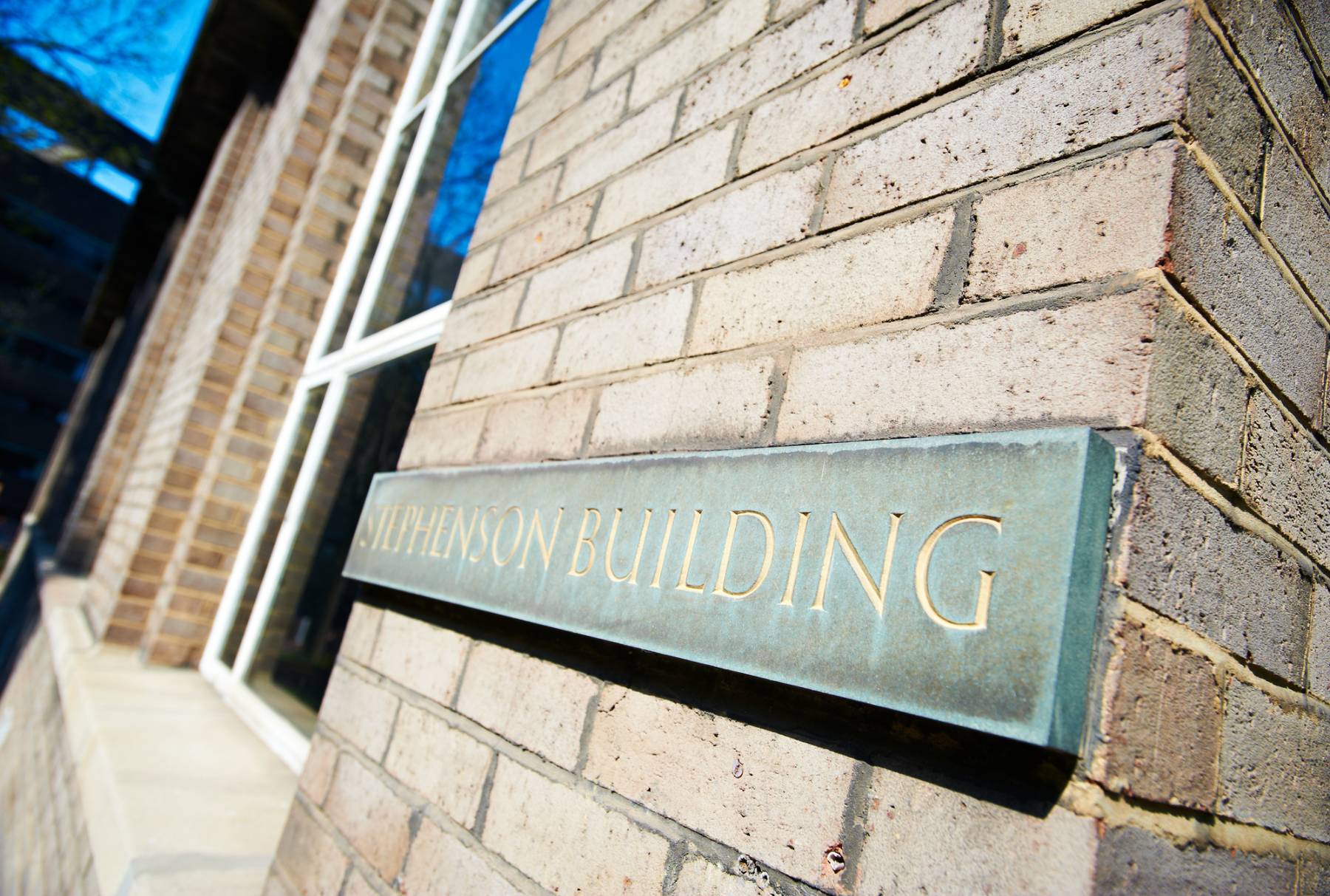
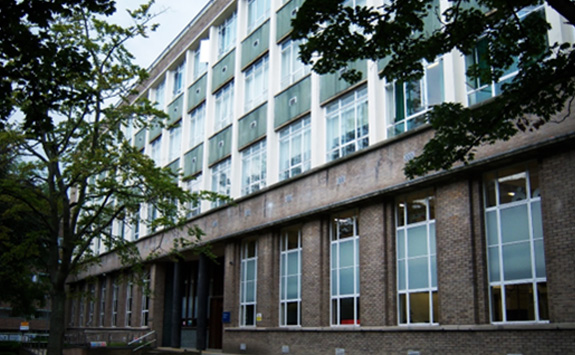
Mechanical Engineering has undertaken ground-breaking research and teaching for over 150 years. The Stephenson Building has been its home since it was opened by Prince Philip, the late Duke of Edinburgh, on 28 November 1951. The building was named after George Stephenson, the “Father of Railways”, and one of the many local heroes of the 1800s industrial revolution.
Mechanical Engineering, like Marine Technology, went through many incarnations over the decades. In 2017, the School of Mechanical and Systems Engineering merged with the other engineering schools to form the School of Engineering. During these changes, the old Stephenson Building served as a hub for learning, engagement, innovation and research for all engineering disciplines. The newly redeveloped Stephenson Building is equally inclusive and provides a space fit for the 21st century.
The Mechanical Engineering and Marine Technology Discipline
Mechanical Engineering covers areas such as:
- transport
- biomedical engineering
- fluid dynamics, mechatronics
- mechanical machines
- gears and transmission
Marine Technology includes:
- naval architecture
- marine engineering
- shipping and port logistics,
- offshore and subsea engineering.
The Mechanical Engineering and Marine Technology discipline is made up of four academic groups:
- Design, Manufacturing and Materials (DMM)
- Bioengineering (BIO)
- Fluid Dynamics and Thermal Systems (FDTS)
- Marine, Offshore and Subsea Technology (MOST)
Key areas
The Design Unit
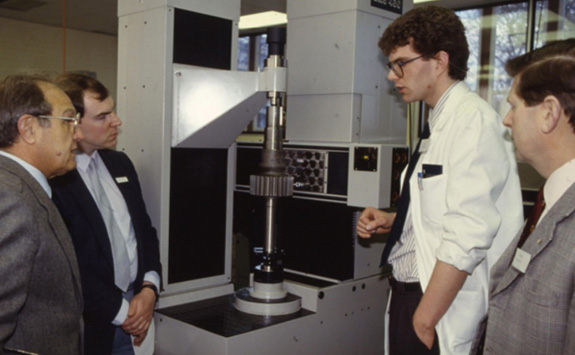
Embedded within the DMM group, the Design Unit has a rich and successful history. It is the largest group in the UK that specialises in gearing and transmission systems research. It is a world-leading centre of gear technology, holding the national and international standards and traceability for gears.
The Design Unit now has over £5 million worth of equipment secured from grant funding and commercial work with industry. With this equipment, failure analyses on gearboxes have been regularly performed with clients such as the Royal Navy. The recognition gained by working with local and international organisations led to the opening of the National Gear Metrology Laboratory in the Design Unit in 1987.
Today, under the direction of Professor Brian Shaw, the unit specialises in mechanical power transmission systems.
Railway Engineering
The Centre for Railway Research (NewRail) was established in 2004 after the team at Sheffield University’s Advanced Railway Research Centre transferred to Newcastle. Originally led by Professor Mark Robinson, its aim was to deliver research and consultancy to meet the complex challenges of the rail industry.
At its height, NewRail was the preferred university research supplier to leading industry stakeholders such as Bombardier Transportation and Alstom. It was also the only university on the UITP (International Association of Public Transport) advisory board.
In 2017, the UK Rail Research Innovation Network (UKRRIN) was established to undertake research between leading academic institutions and the rail industry. Newcastle was a founding member, led by Professors Brian Shaw and Roberto Palacin. The associated Centre of Excellence for Rolling Stock (CERS) is co-located with Design Unit.
Also in 2017, with the formation of the School of Engineering, NewRail and TORG (Transport Operations Research Group) merged to form the Future Mobility group. This group became a member of the National Hub for Decarbonised, Aadaptable and Resilient Transport Infrastructures. Two of the hubs three directors, Professors Phil Blythe and Roberto Palacin, were based at Newcastle.
Biomedical Engineering
The Biomedical Engineering group was first established by the now emeritus Professor Garth Johnson and was based on strong collaborations with the Newcastle Medical School. In 2004, Thomas Joyce, now professor of orthopaedic engineering, joined the group to work on artificial implants.
Then in 2007, Professor Kenny Dalgarno, Sir James Woodeson Professor of Manufacturing Engineering and the Deputy Director of EPSRC Centre for Innovative Manufacture in Medical devices, joined the group. He helped revolutionise the application of 3D printing for biological applications by developing and implementing cells and tissue engineering scaffolds using innovative printing technologies. In the mid 2010s, Drs Ana Ferreira-Duarte and Piergiorgio Gentile joined the School. Their work is focused on designing and manufacturing sustainable products inspired by nature. Their research contributes to the development of bio-inks and hydrogels. The technologies they have designed and developed are patented and internationally recognised.
Fluid Dynamics and Thermal Systems
Fluid Dynamics and Thermal Systems has long been a major research area in Mechanical Engineering, especially in multiphase flow analysis. This activity was strengthened in 2011 with the arrival of Professor Nilanjan Chakraborty. He brought expertise in computational fluid dynamics, turbulent combustion, fluid turbulence and heat transfer to the team. The group is now considered to be a UK leader in simulation combustion engineering. Since 2018, more than 150 peer-reviewed journal publications have been produced and c£6 million in research income has been successfully secured. This placed the group 4th in EPSRC's combustion engineering grants portfolio.
Mechatronics
Mechatronics was first introduced in the discipline by Dr Robert Bicker, an expert in robotics in the early 2000s. With the rise of IoT (Internet of Things) and the advent of the fourth industrial revolution, mechatronics has become a key engineering skill for 21st century engineers.
Intelligent mechatronic systems are present in all aspects of modern society, creating a large demand for skills and knowledge. Our expertise in this area is embedded in the DMM group. Staff use mechatronics hardware in classroom-taught modules as well as research projects, meaning our students develop the hands-on skills needed by industry. With state-of-the-art Maker Space facilities in our new Stephenson building, electronics workshops and computing facilities, this is a strong area of growth.
Marine Technology
Research in the maritime field has become a highly collaborative activity. Universities and industrial partners often work together on large research programmes. The Marine Technology group has undertaken many projects in this area. Funding for this research has been provided by both the European Commission and the Office of Naval Research in the USA. Work has included topics such as:
- the safety of high-speed passenger vessels
- the development of intermodal transport systems
- the reduction of particulate airborne pollution in busy ports
- the integrity of aluminium structures for high-speed vessels
One of the most significant areas in marine research is offshore engineering, which includes many aspects of energy transition. Newcastle academics have been involved with this area of marine technology since the creation of the Lloyds Chair of Offshore Engineering in the 1980s. Research has included:
- offshore structures
- fluid structure interactions in offshore platforms
- CO2 transportation and sequestration
- offshore renewable energy development
Key to this work are the University’s experimental facilities, which include a cavitation tunnel, a towing tank, wind wave and current tank, and a 20 metre research vessel.
Marine Technology academics at Newcastle University have contributed to the sector with outreach activities taking many forms. The discipline has also benefited from joint activities with international academic institutions such as the collaborative degree programme with Ngee Ann Polytechnic in Singapore. This was the template for the wider engagement by Newcastle University in Singapore.
Training the Engineers of the Future
Mechanical Engineering and Marine Technology have proud histories that have built upon achievements made by brilliant engineers, inventors and industrialists from the North East. The discipline is strong and continues to undertake pioneering research that can change lives as well as train the engineers of the future.