Greenland ice sheet
Warmer ocean currents destabilise ice sheets, driving retreat
Published on: 17 December 2025
New research reveals how ocean warming triggered the large-scale retreat of the Northeast Greenland Ice Stream (NEGIS) - offering vital clues for understanding its modern-day vulnerability.
NEGIS is the largest ice stream draining the Greenland Ice Sheet into the ocean. It contains enough ice to raise global sea level by 1.1 – 1.4 metres. Its stability is therefore critical for future sea-level projections.
By reconstructing the behaviour of NEGIS over the last 20,000 years – since the end of the Last Glacial Maximum - the research team, led by Newcastle University and Durham University, showed that oceanic processes, not just atmospheric changes, played a decisive role in past episodes of rapid ice retreat.
The research, published in Nature Communications, found that when an ice stream’s grounding line (where ice lifts off from its bed and begins to float), is exposed to warm ocean water, the ice stream and its ice shelves become much more vulnerable to retreat and collapse.
Lead author Dr Louise Callard, Senior Lecturer in Physical Geography, Newcastle University, emphasised the significance of these findings: “If the Northeast Greenland Ice Stream collapses, it has the potential to significantly raise global sea levels, so knowing what controls its behaviour is crucial. The palaeo record provides an unparalleled archive of past changes, allowing us to recognise what is driving current retreat.
“These findings highlight how important ice–ocean interactions are for understanding why modern ice sheets are retreating. Both observations and computer models must account for these ocean-driven processes.”
The team found that an initial period of retreat occurred between 20,300 and 17,600 years ago. Air temperatures were still low at this point, around -20° to -15 ° C lower than present, suggesting that warm Atlantic Water reaching the base of the ice stream was the main driver for this early retreat via enhanced melt.
The geological record then shows a period of distinctive ice shelf collapse triggered by warm Atlantic water advancing farther and enhanced sub-ice shelf melt around 15,000 yrs ago. This was combined with a rapid rise in air temperatures which undoubtedly drove surface thinning. Together, both mechanisms drove ice shelf disintegration, ultimately causing grounding line instability and ice retreat onto the inner continental shelf.
The research took place as part of the wider project, Greenland in a Warmer Climate, led by Durham University. Professor David Roberts, the project’s Principal Investigator from Durham University, also stressed how critical it has been to understand the past dynamic behaviour of NEGIS, given this highly sensitive sector of the Greenland Ice Sheet plays a critical role in controlling contemporary ice-ocean interaction in the NE Atlantic.
“Understanding the key feedbacks that control ice sheet/ocean interaction is important not only for contemporary environmental change around the poles, but also for predicting future global sea-level rise,” Professor Roberts said. “As part of our work on this project over the last 10 years, we have not only constrained the long term thinning and retreat history of the NEGIS, but we now have a much better understanding of ice stream/ocean feedbacks. This paper is one of the first to recognise ice shelf break-up in the geological record in Greenland and it demonstrates the critical importance of high resolution, palaeoglaciological and palaeooceanographic reconstruction to the scientific community.”
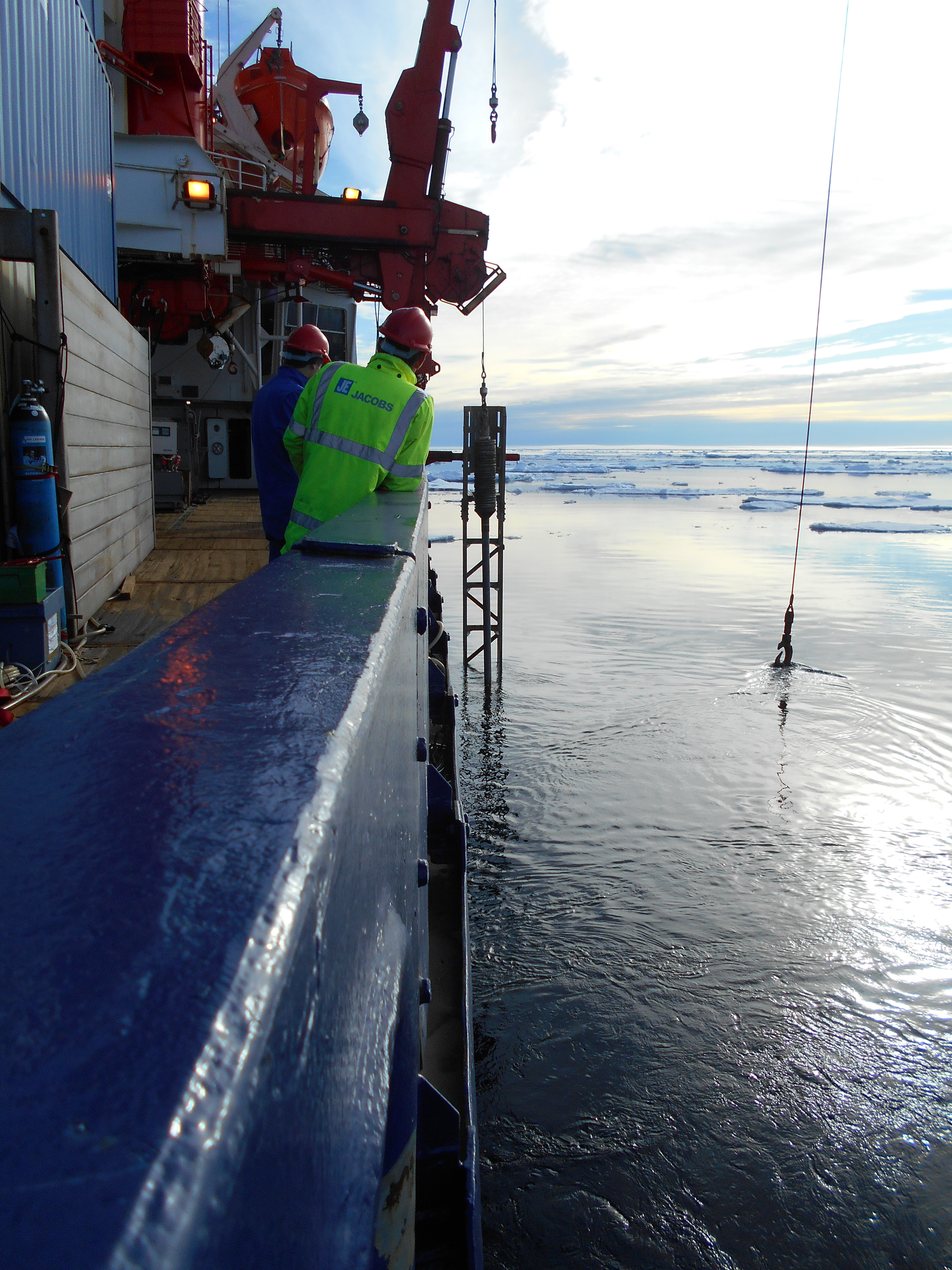
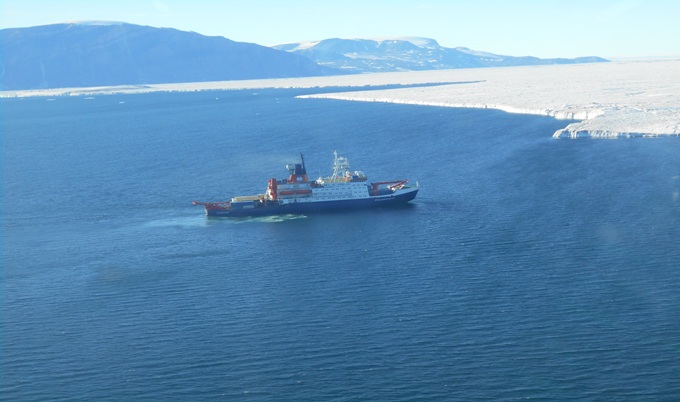
This part of the project was carried out with scientists from Durham University, the British Antarctic Survey, and the Alfred Wegener Institute (AWI), Germany. Working together with AWI colleagues the offshore team undertook two research trips on the German ice breaker RV Polarstern in 2016 and 2017. Those trips resulted in the collection of seafloor bathymetric data and sediment cores, which later formed the focus of sedimentary and microfossil analysis, and which provided the foundation for the study’s key findings.
The research was funded by UK Natural Environment Research Council (NERC) grant NE/N011228/1.
Reference: Callard, S.L., Ó Cofaigh, C., Lloyd, J.M. et al. Ocean driven retreat of the Northeast Greenland Ice Stream following the Last Glacial Maximum. Nat Commun 16, 10961 (2025). https://doi.org/10.1038/s41467-025-66671-2