
grass ceiling
GRASS CEILING selected as a Success Story by European Commission
Published on: 19 January 2026
A project led by Professor Sally Shortall has been selected as a Success Story by the European Commission.
GRASS CEILING (Gender Equality in Rural and Agricultural Innovation Systems) is highlighted on its Research and Innovation webpage under the title “Cutting a path through European agriculture’s ‘grass ceiling’“.
Success Stories are chosen by the Commission’s Directorate-General for Research and Innovation (DG RTD), from EU-funded research and innovation projects supported by the European Commission, as examples of research with real-world impact.
The article highlights the work of GRASS CEILING, which involved a consortium of 29 partners across nine European countries and ran from January 2023 until December 2025, in empowering rural women engaged in socio-ecological innovations through spotlighting areas for improvement in supports available, data captured and the mainstreaming of women’s realities and needs in policy at European and national levels. It also underscores the impact of the Living Labs, women-led innovation spaces, established in each member country in which 72 rural women innovators were trained over the three-year lifecycle of the project.
A high impact case study
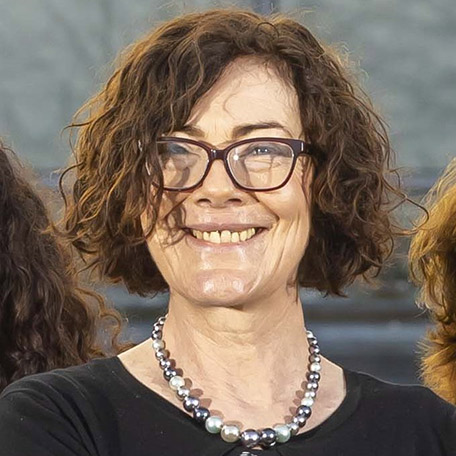
Professor Sally Shortall is Duke of Northumberland Professor of Rural Economy and Director of the Centre for Rural Economy, School of Agriculture, Food and Rural Development, Newcastle University and Professor at South East Technological University, Ireland.
She said: “I am delighted GRASS CEILING has been chosen as a high impact case study by the European Commission. We have, through our research, changed the lives of women in our nine participating countries. We have seen women in Italy bring their idea to produce organic olive oil to market, and in Croatia women used wool from their farms to produce flowers to sell.
“We have also had significant policy impact; I have given evidence to a number of European Parliament Committees, and we had MEPs and senior European Commission officials follow the project carefully and speak at our events. It was a joy to coordinate this project!”
The final GRASS CEILING Showcase event took place at the European Economic and Social Committee (EESC) in Brussels in December. Here, representative participants of each Living Lab spoke about their innovations and experiences of participating in the project. The key recommendations and policy toolkit, including templates for gender proofing and gender benchmarking, developed as part of GRASS CEILING’s European Policy Forum for Women-Led Innovation were also presented. Speakers at the roundtables included: Elena Schubert (European Commission, DG AGRI – Social Sustainability Unit), Maria Nikolopoulou (European Economic and Social Committee, EESC), Faustine Bas-Defossez (European Environmental Bureau, EEB), Maria Walsh (Member of the European Parliament, MEP), Giulia Bizzo, European Commission, DG RTD – Bioeconomy & Food Systems, Project Coordinator Sari Rautio, Committee of the Regions (CoR) and Maura Farrell, University of Galway, from sister project, FLIARA.
A key teaching and learning output from GRASS CEILING is the online Training Academy or five module Massive Open Online Course (MOOC) which is now live, based on case studies from the project and insights from the Living Labs. It is expected that this will be accessed by 1,000 women per each of the nine case study countries along with members of farm organisations and innovators outside of these regions also.