Award of Queen Elizabeth Prize for DLB
Royal award for Dementia research
Published on: 24 February 2026
Researchers from the University transforming the understanding, diagnosis and care of people with Dementia with Lewy Bodies, have been recognised with the highest national honour for universities.
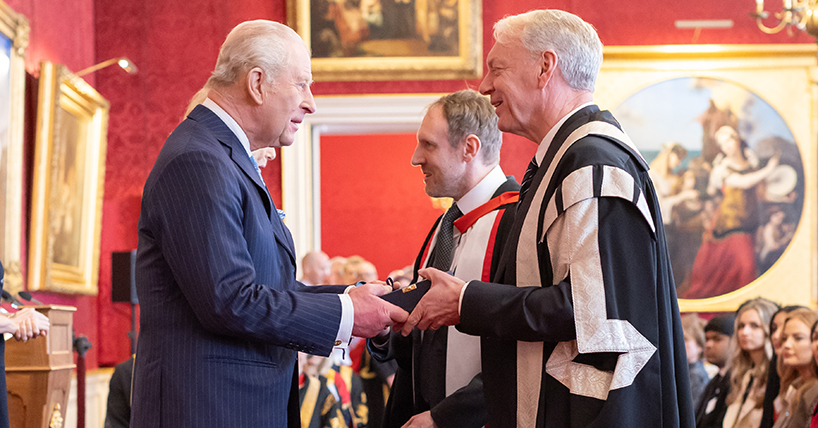
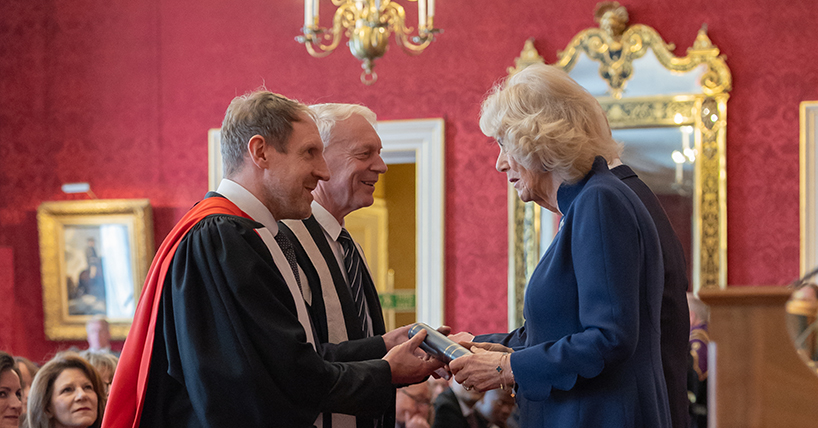
The Queen Elizabeth Prize recognising the University's reputation as a driving force for research into dementia was awarded by His Majesty, King Charles III to the Vice-Chancellor of Newcastle University, Professor Chris Day and Professor of Translational Dementia Research, Newcastle University, John-Paul Taylor.
The prestigious Queen Elizabeth Prizes for Higher and Further Education are awarded by the Royal Anniversary Trust every two years to honour work of outstanding importance and quality in higher and further education in the UK.
Built on the visionary early work of scientific and clinical pioneers at Newcastle University, the Prize recognises more than three decades of ground-breaking research and unwavering dedication.
Professor John-Paul Taylor, professor of Translational Dementia Research, Newcastle University who accepted the award from His Majesty The King alongside the Vice-Chancellor said: “This award reflects the power of sustained team science - built on the vision of early pioneers and driven forward by the creativity and commitment of today’s clinicians and researchers at Newcastle University.
“In close partnership with patients and families, this collective effort has transformed how Dementia with Lewy bodies is understood, diagnosed and treated worldwide. We are proud of that shared achievement and determined to keep pushing the boundaries of discovery and care.”
Vice-Chancellor and President of Newcastle University, Professor Chris Day said: “This award is a great honour and reflects the deep commitment of our researchers, clinicians and wider University community to improving people’s lives.
“For more than three decades, Newcastle’s pioneering work has helped transform how Dementia with Lewy Bodies is understood, diagnosed and managed - bringing real benefits to patients, their families and the communities we serve.
“We are proud that our research is shaping better care and healthier ageing, not just locally but around the world, and we remain dedicated to driving further improvements that support stronger, healthier communities for generations to come.”
Dementia with Lewy bodies (DLB)
Dementia with Lewy bodies (DLB) is the second most common form of dementia after Alzheimer’s disease, affecting an estimated 130,000 people in the United Kingdom and researchers at Newcastle University have transformed global understanding, diagnosis, and treatment of the condition.
DLB gained public attention following the death of actor Robin Williams whose widow described his battle with the condition as “the terrorist inside my husband’s brain” highlighting the devastating toll the disease takes on individuals and their families. It is a complex and often misdiagnosed disease causing problems with understanding, thinking, memory and judgement as well as movement difficulties, visual hallucinations and sleep disturbances, placing a profound strain on patients and their families.
For over 30 years, researchers at Newcastle University have led the way in redefining DLB as a distinct and common cause of dementia. Their work has reshaped clinical practice worldwide, improving outcomes and offering hope to those affected.

Key breakthroughs
The key breakthroughs made at Newcastle include:
- Identifying brain changes in relation to clinical symptoms that are related to DLB which helped establish international diagnostic guidelines. This was made possible by Newcastle University’s Brain Tissue Resource, which with over 2,200 donors is one of the UK’s largest brain donation programmes.
- Establishing dopamine-transporter (DAT) brain imaging as a diagnostic tool for DLB which is now recognised as the global gold-standard for accurate diagnosis.
- Linking biological changes to symptoms and progression, enabling earlier detection even before the dementia symptoms and more personalised care.
- Revolutionising treatment by discovering severe depletion of the brain chemical acetylcholine in DLB. This led to the first successful trials of therapies in DLB that restore its balance - now a global standard treatment that improves cognition and reduces hallucinations. Their research also exposed the risks of certain antipsychotic drugs, prompting safer prescribing practices worldwide.
Today, Newcastle University continues to lead the field, exploring disease mechanisms, developing stem-cell models, and investigating blood-based tests and personalised therapies to detect and manage DLB earlier and more effectively.
This progress has been underpinned by the NIHR Newcastle Biomedical Research Centre and the Newcastle Health Research Partnership and been enabled by wide-ranging support from international and national funders along with industry partners.
This is the fifth time the University has been awarded what was previously known as the Queen’s Anniversary Prize and one of two in the region with Gateshead College being recognised for its construction training programme. The University gained the prize in 2023 for excellence in water research, in 2013 in recognition of its internationally renowned research into sustainable rural economies and societies. Newcastle received the prize in 2009 for research into ageing and again, in 2005 for its innovative solutions to mine water pollution.
A patient's perspective
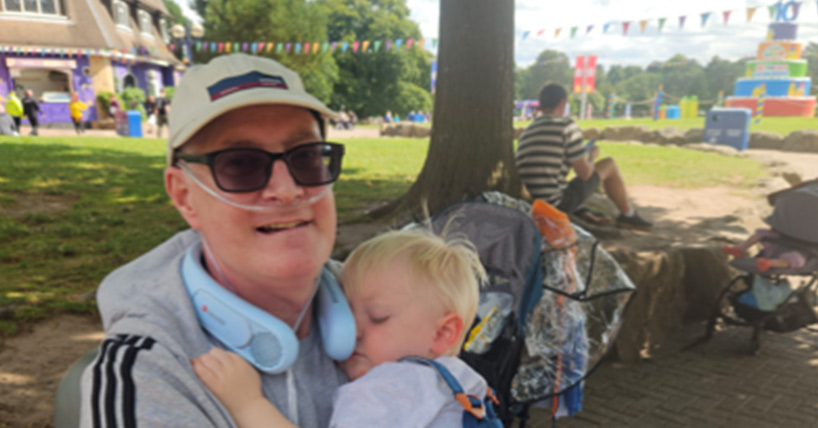
Nigel Thomas, who is 79 years old and from Cleadon Village, South Tyneside and his wife Heather who is 78, shared with us their thoughts about Nigel’s diagnosis of Dementia with Lewy Bodies and the care they have received through the Newcastle team:
Nigel said: “I have lost some confidence in being independent. I now rely on my wife to organise much of my life although I do many of the basic household activities
“Before diagnosis and during early treatment I was confused, as I couldn’t understand what was happening to me. I know that some of my behaviour had changed; for example, I have become obsessive in ensuring I was carrying my wallet, spectacles and phone. I have also become slower in movement and I have lost some height.
“I dread to think what my circumstances would be if we had not met Professor John-Paul Taylor and his team and received comparatively early intervention with a tailored regime of vital medication which is constantly reviewed. Furthermore, I am appreciative of the team’s sensitivity, consideration, referrals and constant academic enquiry.
“Lewy Bodies had not however affected my ability to speak, read and write and to continue to be fluent in English or any of the foreign languages, especially French, German and Italian, that I have learnt.
“What is particularly important to me is my passion for military history. I have retained the core knowledge but prior to treatment by Newcastle University I did struggle in using my iMac. Now I can do this independently and in fact I am at present updating my rank insignia charts for an important commission which is a source of pride for me.”

Useful information:
Read more about the Queen Elizabeth Prize for our research into Dementia with Lewy Bodies
Find out how you can support research into Dementia with Lewy Bodies at Newcastle University.
Find out more about brain donation and the Newcastle University Brain Tissue Resource.
More information on research into dementia at Newcastle University and the work of the Lewy Body Lab at Newcastle University.
Information on the DIAMOND-Lewy Programme – focused on improving diagnosis and management of Lewy body dementia across the NHS.