comment: Chagos Islands deal delayed
Comment: why the Chagos Islands deal is delayed
Published on: 13 March 2026
Writing for The Conversation, Sue Farran and Colin Murray explain why the Chagos Islands deal is delayed and why Mauritius is threatening to sue the UK government
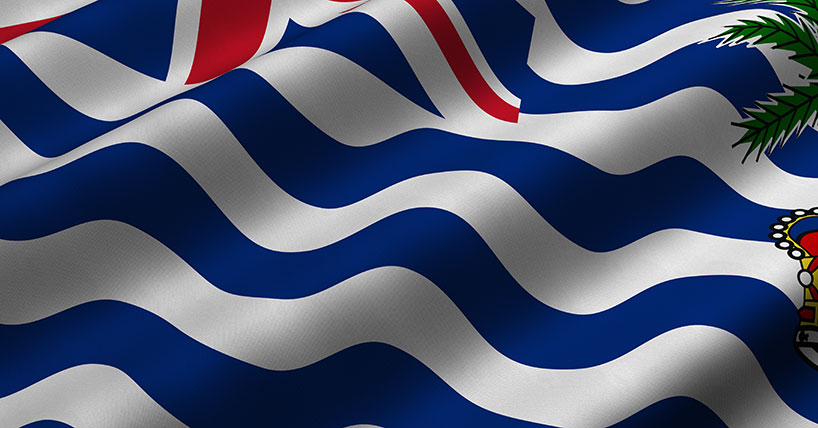
More than a year ago, the UK agreed to grant Mauritius sovereignty over the Chagos Archipelago, which Britain has governed as the British Indian Ocean Territory since 1965. But the treaty to transfer sovereignty has hit choppy waters. The deal has stalled in the UK parliament and Mauritius has now threatened legal action against the UK over the delay.
For years, successive UK governments played the interests of the Chagossians off against those of Mauritius, to deflect potential threats to its control of the Chagos Islands. But just as that strategy has run out of road, the international legal order is under extreme pressure.
Last month, the US president, Donald Trump, declared that the UK was “making a big mistake” in relinquishing the Chagos Islands, one of which, Diego Garcia, hosts a US-UK military base. This appears to have been prompted by Keir Starmer’s reluctance to let the US use Diego Garcia for preemptive strikes against Iran. Starmer later changed his position, with the caveat that any strikes should be defensive. How that distinction is to be monitored, however, is debatable.
Trump long accepted the proposed UK-Mauritius treaty, even if it sat uncomfortably with his own desire for US territorial expansion. But he first appeared to change his tune in January, calling the deal “an act of great stupidity”.
Under the pressure of international politics and domestic opposition, the legislation supporting the deal to return the Chagos Islands to Mauritius has stalled. In January, a debate on the bill was pulled in the final stages, after the Conservative opposition tabled an amendment calling for a pause “in light of the changing geopolitical circumstances”. Its return for further debate is not yet scheduled.
The treaty between the UK and Mauritius, which was ratified in May 2025, allows the UK to exercise control over the Diego Garcia base for a period of 99 years, with an option for a further 40-year extension. In exchange, the UK will pay Mauritius “an annual average of £101 million for 99 years in 2025-26 prices, totalling around £3.4 billion”. Under the deal Mauritius can also allow for the settlement of the islands apart from Diego Garcia.
The UK’s 1966 agreement with the US over Diego Garcia requires the UK to have sovereignty over the islands. Politically, this means the UK government must get the US administration back on side before the deal with Mauritius can be completed. Legally it has been suggested that the treaty complies with international law.
Having anticipated the financial gains from leasing the base back to the UK as part of the treaty, the delay means that the Mauritian government is unable to address its budget deficits or deliver on promises made to the electorate. This is why Mauritius is now exploring legal options to sue the UK over the delay.
How we got here
During the cold war, the US and UK agreed that the UK government would detach the Chagos Archipelago from its then colony of Mauritius to provide a base “for future US and UK military use”. Alongside the detachment, the islands’ population, the Chagossians, were forcibly removed to ensure the security of the base on Diego Garcia. This base enables the US to project military power across Africa, Asia and the Middle East.
In 2019, after a campaign by Mauritius in the UN general assembly, the International Court of Justice found that The UK’s retention of the Chagos islands as a colony was unlawful, and it was obliged to end the colonisation “as rapidly as possible”.
UK ministers responded that they did not consider the decision binding, as it was only an advisory opinion. Nonetheless, because it provides an authoritative statement on the relevant law, the consequences started to bite. In 2021, a special chamber of the International Tribunal for the Law of Sea held that the opinion had legal effect.
In 2022, the Conservative government under Liz Truss began negotiations with Mauritius. Two years later, the two governments agreed to enter into a treaty supported by legislation.
Under the Diego Garcia Military Base and British Indian Ocean Territory bill, sovereignty of the archipelago will be transferred to Mauritius. This includes Diego Garcia. The current UK government regards the deal as the best means of securing the military base, given the weakness of its sovereignty claims.
Many Chagossians opposed the deal on the grounds that they had been insufficiently consulted. This opposition has been highlighted by some of the deal’s detractors in the UK parliament, particularly in the Conservative party. But no UK government has ever taken steps to facilitate resettlement for the Chagossians. This sudden vocal support for their cause is opportunistic.
The high court has also comprehensively rejected a legal challenge to the government’s plans mounted by some Chagossians. The judge assessed multiple claims to be unarguable, not least because the security and foreign relations issues at stake are policy areas where ministers enjoy broad discretion. Notwithstanding plans for an appeal, it would mark a startling change in the courts’ approach to formally recognise the Chagossians as having litigable interests in the islands.
The UK has repeatedly asserted its support for a rules-based international order in the face of wars of aggression and territorial expansion by states such as Russia. It would be acutely embarrassing for it to simultaneously maintain its own territorial claims. This dispute thus determines the extent to which the UK considers its rhetorical commitments to international law to be binding when its own interests are at stake.
Sue Farran, Professor of Comparative and Plural law, Newcastle University and Colin Murray, Professor of Law and Democracy, Newcastle University
This article is republished from The Conversation under a Creative Commons license. Read the original article.