Leverhulme Research Leadership Award
Scientist wins prestigious award to advance brain-inspired AI
Published on: 13 March 2026
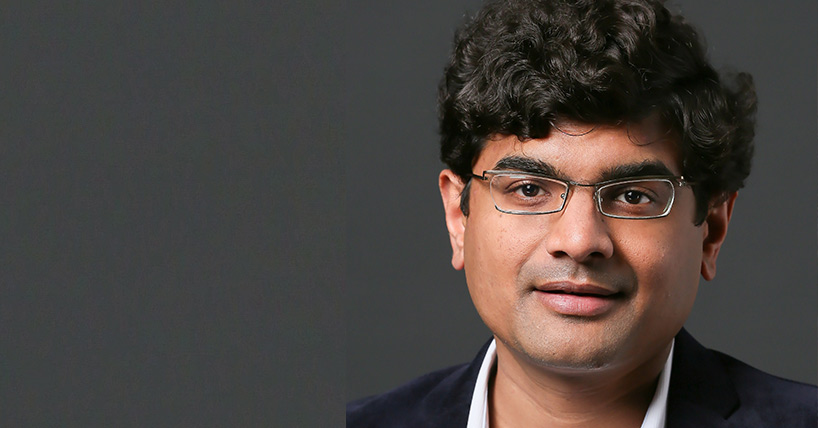
A leading neuroscientist has been awarded a £1.2m Leverhulme Research Leadership Award to drive forward the next generation of brain-inspired artificial intelligence.
Dr Srikanth Ramaswamy, head of the Neural Circuits Laboratory at Newcastle University, will receive the funding over five years after securing one of the UK’s most prestigious research fellowships.
The Leverhulme Research Leadership Award is granted only once every four years, and recipients are chosen through a rigorous national competition. The award recognises researchers with a strong track record and the ambition to push the boundaries of their field.
‘Truly honoured’
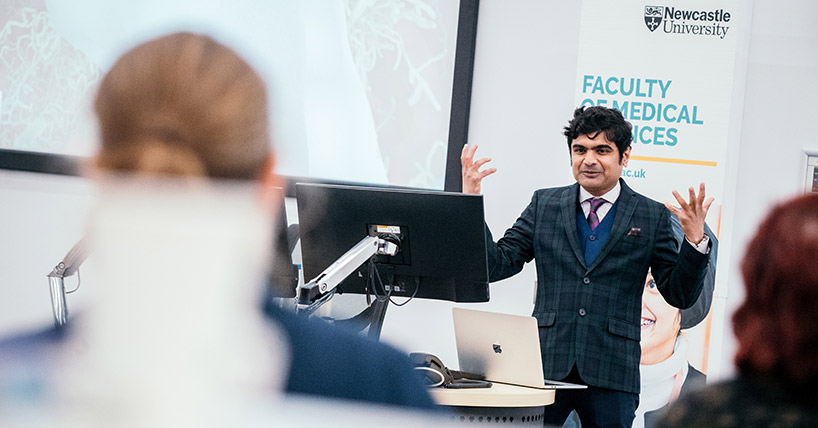
Dr Ramaswamy said: “I am truly honoured to receive the Leverhulme Research Leadership Award — one of the most competitive research awards in the UK.
“This is a defining moment for my group, and this support will give us the freedom to pursue bold, long-term questions at the intersection of neuroscience and AI, understanding how the brain's remarkable capacity for adaptive learning can inspire the next generation of AI systems.
“I am deeply grateful to Newcastle University for nominating me and to the Leverhulme Trust for this extraordinary vote of confidence in my research vision.”
Today's AI systems are undeniably powerful, yet they struggle with something humans do effortlessly - adaptive learning.
When circumstances shift or new challenges arise, most AI systems cannot adjust flexibly without extensive reprogramming. Dr Ramaswamy believes the key to solving this lies in our own biology.
Unlike machines, the brain doesn’t rely on a fixed learning algorithm. Instead, it uses a class of chemicals known as neuromodulators to continually fine‑tune how it learns, adapting to experience, context and environment. In essence, neuromodulators act as the brain’s control system for lifelong adaptability.
Dr Ramaswamy’s research has spent years uncovering how these chemicals operate at the circuit level. With this award, his team will translate those biological principles into a new generation of AI systems capable of adjusting their learning in real time - much like the brain itself.
“The brain doesn’t just learn — it learns how to learn,” said Dr Ramaswamy. “Neuromodulators are the biological machinery behind that. By building these principles into AI, we can create systems that are genuinely adaptable, not just powerful.”
The potential applications are wide‑ranging: personalised education that responds to each learner, smarter medical diagnostics, more capable brain‑computer interfaces, and autonomous systems that truly improve with experience.

'Respected researcher'
Dr Ramaswamy is a founding scientist of the Blue Brain Project at EPFL in Switzerland — one of the world’s most ambitious initiatives to digitally model the human brain — and a key contributor to the European Human Brain Project.
His open‑access Neocortical Microcircuit Collaboration Portal has been accessed more than 500,000 times by researchers around the world.
At Newcastle University, he leads a multidisciplinary team that combines cutting‑edge brain imaging, electrophysiology and computational modelling. His research tackles one of the most profound questions in modern neuroscience: how the brain sustains flexible, lifelong learning - and how those principles can shape the next generation of AI.
This award adds to a strong portfolio of international funding, including support from the US Air Force Office of Scientific Research, UKRI BBSRC, the Marie Curie Fellowship scheme and the Lister Prize Fellowship.