
dna origami
New tool to help build more reliable DNA nanostructures
Published on: 8 June 2026
Scientists have developed a new way to improve the reliability of DNA origami for future biomedical, agritech and other technological applications.
Scaffolded DNA and RNA origami is a technique that allows scientists to build tiny, highly precise two- and three-dimensional objects. Since these nanostructures can interact naturally with biological systems, they could have important future uses, such as in healthcare and agritech.
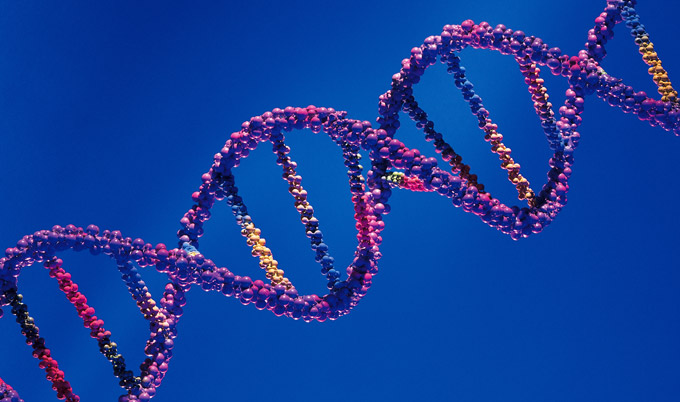
DNA origami forms with strands of DNA, one long strand called a ‘scaffold’ and many shorter strands known as ‘staples’. When these are mixed together and gently heated and cooled, the smaller strands naturally attach to specific parts of the longer strand, pulling it into shape. Through this self-assembly process, the DNA folds itself into tiny, carefully designed structures that extend the familiar double helix form of DNA.
However, it is not fully understood how the exact order of DNA building blocks affects how reliably these structures form. Unwanted interactions between different DNA strands can sometimes cause the assembly process to produce errors, reducing the number of correctly formed structures, even when the strands are designed to match properly.
To address this, an international team of scientists, led by Newcastle University, have developed a computational tool that predicts and avoids the unwanted interactions when designing DNA origami. Using this approach, the team identified both favourable and unfavourable scaffold regions from biological and synthetic sequences.
Published in the journal Nature Communications, the findings show that DNA sequence choice is a critical factor in successful DNA origami design and could help researchers create more reliable nano-scale devices for future applications in medicine, biotechnology and materials science.
Experiments with both flat (2D) and three-dimensional (3D) DNA origami structures showed that sequences predicted to have fewer off-target interactions folded far more successfully, while poorly optimised sequences often failed despite having the correct overall design.
The research provides a practical software tool to design more reliable DNA nanostructures for future biomedical and technological applications.
Optimising DNA origami assembly
Study lead author, Natalio Krasnogor, Professor of Computing Science and Synthetic Biology, said: “The new paper uses a multi-objective computational framework that optimises DNA origami assembly by selecting scaffold sequences that minimize off-target interactions, which are known to cause kinetic traps and reduce folding yield. This is crucial for researchers aiming to improve the fabrication yield and mechanical uniformity of custom-designed DNA origami objects for downstream biomedical or agritech applications.”
Dr Juan Elezgaray, University of Bordeaux, France, said: “DNA origamis are used nowadays as an almost routine tool to create nanostructures. We have shown that the success of the method can be seen, partly, as a matter of chance, mostly linked to the choice of a particular scaffold which is easily available. Other choices would have led to a far less efficient method.”
Professor Emanuela Torelli, Università degli Studi di Udine, Italy and a Visiting Researcher at Newcastle University, said: “We provide a novel software able to select optimal DNA sequences for a given target origami nanostructure shape. Looking forward, our in-silico design tool can refine the packaging via origami folding of a specific cargo (e.g. mRNA) and the synthesis of nano-vehicles for exogenous biomolecules delivery to cells.”
Future biomedical, biotechnological and materials applications
Professor Ariel Kaplan, from the Israel Institute of Technology, added: “DNA origami is often described as programmable self-assembly, but this work shows that the DNA sequence itself matters more than is usually assumed. By combining computational design, imaging, and single-molecule optical tweezers, we found that avoiding unintended interactions improves not only folding yield, but also the mechanical uniformity of the resulting nanostructures. That reliability is essential for moving DNA origami toward future biomedical, biotechnological, and materials applications.”
Professor Michael Famulok, Universität Bonn, Germany, said: “We have begun to successfully incorporate the Sequence Selector algorithm in our research to systematically optimize origami staple sets and thereby obtain more robust origami designs. This method complements existing origami design tools that we have used so far and helps reduce misfoldings caused by kinetic traps or non-specific interactions.”
Reference
Shirt-Ediss, B., Torelli, E., Navarro, S.A. et al. Optimising DNA origami assembly by reducing off-target interactions. Nat Commun (2026). https://doi.org/10.1038/s41467-026-73387-4

.jpg)