Deniz Yonucu ISRF
Newcastle academic receives esteemed mid-career Fellowship
Published on: 21 August 2026
A Newcastle University researcher has been awarded an esteemed Fellowship by the Independent Social Research Foundation (ISRF).
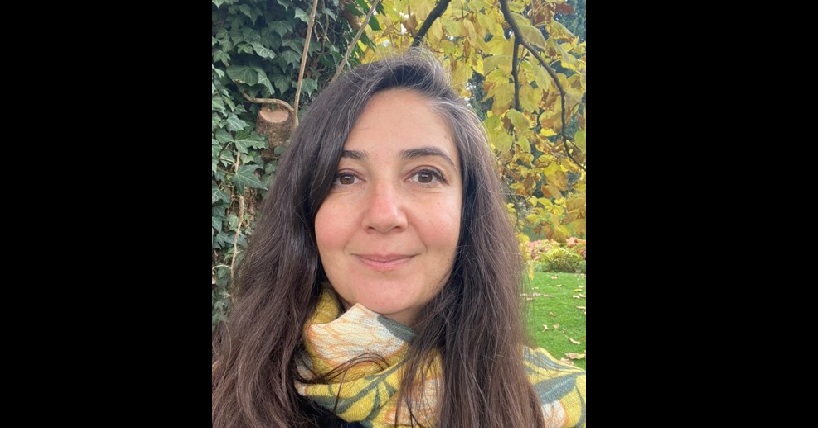
Dr Deniz Yonucu, a Senior Lecturer in the School of Geography, Politics and Sociology, is a social anthropologist whose research examines racism, colonialism, policing, and state violence. She has been given an ISRF mid-career Fellowship to carry out her research project Entangled Racisms: How Multiple Racisms Fuel the Far-Right in Diverse Societies.
The project will address a gap in the current understanding of why certain groups support far-right parties and will look in particular at why some people with migration backgrounds support political projects that are explicitly anti-migrant and racist. It will aim to develop ‘entangled racisms’ as a new conceptual framework for understanding how multiple racisms interact in diverse societies to fuel the far-right.
The research will build on Dr Yonucu’s earlier work on non-European forms of racism and the infrastructures of fascism, extending these questions to contemporary Europe.
Dr Yonucu said: “I'm truly honoured to receive this Fellowship. It offers something increasingly precious in academic life: a full year to read, think deeply, and follow the research where it leads. I'm grateful to the ISRF for making this possible.
“Over the coming year I'll be conducting fieldwork in Berlin and Hamburg, where I'll also spend time as a visiting professor at the University of Hamburg. My project starts with a difficult question: why do some people from migrant backgrounds support far-right and anti-immigrant politics? Part of the answer, I think, lies in how the contemporary far-right manipulates multiple racisms and increasingly operates through racial difference as much as against it.”
Dr Yonucu’s first book, Police, Provocation, Politics: Counterinsurgency in Istanbul (Cornell University Press, 2022), explored the governance of racialised working classes, and won the 2023 Anthony Leeds Prize for the best book in urban anthropology.
Alongside academic publications, she contributed to UN OHCHR (Office of the United Nations High Commissioner for Human Rights) expert meetings on racism and securitisation in 2025.