History of Chemical Engineering
Chemical Engineering at Newcastle has a rich history of excellence and innovation.
Legacy of excellence
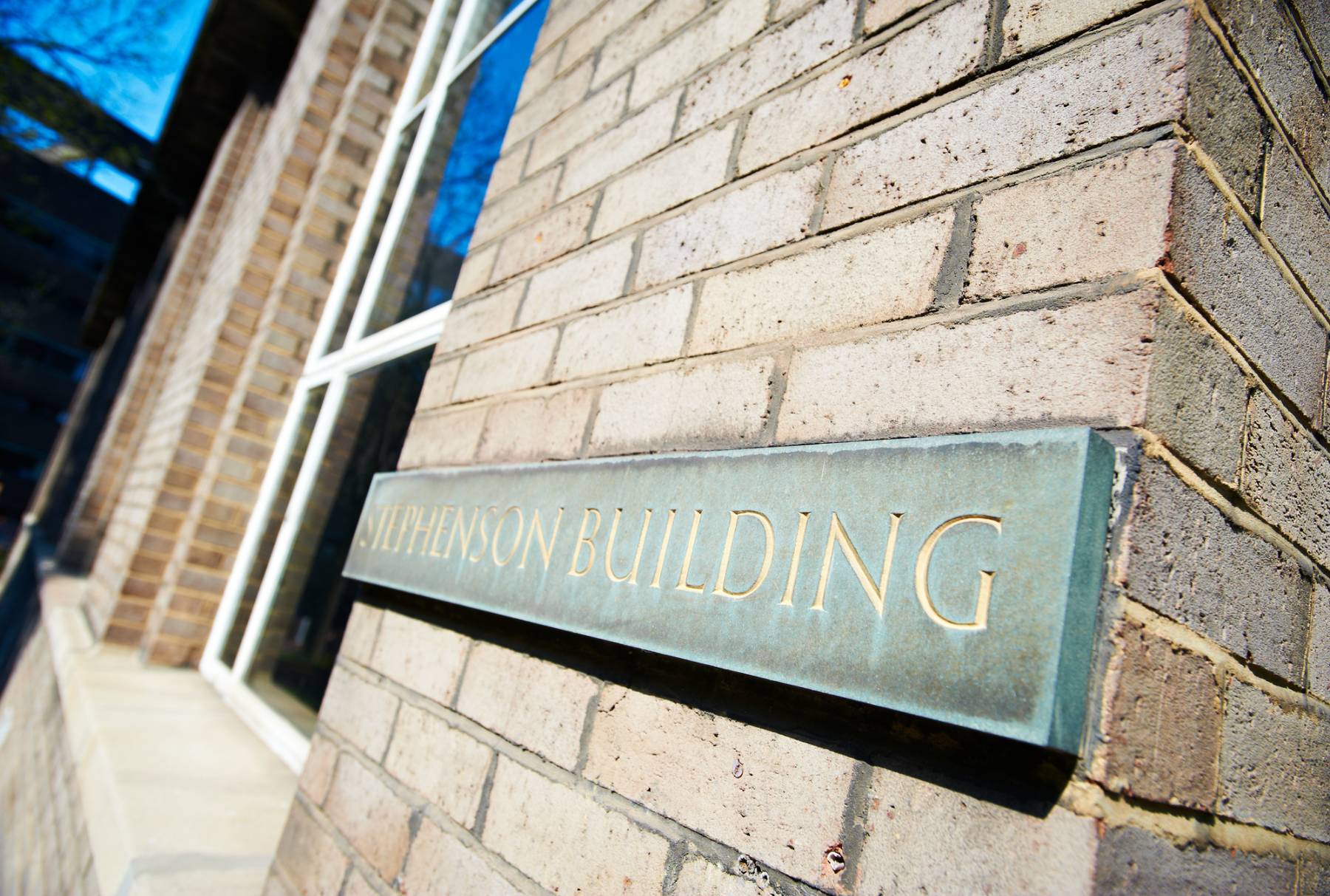
Chemical Engineering at Newcastle University began in a modest corner of the Stephenson building, welcoming its first cohort of BSc Hons students in 1955.
The previous year, John Metcalfe Coulson, a distinguished academic from Imperial College, was appointed as Professor and Head of Chemical Engineering. Under his leadership, the department flourished, necessitating a new facility by the 1960s.
The opening of Merz Court
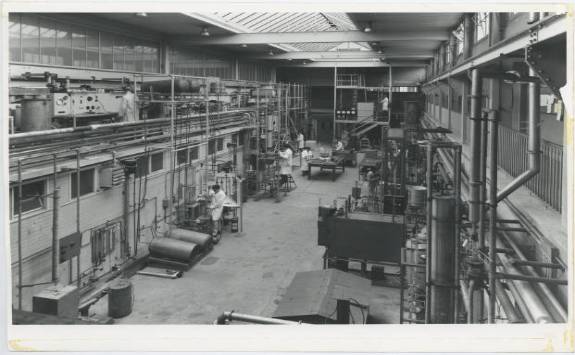
In line with the university's expansion, Merz Court was opened by Prime Minister Harold Wilson on May 7, 1965. Coulson documented this milestone in an article for Nature, highlighting the building's advantageous location next to the expansive Town Moor, which offers a scenic northern view.
Today, Merz Court, with its 114,000 square feet of usable space, remains a hub for teaching and research in Chemical and Electrical and Electronic Engineering. John Metcalfe Coulson's legacy endures, not only through his pivotal role in the establishment of Merz Court but also through the renowned Coulson and Richardson chemical engineering handbook, which was in its seventh edition as of 2022. The Coulson Lab, named in his honour, continues to inspire and educate future chemical engineers.
Industry collaborations
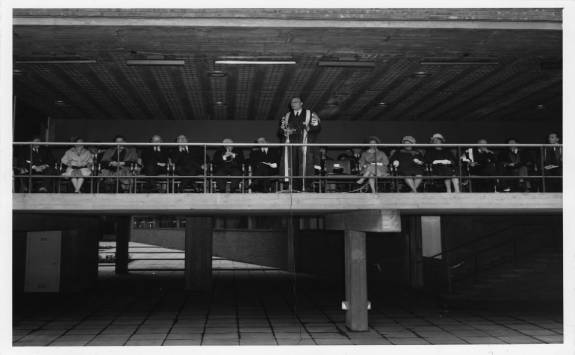
Newcastle University’s research has a global reach but also significantly impacts local companies, and Chemical Engineering has been at the forefront of these industrial collaborations. This expertise was notably recognised in the 1980s when the Cookson Group, a local company founded by Isaac Cookson in 1704, endowed two Chairs in Materials. The Cookson Group, now known as Vesuvius plc, specialised in refining and casting metals, as well as manufacturing plastics and ceramics.
The first Cookson Group Chair was held by Professor Trevor Page from 1987 until his retirement in 2008. Professor Geoff Gibson, who had a keen interest in polymer composites, held the Roland Cookson Chair in Composite Materials Engineering from 1990 until his retirement in 2018. Under their leadership, the Advanced Materials group was formed, merging the Metallurgy and Material groups into the Department of Mechanical, Materials, and Manufacturing Engineering. This group covered a wide range of materials science, from metals and ceramics to polymers and composites.
Pioneering research in carbon capture
Chemical Engineering at Newcastle continued to strengthen its materials science expertise with the addition of Professor Steve Bull, Dr. Alasdair Charles, and Dr. Adrian Oila in the 1990s and 2000s. The 1990s also saw pioneering research in carbon capture by Professor Colin Ramshaw in collaboration with Norsk Hydro, which was ahead of its time in addressing climate change. To this day Newcastle remains at the forefront of research on carbon net zero, demonstrating its commitment to sustainability.
A new era of innovation
In 2002, the Department of Chemical Engineering joined forces with parts of Mechanical Engineering and Physics to form the School of Chemical Engineering and Advanced Materials, led by Professor Julian Morris. Julian, who passed away in 2020, was instrumental in establishing the Centre for Process Analytics and Control Technology (CPACT) and the Centre for Process Innovation (CPI), both of which have become integral to the UK’s innovation landscape. His legacy includes recruiting influential academics and fostering a collaborative spirit between industry and academia.
Under Julian’s leadership, the department saw significant milestones, including the appointment of Professor Sudipta Roy as the first female professor in Chemical Engineering in 2005. Today, the department boasts five female professors and has had three female Directors of Discipline, including the current Director, Professor Kamelia Boodhoo. The welcoming spirit of the department remains unchanged, as echoed by graduates who cite the warmth of their initial welcome as a key reason for choosing Newcastle.
In 2002, the Advanced Materials group transitioned to the Chemical Engineering department, welcoming nanotechnologists Professor Lidija Siller and Professor Milan Jaros from the physics department. Their expertise in chemistry and materials interactions significantly enhanced our research capabilities. Concurrently, an Electrochemical Engineering group was established, led by Professor Keith Scott and including Professor Paul Christensen, Professor Sudipta Roy, and Dr. Mohamed Mamlouk, who was promoted to Professor in 2022 for his pioneering work on batteries and hydrogen production. These groups later merged to form the Advanced Materials and Electrochemical Engineering group, one of three key research groups within the Chemical Engineering Discipline.
Leadership and innovation
Professor Steve Bull, who became Head of Chemical Engineering and later School Head from 2005 to 2010, currently holds the Cookson Group Chair of Engineering Materials, succeeding Professor Trevor Page upon his retirement in 2008. Steve's research focuses on surface engineering, particularly the mechanical properties of layered systems in corrosive environments, and has recently expanded to include the recycling of additive manufactured polymers and composites. His contributions to nanomechanical testing and surface engineering earned him a Fellowship at the Royal Academy of Engineering in 2014. Professor Trevor Page was similarly honoured in 2007.
The decade from 2010 to 2020 saw heightened global concerns about environmental sustainability. Professor Jonathan Lee secured funding for projects with Alston Power to apply intensified carbon capture technology to power stations. These efforts led to the development of an integrated stripper and reboiler to reduce the costs of carbon capture, as well as a rotating packed bed carbon capture pilot plant. During this period, Professor Paul Christensen focused on the chemical safety of lithium-ion batteries at the local Nissan battery plant, a collaboration that continues to address the challenges of lithium-ion technology. Newcastle's strong ties with Nissan include a significant project on lithium recycling funded by the Faraday Institution in 2018. Professor Christensen is internationally recognised for his work and serves as the Senior Advisor to the National Fire Chiefs Council, among other roles.
Student-led sustainability activities
In 2013, the University’s Student Union founded StuBrew, a company dedicated to environmental and sustainability initiatives. StuBrew, one of only 25 projects in the UK to receive funding from the National Union of Students’ “Student Green Fund,” installed a 400L beer brewing facility in Merz Court, with the first brew on November 16, 2014. Due to its success, including special brews like “Exam Room Tears” and “Lab Session,” the brewery expanded to a 1000L capacity in June 2018. StuBrew has received several accolades, including the People’s Choice for Beer of the Festival at the 2019 Tyneside CAMRA beer festival. This project not only promotes sustainability but also provides students with entrepreneurial skills and hands-on experience in running an industrial process.
Addressing major societal challenges
Three research groups were developed in Chemical Engineering, each providing solutions to global challenges:
Advanced Materials and Electrochemical Engineering
The late 2010s marked significant growth for the Advanced Materials and Electrochemical Engineering group at Newcastle University. This period saw the addition of expertise in bioengineering, recycling, batteries, and energy technologies. Professor Mark Geoghegan, who took over the Roland Cookson Chair in Engineering Materials from Professor Gibson in 2019, brought his interests in polymers, biopolymers at surfaces, polymer electronics, and adhesion from Sheffield. He joined a dynamic team of researchers, including Professor Marloes Peeters (electrochemical biosensors), Professor Katarina Novakovic (polymer recycling), and Dr. David Xie (sustainable polymers). The redevelopment of the Stephenson Building, which fully opened in 2024, will further enhance opportunities for those working in biomaterials.
Process Intensification
Newcastle’s Process Intensification Group (PIG) is one of the largest of its kind globally, with around 70 researchers across eight laboratories. Founded in the 1990s by Professor Colin Ramshaw, who pioneered high-gravity technologies, the group has grown significantly under the leadership of Professors Kamelia Boodhoo, Adam Harvey, and Jonathan Lee. Initially focusing on spinning disc reactors, oscillatory baffled reactors, and rotating packed beds, the group's research now includes non-thermal plasmas, intensified heat exchangers, heterogeneous catalysis, and more. Key application areas include CO2 capture and conversion, biofuel production, biorefining, green chemistry processes, and gasification & pyrolysis.
Materials, Concepts & Reaction Engineering (MatCoRE)
The Materials, Concepts & Reaction Engineering (MatCoRE) Group, formed in 2017, focuses on bridging the gap between fundamental materials science and chemical reaction engineering. Led by Professor Ian Metcalfe, Dr. Wenting Hu, Dr. Evangelos Papaioannou, Dr. Stevin Pramana and Dr. Greg Mutch, the group has secured significant funding and produced high-profile research. Their work addresses technological challenges such as carbon dioxide capture and hydrogen production, contributing to policy briefings and government advisory bodies. Professor Ian Metcalfe was elected a Fellow of the Royal Academy of Engineering in 2012, and in 2025 he was awarded the IChemE Sharma Medal. Also in 2025, Dr Greg Mutch was awarded the IChemE Warner Medal.
A strong community and team ethic
The success of Chemical Engineering at Newcastle is due to the contributions of outstanding academics, dedicated administrative staff, and skilled technicians. The discipline has fostered a strong team ethic through social activities, including field trips, weekend walks, annual balls, Christmas parties, and charity events like the Great North Run. This sense of community continues to support and inspire innovation and excellence.
Adapting to COVID-19 challenges
Chemical Engineering at Newcastle University faced the challenges of COVID-19 head-on. We swiftly transitioned to online teaching, including exams and labs, while remaining flexible to accommodate students' needs. Over 50% of our Stage 1 cohort experienced at least one in-person lab, preparing them for Stage 2's hybrid teaching model. Our researchers, including Professor Peeters and Drs. Seyedin and McClements, developed a new COVID-19 bioelectronic test that was 6000 times more sensitive than previous lateral flow tests.
Pioneering sustainability
Significant strides were made in sustainability. Professor Jonathan Lee and Dr. James Hendry advanced their carbon capture technology through the HiRECORD project (2022-2026), testing a 10-ton per day CO2 capture process across Europe. Carbon Clean Solutions launched the world’s first intensified carbon capture process in 2021, based on their technology. Professor Lidija Siller’s carbon capture and mineralisation technology, licensed to Norwegian company Evoltec, is being tested at a municipal waste plant in Bergen, Norway. This technology is one of only nine globally that offers a complete solution to CO2 emissions, as highlighted in the “State of the Art CCS Technologies in 2022” Global CCS report.
Local impact and global reach
To help Northumbria Water achieve net zero by 2027, Dr. Chris O’Malley and Dr. Mark Willis optimized the company’s treatment process, converting biogas from wastewater into biomethane, a renewable energy source. The BioSPRINT project, led by Dr. Fernando Russo Abegão and Professor Kamelia Boodhoo, focuses on the valorisation of sugars from underexploited hemicellulose streams, aiming for zero-waste biorefining operations. This project has made significant progress in lignin recovery and downstream purification using innovative technologies.
A strong and evolving discipline
The Chemical Engineering discipline at Newcastle has evolved from processing technologies to embracing the circular economy. Since its inception in 1955 in the Stephenson Building, the discipline has grown and adapted, with many faces joining and leaving over the years. Today, it remains strong with three major research groups: Advanced Materials and Electrochemical Engineering, Process Intensification, and Materials, Concepts and Reaction Engineering. Our future is bright as we continue to address the challenges of increasing and aging populations, climate change, and energy demands through groundbreaking research and education.