SASE
Students bring the rainforest to life at city museum
Published on: 20 February 2026
The African rainforest came to life at the Great North Museum: Hancock thanks to a Newcastle University initiative.
Immersive experience
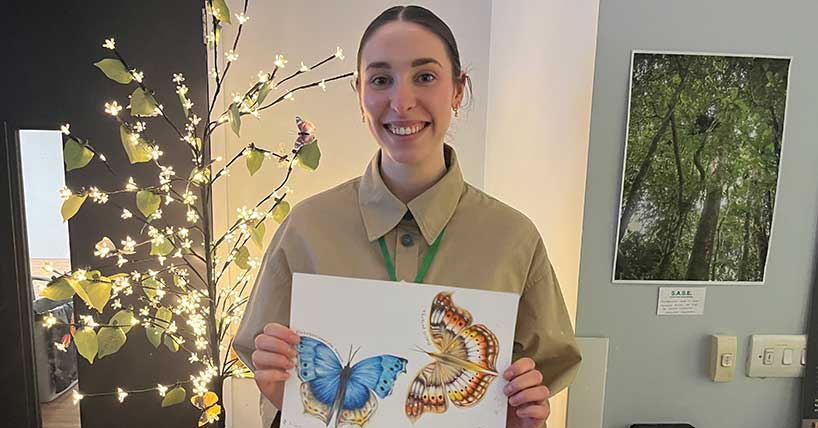
Students Against Species Extinction (S.A.S.E.) and academic mentors from across disciplines teamed up with the Cross River Gorilla Project (CRGP) charity to create an immersive environment where home-schooled youngsters could pretend to be forest rangers and take part in activities to learn more about the home of the endangered great ape.
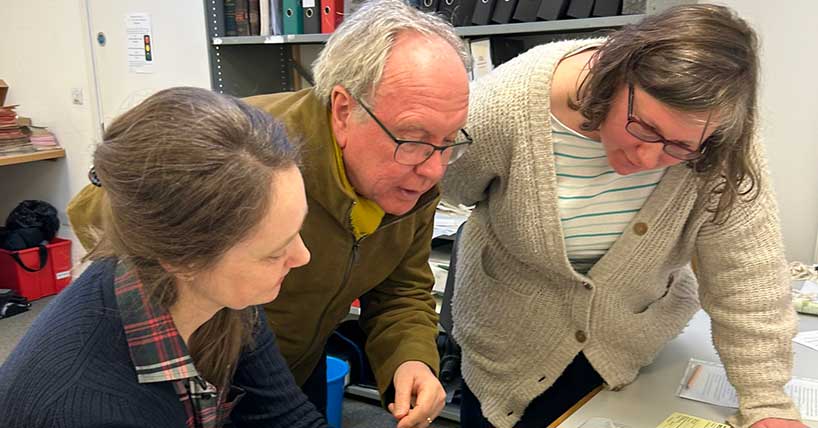
The students, a group of around 20 studying Media and Public Relations, Marine Biology and Law, planned and ran the event with the help of their academic mentors. It included a sensory tent, video, guided tour, activity station and grow tree where visitors could ask a question to the local rainforest community members to further their engagement and understanding.
“The day was about raising awareness, especially about the many species that are endangered or still undiscovered,” says Ananya Rajesh Sonawane who is studying for an MA in Media and Public Relations. “It was a fun way to engage with the local community, connecting them to a place all the way across the globe. In practice, this is what communications is all about: building that connection and empathy.”
Dawn Grice who is studying Marine Biology says: “I applied to S.A.S.E. for my two-week placement as I’m really interested in animal conservation and the Cross River Gorilla, which was at the heart of this immersion exhibition, is an endangered species. Outreach and education are also within my future career prospects and through this fantastic opportunity, I’ve been able to learn and also educate young people firsthand in a meaningful way. Being able to work in collaboration and hearing the positive feedback from participants today has made this extremely worthwhile.”
Isabelle Long, who is a third-year undergraduate studying Media, Communication and Cultural Studies, joined S.A.S.E. through her Global Communications module. “Working on global NGO campaigns on our module then getting the opportunity to execute those in real life is so rewarding. You become really invested in the NGO’s goals and mission,” she explains. “I think the event was so rewarding; I was introducing the immersive video to participants, leading them to the sensory tent, and seeing everyone's reactions made me emotional.”
A significant contribution
Dr John Daniels, the chair of the Cross River Gorilla Project, has a long-standing relationship with S.A.S.E. He says: “The event at the Great North Museum: Hancock was an exciting and innovative way to raise the profile of the West African rain forest at a time of climate change and global warming by providing an immersive forest experience for children and the local community.
He added: “Newcastle University students have engaged enthusiastically with the work to protect the critically endangered Cross River Gorilla and the rainforest of the Lebialem Highlands in Southwest Cameroon, where this iconic animal can be found. They have made a very significant contribution to legal protection, biological understanding and overall public awareness over what is now a 10-year period. It has provided them with practical experience of working on a conservation project.”
S.A.S.E was founded by Media and Public Relations lecturer Kellie Daniels. It now has members across the world including Nicholls State University in the United States and the University of Bamenda in Cameroon. Last year, S.A.S.E. was recognised by the United Nations and works with it as an 'Actor' to play a prominent role in the global environmental restoration movement. In 2027, S.A.S.E plans to increase its global reach by expanding to Mexico, Vietnam and Ghana.
Kellie says: “When students, academics, and cultural institutions collaborate, education becomes a force for real-world change. This exhibition proves that interdisciplinary, global partnerships can inspire communities and accelerate solutions to conservations biggest challenges.”