
Twilight focused action
Twilight action could reduce light pollution’s impact on biodiversity
Published on: 9 February 2026
Newcastle experts argue that twilight should be the focus of light pollution mitigations for biodiversity.
Professor Darren Evans and Madeleine Fabusova from the School of Natural and Environmental Science discuss new research which shows that typical levels of artificial light at night can simultaneously suppress early-night activity and disrupt navigation cues in nocturnal insects and spiders. These findings identify twilight as a disproportionately sensitive period, raising questions about how street lighting and other mitigation strategies should be targeted.
Published in the journal Current Biology, the findings also highlight a mismatch between ecological sensitivity and current lighting policies. Many mitigation strategies, such as dimming lights after midnight or switching off lamps during low‑traffic hours, focus on late‑night periods. However, if twilight is when wildlife is most vulnerable, these measures may offer limited protection.
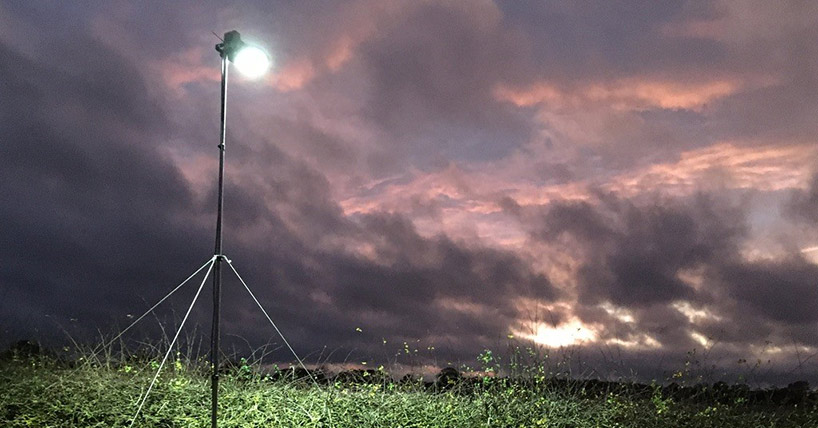
Small changes could go a long way
The authors argue that even modest changes could make a difference for wildlife and people. Small reductions in brightness during twilight, better shielding to reduce skyglow, or adjusting LED spectra to limit short‑wavelength emissions could help reduce ecological harm without compromising human safety.
The authors highlight that Newcastle University is leading the way in exploring how light pollution mitigation can be better aligned with biological processes but warn that progress is slow.
Professor Evans reviewed existing strategies for reducing the ecological impacts of street lighting and noted the substantial potential offered by LED technologies, which allow fine-scale control of intensity, spectrum, and emission direction. However, empirical mitigation studies remain relatively few, and those that do exist have rarely examined twilight specifically, despite this being the period when many key nocturnal interactions begin. This mismatch suggests that mitigation practices may not be targeting the most important window.
Darren Evans, Director of Expertise: Ecosystems and Professor of Ecology and Conservation, said: “A growing number of studies are pointing to twilight as a disproportionately sensitive period for biodiversity, raising questions about how lighting mitigation strategies should be targeted, especially during busy times for commuters.”
Study co-author, Madeleine Fabusova, a PhD researcher at Newcastle University’s School of Natural and Environmental Sciences, added: “Although a good number of street light mitigation options exist, there is a good amount of implementation still needed on our road networks. This research shows we need to better understand and manage the sensitivities of a range animals negatively impacted by light pollution.”
The authors call for greater collaboration among ecologists, lighting engineers, road safety experts and national and local authorities. The Newcastle researchers are part of an interdisciplinary team currently writing new road lighting guidelines for Europe as part of the SAFELUX project. This will include gathering evidence from trials that could inform national lighting guidelines, biodiversity action plans and local authority practices.
Reference
Evans, D. M., & Fabušová, M. (2026). Light pollution: Should twilight be the focus of mitigations for biodiversity? Current Biology, 36(2), R61–R63. https://doi.org/10.1016/j.cub.2025.11.063