
Lough Neagh
Lough Neagh sand mining threatens lake’s ecosystem, research warns
Published on: 17 April 2026
New research involving Newcastle University outlines how Lough Neagh, the UK and Ireland’s largest freshwater lake, is under threat from commercial sand dredging.
Published in the Journal of Environmental Management, the study led by Queen’s University Belfast in collaboration with Dr Chris Hackney, Senior Lecturer in Physical Geography in the School of Geography, Politics and Sociology, Newcastle University, is the first-of-its-kind and implies that sand dredging may be having broader and more persistent impacts on the lake than previously understood.
Sand dredging is the underwater excavation and removal of sand from seabed’s, rivers, or lakes using specialised vessels.
Lough Neagh supplies over 40% of Northern Ireland’s drinking water, supports fisheries with its habitats and wildlife that is internationally, nationally and locally designated. In recent years, however, it has become a symbol of environmental decline, with toxic algal blooms, biodiversity loss with growing public concern.
Dr Hackney undertook the high-resolution sonar mapping, or bathymetric survey, of the Lough bed that was used in the study and revealed that it has been significantly disturbed by the process of sand extraction. Areas impacted by extraction were approximately 12 metres lower than the undisturbed lough bed levels seen nearby.
“Sand extraction is just one of many pressure Lough Neagh is currently facing, yet it is one that perhaps doesn't get as much recognition in terms of its impacts”, Dr Hackney said. “This new study shows that the impacts of sand dredging operations are not just confined to the licensed areas of the lough, but that increased turbidity is observed during boat transits and in plumes near the offloading sites around the shore. As the water quality of the lough continues to degrade, it’s vital that we understand the impacts of all the pressures it is facing to ensure we can help quicken the recovery of this vital water body."
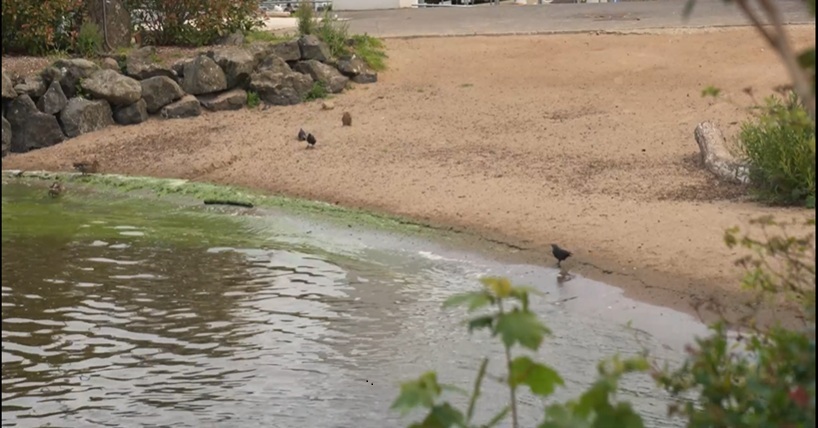
Impacts of sand dredging
Dr Neil Reid, Reader in Conservation Biology at the Co-Centre for Climate, Biodiversity and Water in the School of Biological Sciences at Queen’s, and lead author of the study, said the work represents a step change in understanding: “This is the first attempt to quantify the range of potential impacts from sand extraction throughout Lough Neagh and to infer potential ecological consequences. Our findings suggest disturbance is not localised, but widespread across much of the lake ecosystem.”
Sand is a vital resource that underpins modern infrastructure, used in concrete, construction, and land reclamation.
The researchers examined the lakebed in part of the dredging zone with results revealing extensive physical alteration. Dredging had carved deep depressions into the sediment, lowering the lakebed by up to 17 metres. Satellite imagery analysis revealed widespread sedimentation clearly visible from space, with plumes of silt spilling from dredging vessels, kicked up by vessel propulsion during transit, as well as runoff from landing sites. Sedimentation is a well-established cause of damage to aquatic ecosystems and a key factor in the decline of freshwater wildlife.
Dr Reid added: “The situation at Lough Neagh reflects a wider global challenge. Demand for sand is increasing rapidly with extraction pressures growing in many aquatic environments, so understanding the full extent of the impacts is essential. This study suggests that the effects of sand dredging extend far beyond the point of extraction, influencing the entire ecosystem likely negatively effecting water quality, habitats, and biodiversity.
"There are practical ways to reduce the environmental footprint of dredging. Adjusting suction settings could reduce sediment disturbance while limiting hopper overflow could reduce sediment discharge. Slower vessel speeds and fixed shipping lanes could confine disturbance. In shallow water, avoiding high-thrust manoeuvres or protecting the lakebed could reduce resuspension. On land, covering sand piles and using settlement ponds or vegetation buffers could intercept runoff."
Reference: ‘Sand dredging is associated with benthic habitat alteration and chronic turbidity with profound ecological consequences likely for the UK and Ireland's largest freshwater lake’, Neil Reid, Rachel Stewart, Marc Ruddock, Gerard Hamill, Christopher Hackney. Journal of Environmental Management, 2026, 129573, DOI: 10.1016/j.jenvman.2026.129573
Press release adapted with thanks, from Queen's University Belfast