Bumblebees and toxic metal
Bumblebees hit harder by toxic metals
Published on: 7 July 2026
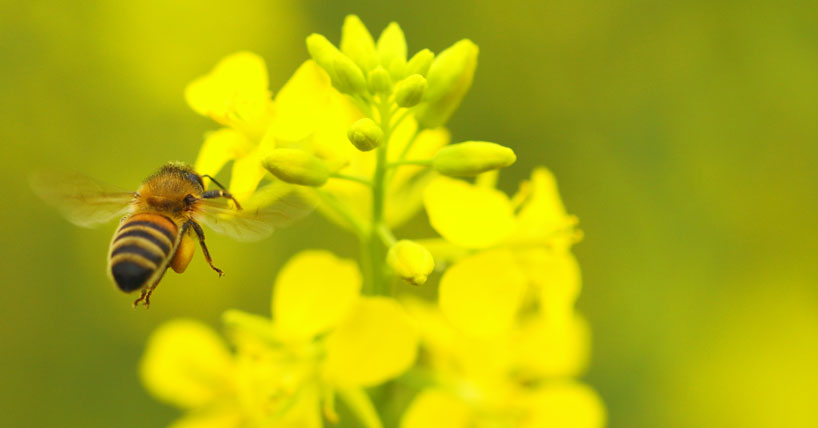
Bumblebees collect up to seven times the amount of toxic heavy metals as honeybees even when foraging in the same environment, new research has discovered.
Exposure to these metals can affect everything from their ability to forage for food to their ability to reproduce.
Metal pollution is a widespread issue, typically concentrated near industrial centres, mining areas and towns and cities. It can also be carried to rural areas in the air or through the use of sewage sludge, agrochemicals and fertilisers, for example.
When bees are foraging for food, they can inadvertently collect metals from their environment through exposure to contaminated soil, dust and pollen. Even at low concentrations, certain metals can be toxic, for example impairing learning and memory, which may affect foraging efficiency and navigation. Metals have been linked to reduced reproductive success, leading to fewer offspring and disrupting brood development.
Honeybees have previously been used a proxy for assessing contamination in highly polluted areas. However, in research published in Ecological Entomology, a journal of the Royal Entomological Society, scientists have shown that species of bees accumulate heavy metals differently - with bumblebees particularly vulnerable to exposure.
Researchers from the University of Cambridge collected pollen samples using pollen traps, and measured concentrations of arsenic, cadmium, chromium, cobalt, lead and tin in both pollen and adult bee bodies. They used this information to compare levels of heavy metals accumulated by honeybees and bumblebees from apiaries in Cambridgeshire, an area that typically has relatively low soil metal contamination.
Despite the colonies of the two bee species being adjacent to each other, meaning that they were foraging in the same landscapes, the researchers found that heavy metal concentrations differed significantly between species.
Bumblebees collected pollen with between two and seven times the level of heavy metals as that collected by honeybees. This was true for most metals tested. Bumblebees accumulated around three times greater concentrations of heavy metal in their bodies than honeybees
Dr Sarah Scott, who carried out the research while at the University of Cambridge and is now at Newcastle University, said: “Most metal levels we found were not high enough to kill bees, but even low levels can still harm bee health and colony success in subtle but important ways, such as affecting their ability to forage and reproduce.”
The reasons for these differences are likely due to a mixture of foraging behaviour and bee physiology.
Honeybees nest in above-ground cavities, such as hollow trees or human-managed hives. Colonies are large, typically consisting of 30,000 to 60,000 individuals. In contrast, bumblebees nest underground, in soil or leaf litter. Bumblebee colonies are much smaller, typically containing 50 to 500 individuals.
Flower choice influences contamination levels
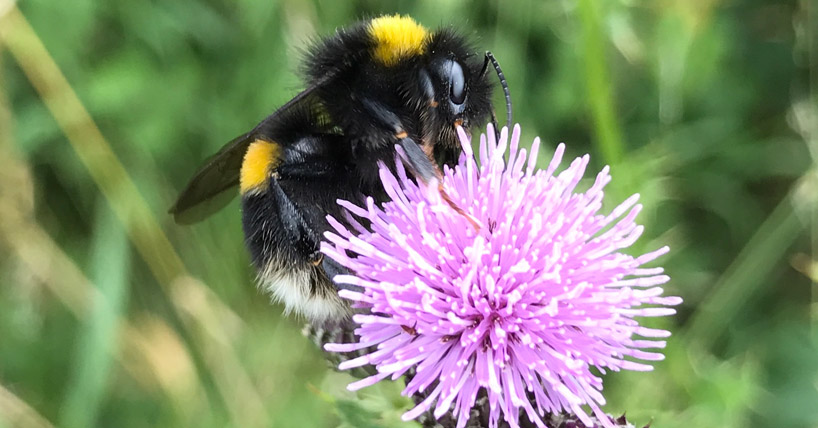
Not all bees visit the same flowers. Their choices depend on things such as nutritional needs, their body size and tongue length and foraging habits, and some plants absorb metals at higher levels than others. Honeybees collect large amounts of pollen from many types of flowers, so any contamination may get diluted. Bumblebees, on the other hand, collect less pollen from fewer sources, so their exposure depends more on whether they happen to visit contaminated plants.
Honeybees travel further distances when foraging – up to 10 km from the colony – and have more workers, so can avoid heavily contaminated spots by using a wider area. Bumblebees, however, stay closer to their nest – typically travelling no more than 1.5 km from the nest to forage – and have fewer options, so are more affected by local contamination.
Bumblebees are also hairier than honeybees, which makes them more likely to pick up dust and tiny airborne particles that can contain metals. These particles can stick to their bodies and end up in the pollen they bring back.
Professor Lynn Dicks from the University of Cambridge, the study’s senior author, said: “Even in areas that we usually consider safe or lower risk for heavy metals – typically rural areas, away from industrial or mining areas – bees can pick up toxic metals. Bumblebee colonies tend to have fewer workers available to perform tasks, so the loss of individuals can have a big impact on overall colony function.”
Dr Scott added: “Bees play a critical role in both biodiversity and food security, so we’d still encourage people to plant flowers to help them, even if you live in an area more likely to be contaminated. At the end of the day, bees still need food. Even if it carries traces of heavy metals, having some food is better than having no food.”
The research was funded by the Royal Society.
You may also be interested in reading how stress gives bumblebees sharper vision and faster reactions
Reference: Scott, S et al. Eusocial bee species are exposed to different toxic element profiles despite foraging within the same landscape. Ecological Entomology; 16 Jun 2026; DOI: 10.1111/een.70108