
Bhutan GLOF early warning system
Local knowledge can improve early warnings of glacial lake floods
Published on: 3 August 2026
Local knowledge, improved evacuation preparedness and resilient mobile phone-based communication channels can enhance Early Warning Systems to reduce loss of life during glacial lake outburst floods.
A study led by Newcastle University involving the community in Lunana, Bhutan, found that while there was a high awareness of the risk of glacial lake outburst floods (GLOFs) among people in Lunana - much of it as a result of ongoing government communications and outreach work - many residents were not sufficiently prepared to respond quickly and safely when warnings occurred.
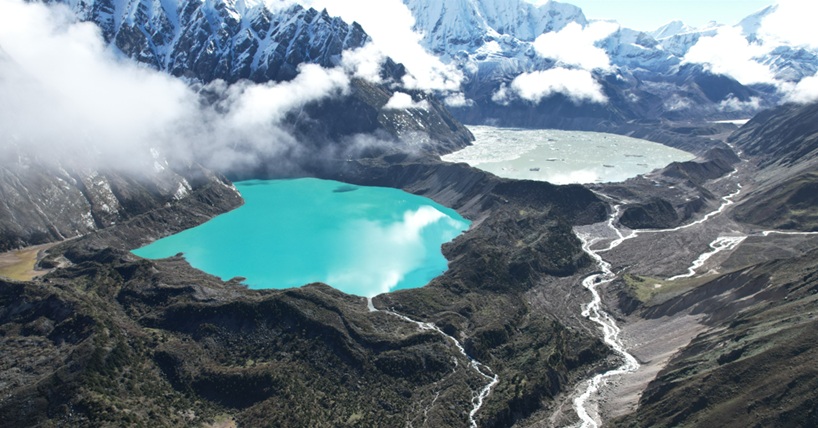
As the climate gets warmer, glaciers retreat and meltwater collects at the front of the glacier forming a lake. These lakes can suddenly burst and create an extremely fast-flowing GLOF which can quickly spread over a large distance from the original site – up to 400 kilometres in some cases. GLOFs can be highly destructive and damage property, infrastructure, and agricultural land and can lead to significant loss of life.
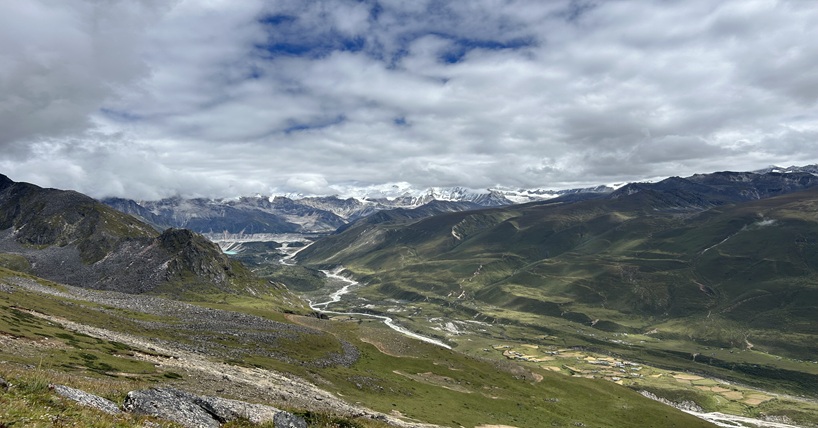
Lunana is a remote village in the north of Bhutan and is surrounded by several glacial lakes, including Thorthormi Tsho, identified as the most dangerous glacial lake in Bhutan.
The research found that during GLOF events in Bhutan in 2019 and 2023, people’s first warnings often came from environmental cues such as unusually loud river sounds and ground vibrations, not from formal early warning systems.
Mobile phone calls from friends and family and alerts through social media channels were also among the most common ways people received both first alerts and follow-up warnings.
Most people said they sought additional information from friends and relatives before they evacuated, and some residents recalled that they felt their evacuation had been disorganised, with some saying that they did not have a ‘grab bag’ of essential items and valuable possessions during the chaotic departure.
The research highlights the importance of strengthening existing GLOF Early Warning Systems so they better reflect the lived experience of communities on the frontline of climate-related hazards.
Lead researcher, Sonam Rinzin, a Doctoral student at Newcastle University, said: “As our climate changes, glacial lake outburst floods are a major and growing threat for mountain communities. Our study shows that early warning technology alone is not enough.
“By combining formal early warning systems with local knowledge, trusted communication networks that are both diverse and resilient, and regular evacuation drills, mountain communities at risk can become better prepared for future floods.”
Using data to monitor GLOF risk
The research builds on earlier work that identified previously unrecognised high-risk lakes in Bhutan and highlighted the communities and infrastructure that could potentially be affected by flooding.
It also develops work undertaken with funding from the Natural and Environment Research Council to collaborate with the Royal Government of Bhutan (RGoB) and Druk Holding and Investments (DHI), which has expertise in sensor prototyping and remote-area power and data communications technology.
The team at Newcastle, which includes Professor Rachel Carr and Professor Stuart Dunning from the School of Geography, Politics and Sociology, Newcastle University, are working with RGoB, DHI and other key organisations in Bhutan to integrate their data into policy and educational awareness campaigns.
This includes co-developing a network of low-cost sensors to deliver a data-based way to monitor GLOFs and their potential triggers, and using ensemble modelling to accurately determine a range of realistic GLOF scenarios to optimise downstream early warning systems.
A key part of this work has been the creation of a website www.himalayanhazards.org to deliver the data from these sensors directly to at-risk communities.
Professor Rachel Carr, Professor of Glaciology, said: “This study shows that early warning systems need to be designed around the realities of how people receive, understand and respond to warnings. These findings have relevance beyond Bhutan, as many mountain regions around the world face increasing risks linked to glacial lake hazards as our climate changes. Strengthening response capability and incorporating community knowledge are essential if early warning systems are to reduce loss of life.”
Funding was also provided through the Frederick Soddy award from the Royal Geographical Society with IBG, the Mount Everest Foundation, and the British Society of Geomorphology.
Reference: “Public warning and evacuation experiences during recent GLOF events (2019 and 2023) and recommendations for future preparedness: insights from Lunana, Bhutan”, Sonam Rinzin, Stuart Dunning, Rachel Carr et al. International Journal of Disaster Risk Reduction, Volume 142, August 2026. DOI: 10.1016/j.ijdrr.2026.106211

.jpg)