Environment
Hayley Fowler, professor of climate change impacts, Newcastle University
When the 2001 census was taken, climate change was already well understood by scientists, but to most people in Britain it still felt like a distant issue. Twenty-five years later, it has become part of the country’s lived environment. Britain is warmer, wetter in winter, more exposed to heatwaves and flooding, and facing rising pressure on coasts, rivers, water supplies and nature.
The clearest change is temperature. The UK’s warmest years have clustered overwhelmingly in the 21st century. Heat that once seemed exceptional is now less surprising, including the record breaking 35°C and 37°C temperatures of May and June 2026 respectively. The most striking example came in July 2022, when the UK exceeded 40° for the first time. This was more than a symbolic record: it showed that Britain’s buildings, transport systems, schools, hospitals and care homes were designed for a climate that no longer exists.
Extreme heat has changed the way climate risk is understood. In the past, British weather hazards were often associated with cold, storms and rain. Those risks have not disappeared, but heat is now a major public-health concern.
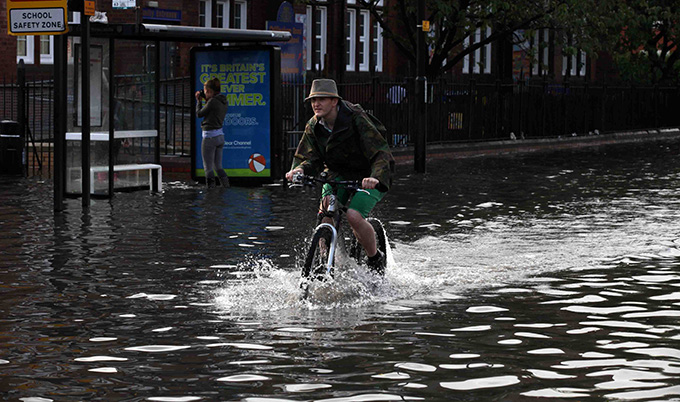
Rainfall has changed too. Britain has always had variable weather, but recent decades show a shift towards wetter winters and heavier rainfall events. The winter half-year from October 2023 to March 2024 was the wettest on record for England and Wales. Heavier rain increases the risk of river flooding, surface-water flooding and sewer flooding, especially in towns and cities where drainage systems struggle during intense downpours.
The main risks
These shifts mean that Britain faces greater risk from droughts, water stress and floods. The Climate Change Committee’s A Well-Adapted UK report (2026) identifies both flooding and drought – as well as heat – as central risks for the decades ahead, warning that the country is not yet adapting fast enough.
This dual risk can seem contradictory, but a warmer climate can intensify both wet and dry extremes. Hotter summers dry soils, increase evaporation and raise demand for water. This matters for households, farming, rivers, wetlands and energy production. Water companies, regulators and governments are now under pressure not only to reduce leakage and pollution, but also to plan for more severe dry periods by building new storage.
Sea levels have also risen around the UK by upwards of 10cm this century, increasing the risk of coastal flooding and erosion. Higher seas make storm surges and high tides more damaging, placing added pressure on coastal towns, ports, roads, railways and natural habitats. For some communities, adaptation may mean stronger defences; for others, it may eventually mean difficult decisions about managed retreat.
Other environmental changes since 2001 are not only about climate. Air quality has improved in some respects, especially as coal power has almost disappeared and vehicle standards have tightened, though pollution remains a serious urban health issue through things like particulates and nitrogen dioxide from vehicle exhausts. Britain has also experienced continuing biodiversity decline, with pressure on birds, insects, rivers and habitats. Public concern about sewage pollution, river health and the condition of nature has grown sharply.
In parallel to all this, we’ve seen a major policy shift. In 2001 decarbonisation was still a relatively specialist policy debate. Since then, the UK has adopted legally binding carbon budgets and a net-zero target. Electricity generation has changed dramatically, with coal largely replaced by gas, renewables and imports. But emissions from homes, transport, food and land use remain harder to cut.
This article is republished from The Conversation under a Creative Commons license. Read the original article.