Limiting Overshoot
UN report sets out path to return below 1.5°C
Published on: 2 September 2026
The world set to cross 1.5°C global warming, but can still limit, adapt to and return from higher temperatures.
Global temperature rise is set to cross 1.5°C, likely within the next few years, pushing climate risks and impacts to increasingly dangerous heights, but it is still possible to bring temperatures down and achieve global goals in the Paris Agreement, according to a new UN Environment Programme (UNEP) report, co-authored by Newcastle University’s Professor Richard Dawson.
The report, Limiting Overshoot, identifies an ‘overshoot, peak, and decline’ pathway as the best remaining option to minimize the magnitude and duration of this overshoot and try to return to below 1.5°C as soon as possible.
Climate overshoot is the temporary exceedance of the Paris Agreement's 1.5°C global warming threshold, followed by a return to below that level through climate mitigation and carbon removal efforts.
This pathway would minimize peak temperature rise through immediate and sustained cuts to greenhouse gas emissions, including methane, on the road to net-zero, and bring down temperatures through long-term net-negative emissions, with carefully governed Carbon Dioxide Removal (CDR) – the process of removing carbon from the air and storing it through afforestation or other means – an essential part of the mix.
At the same time, following the pathway would involve adaptation actions that reduce vulnerability to the current, expected and unexpected impacts of climate change on societies, communities and economies – although there will likely be limits to adaptation and irreversible impacts, especially if peak temperatures are not minimized. The report stresses such a pathway would reduce risks and impacts, make adaptation less difficult and expensive, and increase the chances of lowering temperatures.
“This summer’s scorching heat, raging wildfires and deadly floods are a warning of what lies ahead. We must make the overshoot above 1.5 degrees as small and short as possible. That demands an overshoot of ambition”, said UN Secretary-General Antőnio Guterres.
Professor Richard Dawson FREng, Professor of Earth Systems Engineering, SAgE Faculty Dean of Research & Innovation and one of the report authors, said: “It has been a privilege to work with so many others from around the world to gather the best evidence on how society should now tackle the dual challenge of rapidly cutting emissions while adapting to worsening and, in some cases, irreversible climate impacts associated with climate overshoot.
“For infrastructure, the challenge is especially stark. The assets we build today will operate for decades in a climate that is changing faster than many were designed to withstand. In an overshoot world, infrastructure must be more resilient to extreme weather, whilst also flexible enough to avoid locking our children into unnecessary costs and risks. Adaptation is therefore no longer about restoring yesterday’s conditions, but about preparing our society and infrastructure to be resilient regardless of tomorrow’s climate.”
Devastating impacts
The most optimistic scenario will see temperature rise peak at 1.8°C above pre-industrial levels, above the goal of limiting warming to 1.5°C set by the Paris Agreement. Most other scenarios predict higher peaks.
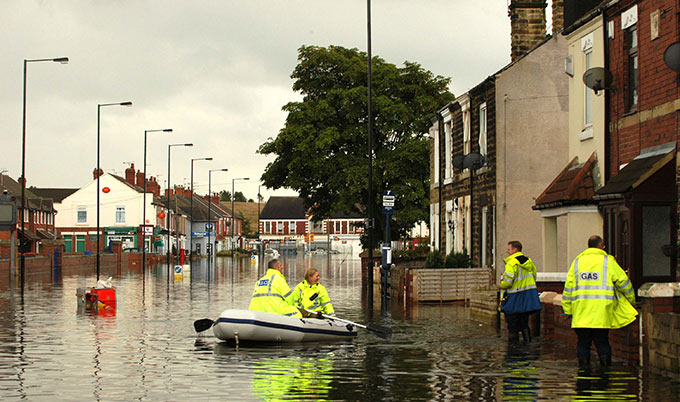
Above 1.5°C, risks and impacts will intensify with every extra fraction of a degree and every year. Anticipated impacts include intensified extreme weather, ecosystem loss, and submersion of Small Island Developing States and low-lying coastal cities. Severe damage to human health, food security, water supplies, nature, cities, infrastructure, and economies is expected.
The report warns that the likelihood of crossing irreversible tipping points increases with the magnitude and duration of higher temperatures. These include the destabilization of major ice sheets, degradation of the Amazon rainforest and disruption of the Atlantic Meridional Overturning Circulation (the system of currents that moves warm surface water north and cold deep water south, playing a key role in regulating the climate). Some impacts may emerge abruptly, while others will accumulate over time.
Considering the scale of the risks and the co-benefits of climate interventions such as a rapid transition away from fossil fuels to renewable energy – improving air quality and public health, lowering energy costs and increasing access to electricity – the report urges accelerated, collective and global action to get on an overshoot, peak and decline pathway. How quickly and strongly this action happens will define the shape and trajectory of the pathway.
Conditions for success
Strong political will and multilateralism, effective policies, inclusive governance, and finance are all important enabling conditions for action – and equity and justice must underpin all responses. Countries with greater responsibility for climate change should act the fastest with the greatest ambition.
The report also finds that mitigation and adaptation, which are mutually reinforcing, must advance together, while being responsive to emerging risks. Interventions that achieve both mitigation and adaptation goals – such as nature-based cooling – should be prioritized. Adaptation set up now forms the foundation for efforts to come, but it must become transformational and responsive to evolving non-linear and abruptly arising risks – including those that will harm mitigation efforts.
The report emphasises that net-zero is a milestone towards net-negative, with CDR needed in addition to, not instead of, sustained reductions in greenhouse gas emissions. However, CDR can only contribute credibly to a return below 1.5°C if peak warming remains well below 2°C and all residual emissions are reduced. Strong governance frameworks for CDR will be critical to allow responsible deployment and manage implications for environmental integrity, equity, scale.
Responding to a changed future
Years of inaction mean that even if a return to below 1.5°C is secured, irreversible losses and permanently changed conditions are certain. Many communities may be forced to relocate or change livelihoods, while societies will face the challenge of re-adjustment. This raises issues of justice, power, and political legitimacy, which will require new, inclusive governance arrangements to resolve difficult issues.
This report is a reminder that an overshoot, peak and decline pathway is a next generation climate frontier, but one which cannot be left unattended to for the next generation to tackle. Immediate action is required for such a pathway to remain possible
Press release adapted with thanks from the UN Environment Programme. Read the original press release. Read the report.